Chronicle Editor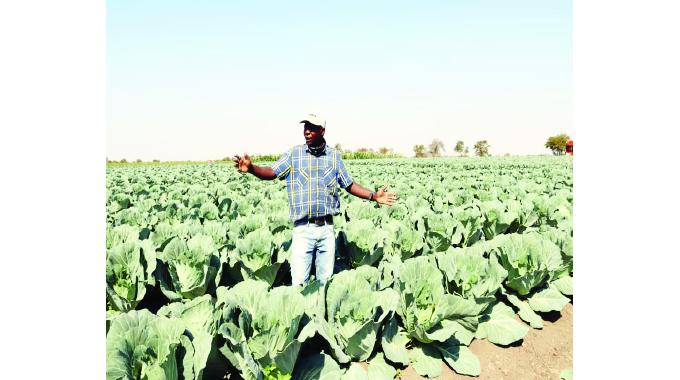
Thupeyo Muleya , Beitbridge Bureau
FOR quite some time Beitbridge District has been known as a hub of livestock production. With an estimated 200 000 head of cattle, 150 000 goats, 90 000 sheep and 40 000 donkeys, livestock production is one of the key economic activities.
Crop production, especially horticulture farming remains low due to erratic rainfall patterns. According to agriculture experts, Beitbridge requires an average of 400mm of rainwater for a successful farming season.
However, in the last decade, most areas in the district have been receiving only 80mm. This has seen more farmers, both small-scale and commercial focusing more on rearing cattle, goats and sheep.
Climate change has altered seasons resulting in low rainfall, especially in the southern region and this has crippled agriculture output.
Farmers that have tried horticulture projects often give up, and as a result Beitbridge residents have resorted to importing vegetables from other parts of Zimbabwe or from South Africa. This has pushed the prices of horticulture-related products up.
In an effort to close the supply gap, some farmers in Beitbridge have turned to water harvesting and use of drip irrigation.
This has seen farms like the Royal Cooper Estate, some 40km along the Beitbridge to Bulawayo Road turning their 30 hectares into a greenbelt and being able to produce for the district and the regional market.
Farm manager, Mr Samuel Karonga, said they started the project in 2016 and since then their market share has been growing across the country.
“We opted for the drip irrigation model since it’s a micro-irrigation system that saves water and nutrients,” he said.
“The model allows water to drip slowly to the roots of plants, either from above the soil surface or buried below the surface.”
Mr Karonga said under this type of irrigation water is placed directly into the root zone of the plant to minimise evaporation.
This, he said, was better than using canals, sprinklers, or flood irrigation to water crops. The farm draws irrigation water from Mazunga River and six boreholes at the farm, which are powered by diesel or electricity.
“We have built an aqua dam, which carries 5 755 300 litres of water drawn from Mazunga River and some six boreholes powered by generators,” said Mr Karonga.
“With such facilities and the use of drip irrigation, we are able to irrigate crops throughout the year.”
Mr Karonga said they were producing cabbages, butternuts, tomatoes, green pepper, watermelons, and green chilli among other products.
The farm also keeps 120 Bonsmara cattle and carries out fish farming in a 70-metre by 50-metres man-made dam. At the moment, the farm has 65 000 heads of cabbages at harvesting stage, 75 000 plants at vegetative stages, 36 000 tomatoes (HTX14 the tomato) planted on a one hectare, onions on 1,5 hectares, watermelon on two hectares and green pepper on 2,8 hectares.
“We started off supplying the Beitbridge market, but now we have penetrated markets in Chegutu, Kadoma, Bulawayo, Gwanda, Mbare, Masvingo, Chiredzi and Gweru,” said Mr Karonga.
“As you can see, we have very fertile soils and we only need adequate irrigation water to increase production.”
The farm employs 45 workers mainly the youth from surrounding villages. Mr Karonga said they were also working on a long-term plan to draw irrigation water from Zhovhe Dam, which is located 15km away from their farm.
“We produce between 120 and 140 tonnes of tomatoes per hectare and our dream is to grow into a huge project to supply the whole southern region,” he said.
In view of the effects of climate change, Mr Karonga said it was important for farmers in the district to embrace drip irrigation and maximise production with less labour.
“This is a seamless process in which you need to engage the right experts to set it up for you and you also need to harvest water or have constant supplies,” he added. @tupeyo.



 Online Reporter