admin
admin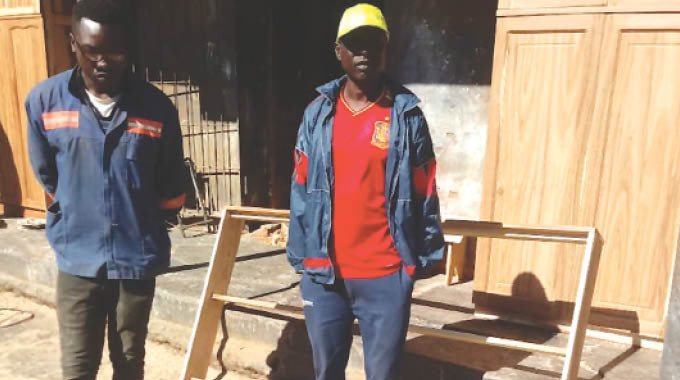
Features Reporter
YOUR sentence doesn’t end when you leave prison. No doubt you spent years reflecting on your bad decisions while in penitentiary, but the consequences of your actions stay with you forever.
That’s what the then 34-year-old Never ‘‘Cobra’’ Kapetamanja found out the hard way. After a night of breaking into cars, Cobra found himself in a jail cell two days later, waiting for a court appearance. He had broken and stolen from two vehicles and would spend the next 10 years as a resident at Bulawayo’s Khami Maximum Prison.
To most it would seem life was over. Your hopes and ambitions would pass you by, and you would never be able to escape the stigma of your criminal record. A decade of confinement would be followed by a lifetime of discrimination, making it almost impossible to find a job.
But Cobra didn’t allow himself to fall victim to circumstances. Prison would take 10 years of his freedom, but he didn’t let it take 10 years of his life. Here’s how he used prison to kick-start his entrepreneurial journey and lay the foundation for a seven-figure consulting business.
Ambition without skill is useless. As someone with a natural aversion to authority, Kapetamanja realised his only chance of success lay in self-employment. Instead of spending his prison years in silent apprehension, he applied himself in the library, learning everything there was to know about management, marketing and entrepreneurship.
He immersed himself in the Bible avidly, and he dedicated time to learning new languages. However, his attempts at self-improvement were constantly undermined and ridiculed.
“I felt like a crab desperately fighting to get out of a bucket. And all of the other crabs . . . the inmates were desperately fighting to pull me back in. This would lead to several violent fights. And they’d do this purely out of spite,” says Kapetamanja.
It was a negative environment that he had to fight against everyday even after he eventually got his freedom. Each time he tried to raise himself up, the people around him were waiting to pull him back down again. Constant hostility and discrimination made attempts at self-improvement virtually impossible.
“As I continued to study the Bible I realised that I couldn’t exist in society as an island. I couldn’t exist in society without respect for authority and other people’s property. But all these efforts were constantly ridiculed by fellow inmates and sometimes even friends and family who came to visit me in prison, Cobra says.
He describes this life lesson as his first entrepreneurial experience. Not only was he able to master a new skill quickly, but he was able to teach and profit from it in an environment where inmates didn’t respect or value other people’s time.
“Teaching life development skills to inmates had its challenges. Yes, I was improving as a person, but I also attracted a lot of negative attention from people who frowned on attempts at self-improvement. My constant learning was often interpreted as a statement that I thought I was better than everybody else. For the most part I brushed it off. I had always been confident in my abilities, borderline arrogant. But I didn’t learn new skills to show off, I learned them to stand a better chance of surviving life outside of prison after my release.”
But as the saying goes ‘‘you can’t teach an old dog new tricks’’. As soon as Kapetamanja got out of prison, he fell back to his old ways and started hustling again. He was to serve more prison terms ranging from six to eight months.
During this backslide, Cobra began to suffer from hypertension and was soon on medication. The possibility of sudden death forced the now 47-year-old career thief and thug to see a need for a radical shift in career choices.
“I realised I ran the real risk of a heart attack or stroke because I had become clinically depressed and was on hypertension medication. I decided to go into legitimate business so that I don’t stress myself from the constant fear of arrest and also to stop stressing my family and community I am living with and try gather back the respect that I had lost during my years of thug life,” Cobra explains.
“I also realised that I needed to ensure my financial security.”
Cobra went on to invest US$2 000 in a furniture making business and believes he is now well on his way to community and economic redemption. He is happy with the business he has made since going into business a couple of months ago. Yet still he feels his community has no faith in him or his business acumen.
“I am happy with the business we have been able to generate since I started a couple of months ago. But I still get the frustrating feeling that my community and my peers don’t believe in me or that I can make a clean break from a life of crime. They don’t think I can make this business work but they better do because I will, and cannot fail,” Cobra says.
The business newbie has based his operations at Mashumba in Mzilikazi where his presence has caused quite a stir as competitors and friends alike titter at his zeal yet seem to envy his budding success. Cobra is currently in the process of registering and formalising his SME business as a Public Business Company. He currently has two full-time employees and a few more casual ones when there are multiple projects being worked on at the same time.
He expects to soon start not just earning the respect he so badly wants but to recover from the 10-year prison spell!


 Online Reporter