Online Reporter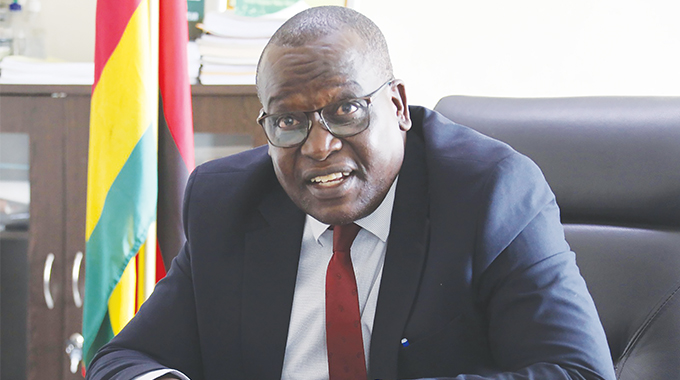
Vusumuzi Dube, Deputy Radar Editor
THE Government, in collaboration with the Bulawayo City Council, has streamlined the process of acquiring land for school establishment in Bulawayo, a move that has spurred the rapid growth of private and church-run schools across the province.
Speaking in a recent interview, Permanent Secretary for Provincial Affairs and Devolution, Mr Paul Nyoni, revealed that this initiative ensures that no learner in the province is left without access to education.
He said the Government’s focus has been twofold: increasing classroom capacity in existing schools, and constructing new facilities in emerging suburbs.

“Infrastructure is a critical cry for our province. In education, Bulawayo has expanded, especially in terms of residential areas. There are many new places, so we needed to increase capacity. But even in the old residential areas, they have also expanded,” said Mr Nyoni.
“One of the success stories there is working together with the Central Government and the local authority. We have streamlined the process for people to get land for schools, in case you are wondering why there has been such a massive sprouting of private sector initiatives,” he said.
Mr Nyoni attributed the surge in private and church schools over the past three years to this more efficient land allocation process.
“Everyone wins, because you know, we can mention names of the number of schools that have come up, in the last three years alone, private schools, church schools, private schools. It is because there was a streamlining where council and the central Government agreed on an approach, which works very well. And I think that has helped us,” he added.
“We cannot say there is a student or a learner who might not be able to get a place to learn in Bulawayo,” Mr Nyoni emphasised.
Beyond classrooms, the Permanent Secretary highlighted improvements in school facilities, including laboratories and workshops designed to equip students with practical skills vital for the future.
“We also had a partner that helped us do quite a number of classroom works at existing schools, as well as laboratories and workshops for those studying clothing and technology,” he said.
“Our partners have gone a long way in equipping our schools with the infrastructure that they need to learn the skills that will help them in the future.”
Turning to tertiary education, Mr Nyoni pointed to ongoing efforts to align training programmes with the economic needs of the province, particularly in mining and technical skills.
“In terms of tertiary education, there was an effort during NDS 1 to refocus training, to respond to specific requirements of the economy.
“A very good example is the Zimbabwe School of Mining, where there were all sorts of courses beyond the three-year diplomas to equip, because people go into the mines and they don’t have good training,” he said.
Mr Nyoni emphasised the comprehensive nature of the training, which covers mining laws, environmental regulations, and technical expertise.
He also praised local institutions such as the National University of Science and Technology (Nust) and Bulawayo Polytechnic for their innovative approaches.
“Nust is doing the same thing, Bulawayo Polytechnic is doing the same thing. I think we’re probably the only polytechnic in the country that has mortuary science as a course.
“At the end of the day, we all leave this earth and we want to be helped by qualified people,” said Mr Nyoni.
He further highlighted the role of innovation centres in fostering creativity and practical skills among students.
“The innovation centres have played a big role. I’ve been challenging the tertiary institutions to say, why don’t we have a shop, a retail shop, to interface with the public, and I think between them, Nust, Bulawayo Polytechnic, Hillside Teachers College, and the United College of Education, and a few others can actually stand their ground in terms of household chemicals, to PPEs, to dry foods, and so on.”
Mr Nyoni shared examples of innovative projects, including work at Nust on stock feeds using maggots, which serve as feed for the local “roadrunner” chickens.
“These young people have been clever enough to formalise it, mix it with other things, and they’ve done well.
“The technovation centres have done that. They allow the children, as His Excellency the President says, allow them to dream, to fail without penalty. You have an idea, you try it, it might not work, but the President has given you a license to fail without penalty because you are trying something new,” said Mr Nyoni.
“One of the things that I found quite amazing, it’s not just the work that was done by Bulawayo Poly in building the technovation centre at Nust, it’s what they are doing to build Plumtree Technical College, what they are doing to build the lodges at the Tshabalala Game Sanctuary, what they are doing in Binga, to assist with the technical school there.”
Mr Nyoni further emphasised the importance of practical learning and the new educational philosophy dubbed Education 5.0, which fosters innovation and a hands-on approach.
“So, now people are learning by doing, and it’s been amazing what these young people can do with the change in mindset,” he added.
“I’m sure the skills have been somewhere in there, but there’s been a change in the mindset, which is called Education 5.0, which has allowed, again, these young people to do things that we know they can do, with the right guidance, with the right orientation.”