admin
admin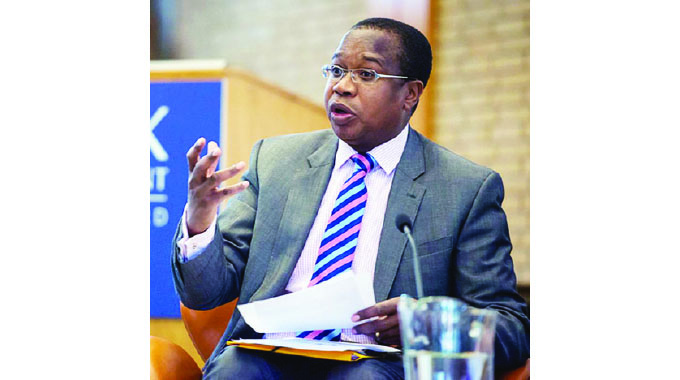
Bulawayo Bureau
The continued existence of restrictive by-laws enacted by the colonial local authorities need to be repealed as they frustrate potential investors keen on setting up business in the country and hamper the Government’s investment drive, Finance, Economic Development and Investment Promotion Minister, Professor Mthuli Ncube, said at the weekend.
Speaking on the sidelines of a Matabeleland South investment conference in Umzingwane district, he reiterated that the attainment of Vision 2030 was hinged on collective stakeholder efforts.
Zimbabwe had opened up a host of investment and trade opportunities across all sectors of the economy in all provinces of the country to stimulate economic transformation and improve livelihoods.
To buttress this, he said it was important for local authorities to complement Government efforts by creating conducive administrative regulations at their level, which will facilitate the ease of doing business in line with the Second Republic mantra “Zimbabwe is open for business”, being spearheaded by President Mnangagwa
“Matabeleland South is a very productive province whether looking at mining, cattle production, tourism, and other potential areas of growth. There is potential to grow the GDP of this province,” said Prof Ncube.
“However, our local authorities need to be assisted in changing the laws, some of which are old and archaic, making it difficult for some of these investors to do business. Some of these laws date back to 1952.”
Prof Ncube said the restrictive by-laws are hindering the development of productive sectors, which is against the spirit of fostering inclusive development in all parts of the country.
“There is a need for local authorities to update such by-laws. As Government, we will look into this issue so that councils are helped to change their laws to be more facilitative than restrictive to investors,” he said.
“This is important because we are throwing all incentives to the investors but they get frustrated by administrative and legal aspects as well as laws that are in place.”
Prof Ncube said the Government will invest more in ICT so that investors can be able to access services online, and urged partners to invest in rural areas, saying there are a lot of untapped investment opportunities.
“Those who invest in rural areas can be given special economic zone status as an incentive. Government has also set tax rebates for investing in animal husbandry,” said Prof Ncube.
He urged investors to approach the Zimbabwe Revenue Authority (Zimra) to check whether they qualify for the incentives.
The minister urged partners to invest in developing infrastructure such as schools and roads in Matabeleland South.
The conference was held under the theme: “Unlocking investment opportunities through private sector-led initiatives for a devolution rainbow province”, which Prof Ncube said was in line with President Mnangagwa’s ‘Zimbabwe is Open for Business” policy, and the drive to stimulate economic performance through investment and trade.
The provincial economy of Matabeleland South is largely driven by animal husbandry, citrus farming, mining and trading in the small to medium enterprises.
Prof Ncube said considering its tracts of land for animal husbandry and a favourable climate for citrus farming, Matabeleland South had a huge potential to become a regional a powerhouse.
“Furthermore, Matabeleland South province is endowed with abundant tradable minerals such as gold, diamonds, platinum, salt deposits, copper, emeralds, lithium, asbestos, and nickel. The province has natural tourist attractions for the growth of the tourism sector.
“It is also endowed with abundant sunshine for the development of green energy. It follows, therefore, that priority areas of investment in the province should include agriculture, mining, manufacturing, tourism and SMEs development.”
In a speech read on her behalf by Matabeleland South director for economic affairs and development in the Office of the President of the Cabinet, Mr Richmond Ncube, Matabeleland South Provincial Affairs and Devolution Minister Dr Evelyn Ndlovu said the clarion call by President Mnangagwa to bring forward Vision 2030 to 2028 requires the province to realise increased investment in its mineral and agro-based local resources.
“We cannot continue to only rely on Foreign Direct Investment, rather we must look inward within our province and country at large for investment funds. We are gathered here to share investment opportunities among ourselves as well as be alive to the realistic challenge that, ‘Ilizwe lakhiwa ngabanikazi,” she said.
“The provincial economic growth we envisage is mimicked by our befitting theme: “Unlocking investment opportunities through private sector-led initiatives for a devolving rainbow province”. We need to consider these sectors by way of investment in value addition and beneficiation for meaningful contribution to the National Gross Domestic Product.”



 Online Reporter