admin
adminCetshwayo Mabhena in Decolonlality at Large
He stood up with the agility of a charismatic preacher. He pointed to the sky and shook his head violently. Clearly the message was to be a painful one for the messenger to suffer it with such quivering and disturbance of his body. “Black people,” the Professor charged as he appeared to choke on his own words, to chew his livers and lungs, closing his eyes as if to summon that wisdom that only the blind can see. Eyes of the gathered multitude were fixated on his famous body. His face was tense and troubled like the countenance of the eccentric genius who sees sound and hears light.
Words were traitors to desert, in front a swollen crowd, the very master of eloquence and pulsating oratory. For minutes without number, Molefi Kete Asante stood there, microphone in hand and finger pointed to the gods above.
The cause of his perplexity was that “black people can be disappointing.” Coming from him, that sentiment sounded painfully paradoxical. Based at Temple University in the United States of America, Asante has spent a large part of his intellectual career nuancing Afrocentricity and preaching the honour and pride of being black in the world. As an African American scholar, a descendant of the former slaves Asante has, with amazing erudition only comparable to that of such figures as EWB Dubois, fleshed out some of the most enriching insights on the condition and experience of black people in the world.
What under the sun had the black people done to so irritate one of the best known defenders of blackness in the world is the question that crossed the minds of the attendants of the International Toyin Falola Conference of 2015 at the University of South Africa. Present in the perplexed crowd was Toyin Falola himself, the gifted Nigerian historian and polymath in whose honour the conference had been organised. With his chiefly Fly Whisk, Professor Falola waved several times at Asante, making signs that we later learnt from our Nigerian counterparts to have been the language of peace and a plea for calm and settlement in the heart of the troubled professor of African Studies and Communication Science.
It is not every day in an academic conference that the ancestors themselves are addressed. Later on in the proceedings of the conference, a gifted Ugandan lady, Professor Catherine Odora-Hoppers had to exclaim that big scholars should not speak in anger and high tones, lest young intellectuals learn from them bad temper instead of intellectual wisdom. Asante is a titanic scholar with more than seventy five books and close to a thousand journal articles under his belt. Perhaps, the most valued furniture of his mind has been his conceptualisation and dissemination throughout the world of “Afrocentricity” as a school of thought, intellectual paradigm and theoretical framework.
The politics of reading and citations
What provoked Molife Kete Asante’s volcanic temper and unhygienic anger that nearly soiled his good name was his arrival in Africa and encounter with an intellectual craze about “epistemologies of the South.” The phrase “epistemologies of the South” that has achieved the status of an intellectual slogan is extracted from the title of a book by Portuguese Lawyer and Sociologist, Professor Boaventura De Sousa Santos who is based at the University of Coimbra.
In the interesting book, Santos argues that knowledges and histories of the Global South; that is Africa, Latin America and parts of Asia should be given cognitive justice and respected alongside the histories and knowledges of Europe and North America. In the Afrocentric mind of Molefi Kete Asante, Santos was participating in cheap and opportunistic intellectual politicking. Black Africans were being taken for a cheap ride by a white Portuguese scholar whose intellection on the Global South is dirty crocodile tears and the bad habit of mourning louder than the bereaved. Even the laziest of all readings betrays the truth that Santos and Asante, in their different books and style, are making the self-same argument on knowledges of the Global South and histories of the former enslaved and colonised peoples.
Asante believes that Santos’s race is a disqualification; he should not pontificate on issues of blacks and survivors of slavery and colonialism. Up to today, in seminars and roundtables of the South African academy, the debate continues on whether knowledge has a colour or the truth a race. Many think that whites should conduct themselves with the humility of strangers and decorum of the guilty when they articulate black issues. Others opine that, knowledge and the truth are a property of humanity, anybody white or black should be allowed to participate in the conversation for liberation. In earnest, the debate goes on. Asante’s wish was that young black scholars would be wary of citing opportunistic Europeans who should spend their intellectual energies preaching to other Europeans and not patronising historically wounded blacks.
The tyranny of the academic discipline
In a bold argument, and a risky one for that matter because it could have cost her the venerated PHD, MSC Okolo, a Nigerian student of literature now a world famous intellectual argued that African literature is philosophy. She argued in her PHD thesis that was published into a book in 2007 that Chinua Achebe and Ngugi wa Thiongo were leading African philosophers who used their fictive imaginations to probe and ponder the existential experiences and condition of Africans in the world.
Okolo’s convincing argument that makes her book a classic of intellectual candour, flows against the Eurocentric tyranny of strict academic disciplines and rigid intellectual and methodological provinces. In the Eurocentric intellectual margistration, a novelist is a story teller and an entertainer, the historian must tell tales of the past, while the mathematician must peddle formulas and tackle statistics and figures. In this intellectual apartheid and academic provincialism, boundaries must not be crossed; thinkers must keep to their disciplines.
True to Okolo’s formidable observation, African knowledge and thinking systems seem to defy the Eurocentric logic of disciplines and limiting methodologies. Chinua Achebe’s bewitching novel, Things Fall Apart, as a legendary story with a wealth of meaning seems to have unfairly stolen attention from his deep philosophical, sociological and some political essays that would have made the man world famous even if he did not write fiction. Ngugi wa Thiongo’s essays, among them the enriching collection under the title of Globaletics of 2012 have found a place as compelling works of philosophy at a planetary scale.
Disciplines, methodologies and theories have been one way of arresting, imprisoning and limiting the imagination and free thinking of peoples of the Global South. In the present university system in Africa, colonial minded professors police students and enforce the theories, methods and disciplines like rigid religious doctrines, in the process suppressing intellectual invention. As large a classic as Frantz Fanon’s Black Skin White Mask, as a PHD thesis in psychology, it failed because of alleged methodological, theoretical and disciplinary dissidence of Fanon who found prescribed frames a burden.
Throughout the universities in Africa, even some of the most gifted and industrious students end up falling out of the system as early as the research proposal stage because the disciplinary and methodological police among the professors. Decolonial thinkers of the Global South, taking after Fanon himself have started conversations about the “method of no method” and “undisciplinarity.” The method of no method and undisciplinarity as concepts are not meant to replace intellectual rigour or cheapen academicism but are rebellious methods of “epistemic disobedience” and “border thinking” that are meant to free the imagination of the oppressed and unleash the creative tools of knowledge generation outside the Eurocentric imprisoning and colonial prescriptions.
The colonial intellectual overlords gave us their theories, methods and disciplines so that we continue reproducing their toxic knowledges even in the absence of the white professor in the university but under the supervision of black and even revolutionary professors. Part of the current for not only transforming, Africanising and decolonising the university in Africa but also liberating it should pay attention to the tyranny of the academic disciplines. It is too late in the day of liberation for African intellectuals and those of the entire Global South to remain disciples of colonial disciplines.
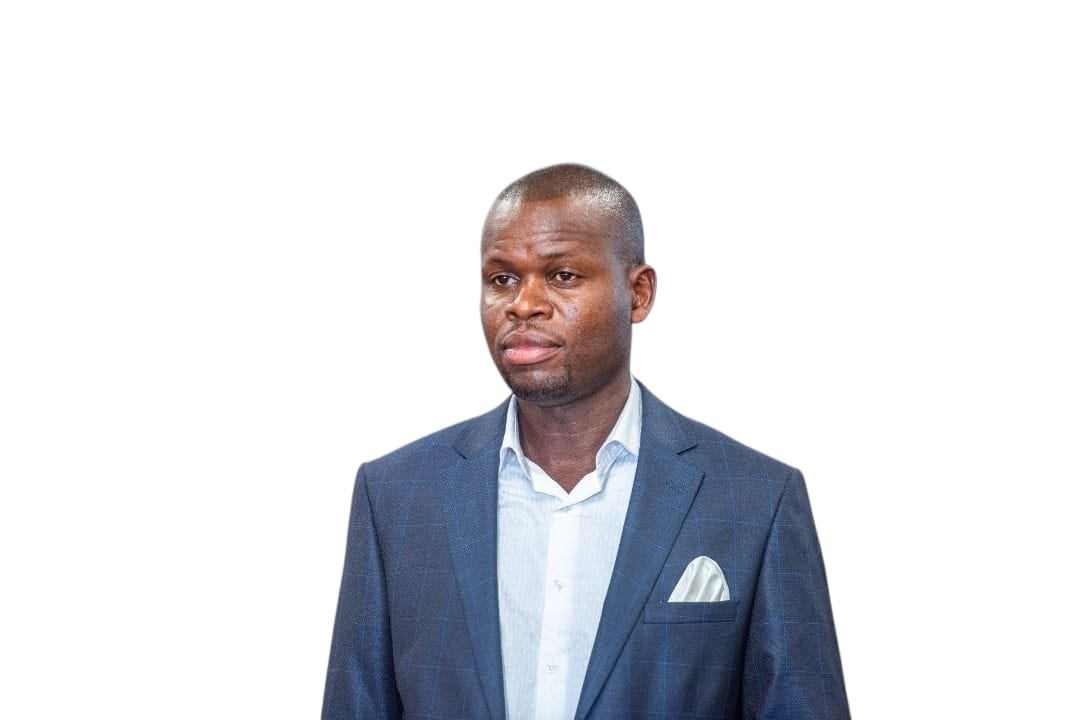
Cetshwayo Zindabazezwe Mabhena is a Zimbabwean academic based in South Africa: [email protected].



 Online Reporter