Online Reporter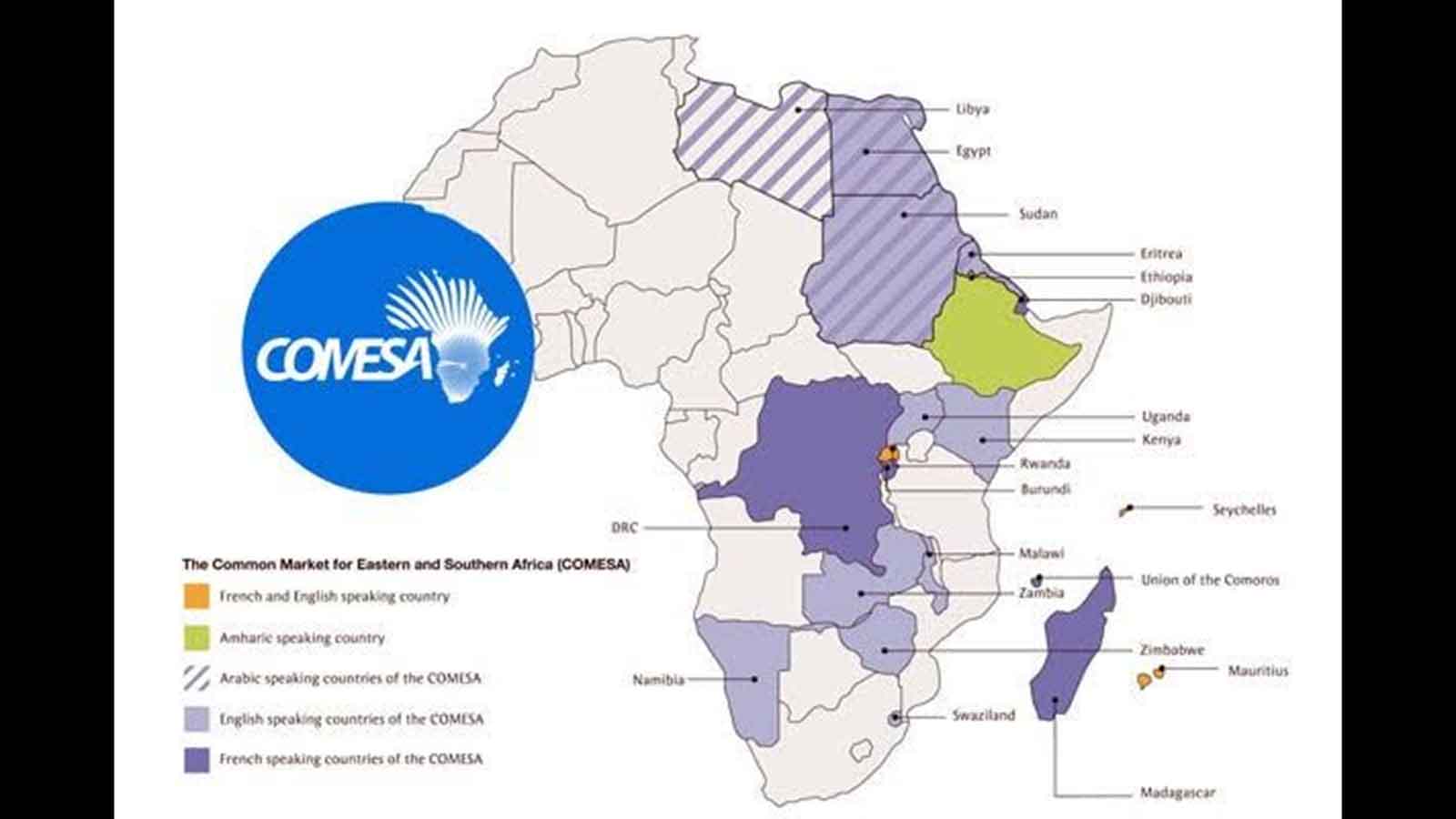
Gibson Nyikadzino-Zimpapers Politics Hub
Evidence suggests that in world politics, great powers are likely to be involved in more conflicts and confrontation because they have more interests, alliances and involvement in world affairs than small states. Great powers, therefore, feel they have responsibilities to impose their will on other states in order to redraw and rectify the international balance of power.
Ongoing geo-political developments in various jurisdictions point to this. These changing international political dynamics are signalling tough times ahead for nations that have an obsession with confrontation over cooperation.
Cooperation, itself a progressive concept essential for the Global South, is critical in building alliances and power blocs that grow their economic power.
In these uncertain times where global supply chains are causing panic within various markets, Global South multilateral cooperation requires a more flexible, bottom-up economic cooperation and market-driven value chains. There is an impending economic doom requiring the reading of Global South countries to strengthen their bonds of cooperation.
In this thinking, Zimbabwe’s hosting of the 25th Common Market for Eastern and Southern Africa (COMESA) Heads of State and Government Summit in October signifies why regional integration is a sine qua non to keep afloat during the troubled times. Under this year’s theme of “One Market, One Future: Advancing Inclusive Industrialisation, Investment and Regional Integration in COMESA,” regional integration should be seen as a means to encourage trade and achieving economies of scale.
A necessity, not alternative
One thing that is informing the need to have regional integration is the shifting post-Western global order. In the post-Western global order, there has been new middle-powers that have emerged and causing the great rebalancing making regional integration a key factor as traditional Western dominance wanes.
The decline in power or the fall of western hegemony is accelerating regional integration among non-western states because they no longer see the West as the leading light of progress for economic and security cues. In these developments, there is leverage that has been created by the rising energy corridors and the security clout of rising middle states like Iran, Turkiye, Indonesia, India, Ethiopia, and Brazil among many which are delinking from reliance on global institutions.
Again, there are new emerging alliances which are of a transactional nature not only informed by shared ideological or cultural uniformities, but pragmatic issues like security and strategic necessities.
Essence of regional integration
Regional integration is traditionally understood as a way to encourage trade flow between member states, to facilitate more efficient allocation of resources by stimulating competition by increasing the capacity of the internal market.
The total population of COMESA citizens is estimated to be over 640 million from the 21 member states of the bloc. This, itself, is a market that needs to be satisfied, that needs innovation and entrepreneurial investments. Of the 21 COMESA member states, eight are SADC members. Other member states are from the East Africa Community (EAC), while others are from the Intergovernmental Authority of Development (IGAD).
The overlapping membership is part of an effort by countries to improve their economic, political, social, or cultural relations. Also, the creation of a single economic space is meant to serve as a basis for ramping up exports to extra-regional markets as a result of improvements in the collective organisation.
In Africa, regional integration is making steady progress and becoming a key objective to improve the prospects for industrialisation and tackling development challenges that cannot be solved at the national level. This is crucial to integrate economies and infuse their growth with modernity for the benefit of the people they are meant to serve.
What to do, avoid
Regional integration efforts usually face hurdles from persistent bilateral tensions and the competing, sometimes-divisive economic footprints of major external powers. Member countries in various blocs can be battlegrounds of great-power competition leading to disruptions in the implementation of agreed regional positions to protect the political interest.
There are models of regional integration that have been implemented and nations got their economic dividends, like the European union (EU) and the Association of Southeast Asian Nations (ASEAN). Some successes of the EU (European Economic Community, then) since the 1950s attest to the advantages of regional cooperation.
For the Global South, the ASEAN community model better explains how COMESA can implement its resolutions to advance regional economic integration. Their priorities are economic, over politics. For instance, some ASEAN members are effectively one-party states, and coups in Burma (2021) and Thailand (2006 and 2014) deposed democratically elected leaders, while Brunei is an absolute monarchy, Malaysia a constitutional monarchy and Vietnam a communist democracy.
With a combined population of 667 million and a combined annual gross domestic product (GDP) of $4,17 trillion, and a collective purchasing power parity (PPP) of about $13,15 trillion by 2025, the ASEAN community has made some strides. For COMESA, the GDP by 2025 was $1.12 trillion.
One of the things that the ASEAN community did was to embark on the priority of self-reliance economically, not to interfere in the domestic affairs of a member country and synchronise trade systems and infrastructure, to support the seamless movement of goods, people and services across borders. It is more of a bloc that has at its core economic integration over cooperation.
For COMESA, what will likely threaten its economic integration programme is complacency, donor dependency and lack of ownership of the economic integration agenda. COMESA states are currently inhibited by the intense overlapping memberships (belonging simultaneously to SADC, EAC, or IGAD). While joining many groups is key, when it comes to economic integration it creates conflicting tariff regimes that informal consensus cannot resolve.
Because of conflicting tariff regimes in some groups, critical economic growth is diminished. For example, the ASEAN bloc managed to achieve higher levels of integration, with intra-regional trade rising from 19,2 percent in 1993 to 25,9 percent in 2025, compared to only 5,5 percent for COMESA in 1993, and nine percent last. Some reasons for COMESA’s challenges include holding on to politics over economics.
It is economic integration that will make the bloc count among other blocs. Bringing national and regional efforts together will undoubtedly enhance the attractiveness of the continent and sustain its economic viability. It is the duty of COMESA to do so, to facilitate the ushering of states in the African Free Continental Trade Area.
The issue of tariffs, upgrading of economic infrastructure and committing to the free movement of goods, people and services should be considered priority. For without those discussions and commitments, it can all be talk that has not been translated to action. Thus, this time around regional economic integration must be treated as a necessity, not as an alternative.