admin
adminTinashe Makichi in Livingstone, Zambia
Common Market for Eastern and Southern Africa (Comesa) Competition Commission’s regional one-stop shop competition authority is now operational, a move expected to boost foreign direct investment within the economic bloc.
The new set up means all transactions with a regional effect will now be addressed at Comesa Competition Commission without the interested parties necessarily going to member states for approval.
This will see the cost of merger approvals going down in the Comesa region as well as improving on efficiency. Article 55 of the Treaty establishing Comesa sets out the foundation for the development of a competition policy in the Common Market.
To realise this objective, the Comesa Treaty provides in Article 55 (3) and in compliance with this Article, that Comesa adopt a regional competition policy through the publication of the Comesa Competition Regulations.
The regulations call for the regional competition authority to support Member States undertaking competition advocacy programmes, which can be financially challenging for individual countries.
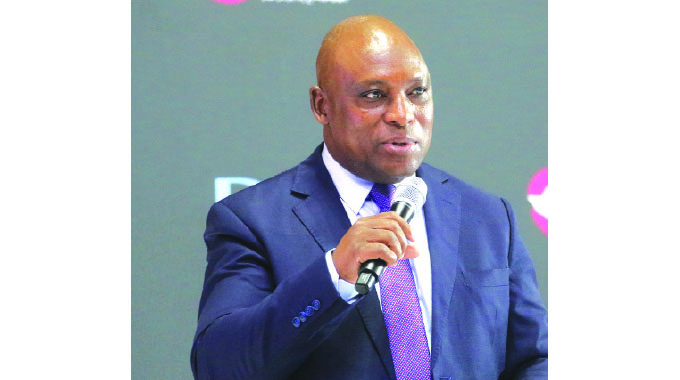
Speaking here yesterday, Comesa Competition Commission chief executive Dr George Lipimile, told journalists attending a Comesa Competition Workshop in Livingstone the initiative was a huge success.
“We have since established a one stop structure and it is one of the initiatives undertaken by the Comesa Competition, which has been 100 percent successful. We are going to see more investments in the region going forward considering that before the one stop shop, the cost structure was unsustainable.
“This initiative has been a success and now all transactions with a regional effect are now being handled at the Commission without necessarily consulting member states.
“There is no doubt that the establishment of a regional competition authority has provided advantages to those Member States, which are part of the regional grouping,” he said.
By creating a one-stop shop competition authority, the Regulations are aimed at creating a more business friendly environment with cost savings and time efficiencies, with the avoidance of regulatory duplications in addition to providing legal certainty to enterprises.
Dr Lipimile said the establishment of a one stop shop plays a huge role in reducing the cost of doing business in the region while at the same time attracting investment inflows.
The recent example is the large international merger involving SABMiller and InBev. SABMiller has operations in a majority of the Member States in the Common Market and as such, would have notified at least six countries.
The notification fees could have been at least $600 000 and the six different decisions from each different jurisdiction would have trickled in at varying paces.
Now, with a regional authority such as the Comesa Competition Commission, the notification fees are capped at $200 000 and with the number of filings and decisions greatly reduced to one.
The merger notification is a single one to a single authority with a single decision, saving the firms time and money on their investments.
Dr Lipimile said benefits of a one-stop shop can only be realised when there is uniformity in the interpretation and application of competition laws throughout the Common Market.
He said there is now a growing recognition of the need for closer and deeper cooperation on regional antitrust issues.
“The Commission has concluded bilateral agreements with a number of national competition authorities in the Common Market, namely Swaziland, Malawi, Seychelles and Kenya, to establish a channel for bilateral cooperation with a view to enhancing the enforcement of competition laws in the Common Market,” said Dr Lipimile.
He added that the implementation of competition policies and laws by member states has been excellent with only three countries out 19 still without competition legislations.
“The implementation of competition policies by member states has been excellent and all the implementation has been happening on voluntary basis. This has been a success story for us and going forward we are anticipating further economic growth in the region,” said Dr Lipimile.


 Online Reporter