Mukudzei Chingwere-Senior Reporter
COMESA leaders have called for faster customs clearance, cheaper cross-border payments and increased investment in regional industries, with President Mnangagwa saying the bloc’s success must be measured by trade generated, jobs created and livelihoods improved.
Closing the 25th COMESA Summit of Heads of State and Government at the New Parliament Building in Mt Hampden yesterday, President Mnangagwa said cumbersome border procedures and outdated manual systems were frustrating regional integration and had to be urgently removed.
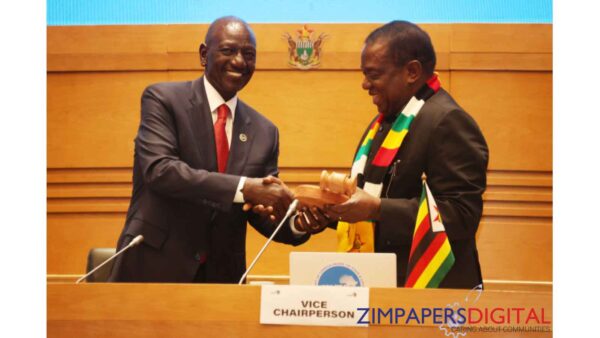
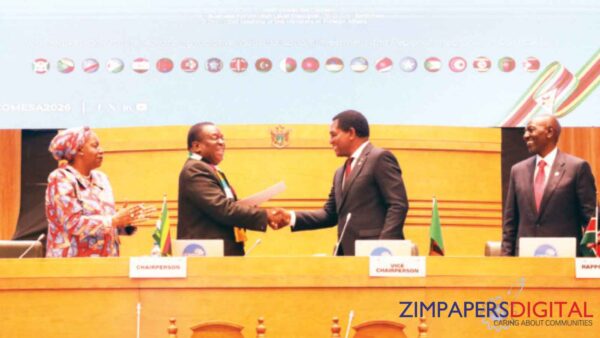
Zimbabwe assumed the chairmanship of the COMESA Authority from Kenya at the summit yesterday, which adopted measures to improve trade flows, attract investment and retain more value from the region’s natural resources.
“We have determined that tariff and non-tariff barriers, cumbersome customs procedures, coupled with archaic and manual systems at ports of entry, are prohibitive to the integration agenda and thus must be urgently expunged,” said President Mnangagwa.
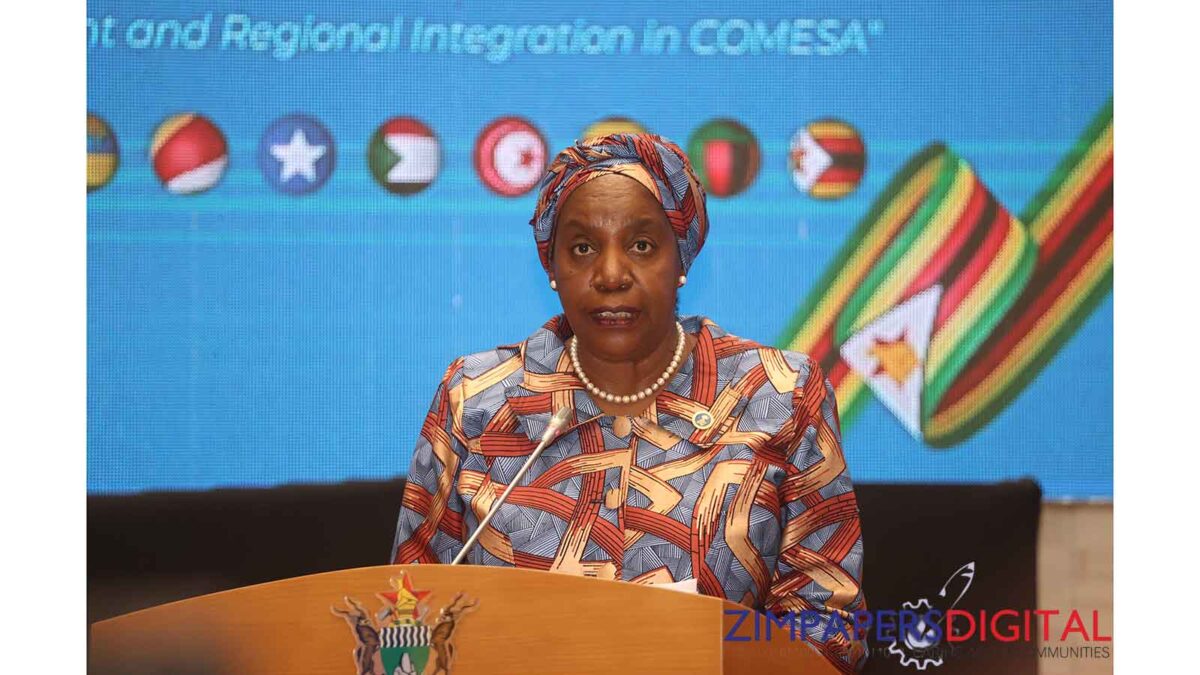
The summit’s final communiqué, read by COMESA secretary-general Mrs Chileshe Mpundu Kapwepwe, urged member states to accelerate electronic certificates of origin, national electronic single-window systems and trade information portals to simplify cross-border trade.
Leaders also called for wider implementation of the Simplified Trade Regime to bring small-scale traders into the bloc’s trade facilitation framework.
President Mnangagwa said the impact of regional integration should be judged by its economic benefits rather than the decisions made at meetings.
“Our deliberations have reaffirmed that regional integration must be measured not only by the decisions we adopt, but more importantly, by the trade we generate, investments we mobilise, industries established, jobs created and livelihoods improved,” he said.
The summit ran under the theme, “One Market, One Future: Advancing Inclusive Industrialisation, Investment and Regional Integration in COMESA”.
Zambian President Hakainde Hichilema, elected vice chairperson of the COMESA Authority, said the region’s resource wealth would only translate into improved livelihoods if member states mobilised investment and implemented their commitments.
“Our responsibility now is to translate this potential into what we may call industrialisation, value addition, more important, investment, because we cannot realise this potential without investment,” he said.
President Hichilema called for a stronger investment culture, urging individuals, businesses and governments to prioritise productive capital over excessive consumption.
“Excessive consumption habits should be replaced with investment habits. Investment is a habit,” he said.
He urged member States to honour their commitments and deepen economic cooperation, saying regional integration should put citizens first.
“Our people are our people, irrespective of the national boundaries.”
To ease cross-border transactions, the communiqué encouraged wider use of regional payment and settlement systems, including the COMESA Regional Payment and Settlement System, which supports payments in local currencies.
Leaders also backed efforts to operationalise the COMESA digital retail payment platform to provide secure and affordable cross-border payments for individuals and micro, small and medium enterprises.
Beyond removing trade barriers, President Mnangagwa said member States needed to expand domestic production, process their resources and increase trade within the region.
“COMESA must become a region that produces more of what it consumes, adds value to its resources, and trades more among its membership, and competitively with the global markets,” he said.
The communiqué expressed concern that continued exports of critical minerals in raw or minimally processed form were limiting opportunities for value addition, technological development, employment and government revenue.
Leaders called for investment in cross-border industrial clusters, agro-industrial parks and regional value chains, particularly in agro-processing, critical minerals, pharmaceuticals, textiles and garments.
They welcomed industrialisation initiatives, including the Zambia-Zimbabwe Common Agro-Industrial Park, as well as efforts to harmonise medicines regulation and promote green pharmaceutical manufacturing.
The summit also called for modernisation of electricity generation and transmission, railways, roads, ports, logistics facilities and digital networks to support manufacturing and mineral processing.
On investment, leaders expressed concern over declining inflows and endorsed the revised COMESA Common Investment Area agreement to strengthen investor confidence and policy predictability.
They urged member States to expedite its domestication.
The communiqué also called for cooperation with development finance institutions, commercial banks, pension funds, sovereign wealth funds and other institutional investors to mobilise long-term, affordable capital.
The COMESA Investment Map is to be strengthened as a pipeline of bankable projects linked to financing.
Green industrialisation featured among the priorities, with leaders calling for harmonised circular economy standards, dedicated financing for small businesses and support for exporters seeking to meet sustainability requirements. Priority sectors include leather, textiles, plastics, packaging and electronic waste.
To facilitate cross-border investment and services, the summit urged member states to operationalise the COMESA business visa, accelerate ratification and implementation of the protocol on free movement of persons, and promote mutual recognition of professional qualifications.
Leaders also called for trade restrictions and safeguard measures within the COMESA Free Trade Area to remain consistent with the bloc’s treaty.
President Mnangagwa said responsibility now rested with governments, ministers, the Secretariat and national institutions to turn the summit’s resolutions into measurable outcomes.
“As Chairperson of the COMESA Authority, Zimbabwe will work with all member States to strengthen implementation, monitoring and accountability,” he said.