admin
admin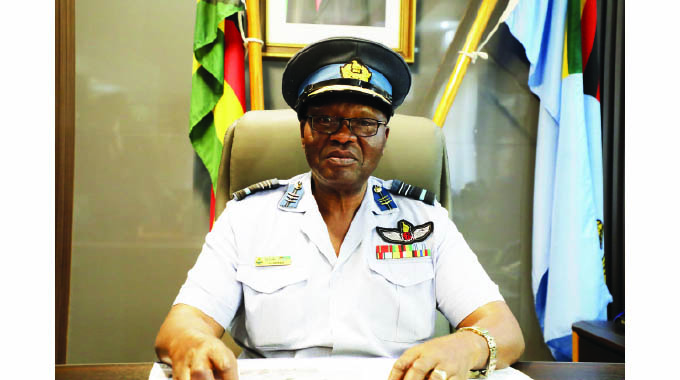
The Zimbabwe Defence Forces (ZDF) mark its 44th anniversary today with the celebrations coming at a time when Zimbabwe is hosting the SADC Summit, the most critical regional conference. The high level meeting will see President Mnangagwa who is the Commander-in-Chief of the ZDF assuming the chairmanship of the regional economic bloc.
The Herald Reporter Talent Chimutambgi (TC) had an interview with Commander Air Force of Zimbabwe (AFZ) Air Marshal Jacob John Nzvede (AMJJN) at AFZ Headquarters, Josiah Magama Tongongara Barracks on operations of the AFZ in line with the dictates of the constitution.
TC: Commander, Sir. You assumed command of the AFZ in March this year and what was the major task before you?
AMJJN: It is more than five months since my promotion and appointment as Commander Air Force of Zimbabwe by the President and Commander-in-Chief of the Zimbabwe Defence Forces, His Excellency, Comrade, Dr ED Mnangagwa.
As you may know, the mandate of the AFZ is derived from Section 212 of the Constitution of Zimbabwe which states that the function of the Defence Forces is “to protect Zimbabwe, its people, its national security and interest and its territorial integrity and to uphold the Constitution”.
From this perspective, I have embraced this onerous responsibility from my predecessors and committed to ensuring that the AFZ continues to support the Commander ZDF in fulfilling this Constitutional mandate.
If I may briefly take you back. After my appointment, I became the sixth Commander of the AFZ since the attainment of Independence in 1980. One notable thread of all these transitions has been continuity in pursuing the roles of the AFZ and unrelenting efforts to maintain the legacy of gallantry and excellence. Each of my predecessors has laid their stone to build the AFZ to be a formidable force that it is today. Equally, I am challenged to lead the AFZ to reach greater heights in a new era characterised by high technology.
In this navigation to fulfil the roles of the AFZ, I have been guided by the vision of the organisation which challenges us “to build a small, well equipped, robust and hard-hitting Air Force capable of effectively defending Zimbabwe’s airspace”.
TC: Sir, you have spelt out the AFZ Vision and notably, it has some markers that need to be attained. What are the critical steps that you have prioritised?
AMJJN: Indeed, the AFZ Vision sets out key markers such as a small and highly motivated force that is equipped with modern equipment. I wish to point out, from the onset, that the attainment of the AFZ is not only left to the organisation. Instead, the ZDF and the Government are key players in operationalisation of the Vision.
Effective defence of Zimbabwe’s airspace and territorial integrity requires equipment such as aircraft and other assets. I am happy to report that, the President and Commander-in-Chief of the Zimbabwe Defence Forces, His Excellency Comrade Doctor ED Mnangagwa has prioritised the modernisation of ZDF as part of the steps towards the attainment of National Vision 2030. In line with these efforts, the AFZ is on a path to modernise its equipment to effectively respond to contemporary threats to security.
However, equipment without qualified and motivated personnel will not serve any purpose. Here I will touch on two areas that I feel are worth highlighting in the efforts to have highly skilled personnel to operate the equipment. The first is training and the second is welfare of personnel.
On training, I want to state that the future of the AFZ of Zimbabwe and indeed the nation, is in the hands of the young generation. Being that as it may, the question is on how we can empower the young generation to take up these future roles and maintain the legacy of the AFZ.
For military organisations such as the AFZ, training is a critical factor for the successful conduct of operations. Security threats by their nature do not give advance warning and it is against this reality that the Air Force must be able to get into its strides as a fighting service without a moments’ delay and with minimum mistakes.
As such, during these times of peace and stability the AFZ dedicates much of its resources towards empowering its personnel with the right skills. Most of the training is done at schools within the organisation that offer courses such as pilot, technical, regimental, air defence and academic training, among other areas. In addition, the AFZ benefits from the ZDF organised external courses offered by friendly forces.
As you may be aware, in regard to education, the Government is implementing Education 5.0 which places emphasis on Heritage- based learning that is supported by five pillars namely; research, teaching, community service, innovation and industrialisation.
The AFZ training has been rightly guided by the policy and I am proud to state that this is being implemented at our major schools. For example, at the School of Technical Training at Manyame Air Force Base, the students that graduate with a Higher National Diploma are required to undertake research and complete a project that solves a local problem. Similarly, the School of Flying Training does not only teach flying skill to students, but it now produces rounded officers who graduate with a degree in Aviation Sciences.
Having shared with you our commitment to training, I want to turn to welfare issues, that is efforts by the AFZ to have a highly motivated workforce. In this regard, I am pleased to note that the Government has been responsive to the needs of officers and members through several monetary and non-monetary incentives. For instance, the recent introduction of the Zimbabwe Gold (ZiG) currency has halted inflation and improved the quality of life for the officers and members.
These measures compliment other incentives in the AFZ such as provision of accommodation to personnel and living out transport for those officers and members living out of our bases. At the same time, we are fully aware that it is everyone’s dream to own a property of their own. To this end, all officers and members are encouraged to be members of the Zimbabwe Defence Forces Benefit Fund (ZDF BF). Through this Fund, the AFZ personnel, among other ZDF members, are allocated stands in cities and towns across the country.
TC: On training, you briefly touched on the aspect of research and development. May you expand on what the AFZ is doing in this area?
AMJJN: For many years, the AFZ has highlighted how it embraced Research and Development as a solution to the problems presented by the imposition of sanctions. As a result, the main effort, then, was to recover and resuscitate the air assets and equipment that had been grounded by lack of spares. The objective was attained and this saw the resuscitation of such aircrafts.
After having seen these remarkable achievements, the second phase of Research and Development has commenced in earnest. In this phase, the AFZ has developed partnerships with local universities, industry as well as international partners to develop equipment and systems that will close the technological gap with other air forces on the continent and beyond.
For those who have followed the recent developments in warfare, it has become apparent that Research and Development has eroded the advantages that other powers had. For instance, the advent of unmanned aerial vehicles (UAVs) and other drones has challenged militaries across the globe to reconsider the old tactics and strategies.
TC: Zimbabwe will host the SADC Summit, and may you share how the AFZ is cooperating with other SADC Air Forces?
AMJJN: Hosting the SADC Summit is a major achievement which should be celebrated by all citizens. At the same time, it is an opportunity to showcase the giant steps that the nation has taken towards attainment of its development goals; on cooperation between the AFZ and other security organisations on how air power can be employed to respond to these emerging threats, both military and humanitarian threats have been acknowledged as potential security problems in the region.
To this end, the regional air forces continue to conduct exercises to prepare for a coordinated response to such threats. Some of the exercises held to date have focused on peacekeeping and humanitarian assistance.
Zimbabwe hosted the first exercise “Blue Hungwe” in 1997 and another exercise “Blue Leopard” in 2013. The last exercise “Blue Kunene” was in Namibia in 2017. Angola is set to host the next exercise in 2025. The AFZ has participated in all such regional exercises and will continue to do so in future.
TC: In conclusion Sir, may you touch on the AFZ’s relationship with the citizens and efforts to assist the underprivileged?
AMJJN: I must acknowledge that over the years there have been deliberate efforts by some internal and external players to sow the seed of discontent between the AFZ and the citizens of Zimbabwe. However, these efforts have failed and the bond that we have with the people of Zimbabwe continues to grow stronger.
I would attribute this to factors such as professionalism of our officers and members, excellence in the execution of our duties and our commitment to uphold the value of human dignity.
As a result, the citizens appreciate such conduct and are proud to identify with the AFZ and the ZDF, at large. This is reflected in all our engagements with the public and the responses we get on our recruitment exercises.
Furthermore, the AFZ has made deliberate efforts to respond to the plight of individuals and communities within our society. To effectively assist in this area, the organisation established the Commander Air Force of Zimbabwe Charity Fund which has Board of Trustees and a Management Committee.
The Fund has placed emphasis on interventions in the areas of health, education, and welfare. Several projects have been completed across the country with the last projects being the handover of a Classroom Block at Bango Secondary School in Matabeleland South Province and Neromwe Clinic in Masvingo. This year, the Charity Fund has set its sights on construction of Mandizha Clinic.
I would attribute this to factors such as professionalism of our officers and members, excellence in the execution of our duties and our commitment to uphold the value of human dignity. As a result, the citizens appreciate such conduct and are proud to identify with the AFZ and the ZDF, at large. This is reflected in all our engagements with the public and the responses we get on our recruitment exercises.
TC: Thank you Sir.


 Online Reporter