Disability Issues
Dr Christine Peta
This week, we are focusing on the intersection of modern-day slavery and disability.
The International Labour Organisation (ILO) estimates that nearly 50 million people are living in modern slavery today, including 27,6 million in forced labour and 22 million in forced marriage.
This reality manifests as debt bondage in agriculture and brick kilns, domestic servitude behind closed doors, forced begging on street corners and children working in mines and quarries.
Trafficking victims are often drawn from rural communities and moved into towns, farms and mines across the region.
Persons with disabilities are disproportionately trafficked not by accident, but by design.
Poverty and exclusion from school leave them with few alternatives, while institutional care removes them from protective family networks. Furthermore, traffickers know that a person seen as disposable is less likely to be looked for.
Recruitment is frequently deceptive, involving broken promises of rehabilitation, training or employment.
Some victims are forced into begging rings, where their visible disabilities become a prop for profit. Others are pushed into hazardous labour in mining, agriculture and construction because traffickers calculate that an injured worker with disabilities is easier to control than to compensate.
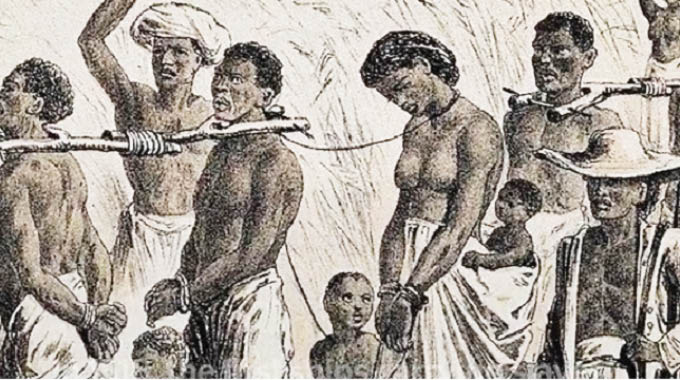
Today, August 23, Zimbabwe, just like other countries across the world, will be commemorating the International Day for the Remembrance of the Slave Trade and its Abolition. Modern slavery, much like the old, not only preys on disability but also produces it.
Trafficking victims routinely sustain injuries that go untreated, develop illnesses that never receive care and carry psychological wounds that become disabilities.
Research consistently finds that children with disabilities are several times more likely than their peers to experience violence, abuse and exploitation, keeping a continuous cycle turning where the vulnerable are broken, abandoned and forgotten.
Commemoration of this day must be more than a ceremony.
Data on modern slavery must be disaggregated by disability, because what is not counted is not seen, and what is not seen is not protected.
Anti-trafficking responses, including shelters, legal aid, witness protection and rehabilitation, must be disability-inclusive by design and accessible to survivors with diverse needs.
Prevention must begin in communities through close collaboration between organisations of persons with disabilities and anti-trafficking agencies to expose deceptive recruitment and build awareness.
Fortunately, Zimbabwe is not idle.
The 2013 Constitution entrenches the rights of persons with disabilities by prohibiting discrimination and guaranteeing equal protection before the law.
In September 2013, the Government of Zimbabwe ratified the United Nations Convention on the Rights of Persons with Disabilities, binding itself to protect persons with disabilities from exploitation, violence and abuse.
The Trafficking in Persons Act of 2014 subsequently domesticated the United Nations (UN) Palermo Protocol, criminalising human trafficking for forced labour and begging while providing for victim protection and rehabilitation.
An inter-ministerial committee and a national action plan guide these efforts to prevent trafficking, identify victims, dismantle recruitment networks and prosecute offenders.
In June 2021, the President of Zimbabwe launched the National Disability Policy to mainstream disability across sectors, while national social protection programmes reach households where disability and poverty overlap to ease the desperation on which traffickers feed.
Because the architecture of protection already exists in Zimbabwe, the critical question before the nation is no longer whether to build it, but how to strengthen enforcement so that it reaches the most vulnerable in every district, on every farm, at every mine and behind every closed door.
The ultimate task is to break the chains of exploitation and stigma in a world that turns human beings into broken cargo and calls it commerce or fate.
Efforts must not end until modern-day slavery is eliminated and the last broken body is healed and honoured.
Dr Christine Peta is a disability, public health, policy, international development and research expert. She can be contacted on: [email protected]