admin
admin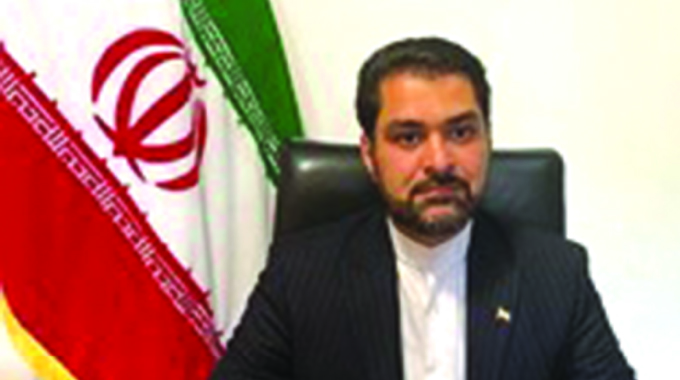
Hamid Bakhtiyar
The victory of the Islamic Revolution of Iran in the 20th century – the century that was supposed to be the end of history and witnessing an end to ideologies – stormed and upset the materialistic thoughts and theories of both the West and the East and introduced a new concept to the world.
Unlike other modern revolutions of the world, this approach was rather religious and non-materialistic and, therefore, came to pose a serious challenge to the fundaments of the materialistic outlook that dominated the world system and order and rekindled the rays of hope and enthusiasm among the oppressed people of the world and Islamic societies.
It was for this very reason that it faced opposition and political pressures from the hegemonic powers right from the early days of its inception.
Nonetheless, after a lapse of more than 40 years, and in spite of all sorts of pressures, the world has been witnessing the impacts of this miracle of the 20th century, particularly in the form of opposition to the hegemonic system on the part of the oppressed nations.
The religious culture and traditional and indigenous values of the Islamic Revolution took the world by surprise.
The Western countries which had experienced a number of ideologies like imperialism, realism, liberalism, socialism, nationalism and communism among others in international relations, could not grasp and fathom a religious ideology being the foundation of a political system.
It goes without saying that, as the main theorist of the revolution, the late Imam Khomeini played a significant and influential role in reviving the Islamic religious thought in the world.
As believed and confessed by many Western thinkers, orientalists, Islamologists, and sociologists, he was the greatest reviver of Islamic Thoughts and values and succeeded in giving rise to an Islamic renaissance and in implementing what Islamic reformists and modernists had been propagating since the 19th Century.
The Islamic Revolution of Iran took place at a time when the West had been irrefutably dominating the international system for about four centuries and any change in the various intellectual, cultural and economic aspects of the international system as well as any new discourse in these areas were profoundly rooted in the Western thoughts.
The most important impact of the Islamic Revolution on the international system was the revival of Islamic values and consciousness. The victory of the Islamic Revolution proved that religions in general, and Islam in particular, have not, by the passage of time and the expansion of modernism reached their end.
They rather continue to be the most important means of man’s freedom from injustice and, therefore, brought to a halt the world that is rapidly moving towards absolute materialism, opening a window to religious beliefs and spirituality for the young generation that were disillusioned with materialistic ideologies.
In spite of the fact that the Islamic Revolution emerged when the bipolar system was at its peak, it came to be posed as a serious challenge to this system instead of succumbing to it and gave rise to a new order that contradicted Western criteria and resulted in the formation of an anti-hegemonic camp.
Forty-four years have passed since the glorious victory of the Islamic Revolution.
This revolution was a divine and blessed phenomenon that shook the world at the end of the 20th century and lit the light of hope in the hearts of Muslims and the oppressed of the world.
Now, after more than four decades of the precious life of this hopeful genealogy, this huge revolution has made many progress and achievements for our country.



 Online Reporter