Online Reporter
THE Second Republic, under the visionary leadership of President Mnangagwa, continues to make historic strides in shifting women’s empowerment from mere legal theory into a lived, practical reality across Zimbabwe.
By actively championing initiatives like the Young Women for Economic Development convention, the President has demonstrated an unwavering commitment to ensuring that no woman and no place is left behind in the national drive toward Vision 2030.
The Second Republic’s merit-based approach is vividly on display in the public sector, where women have been elevated to break historical glass ceilings—most notably heading the nation’s two most highly technical, engineer-led ministries.
Furthermore, by restructuring agricultural and grassroots financial frameworks to directly back female farmers and entrepreneurs, the administration has ignited a highly successful rural and industrial revolution.
Through these deliberate, action-oriented policies, President Mnangagwa has proven that women are not just passive beneficiaries of development, but are the very architects driving Zimbabwe’s modern economic growth.
“If you educate a man, you educate an individual. But if you educate a woman, you educate a nation,” goes an age-old proverb which highlights that when a woman gains knowledge, skills, or financial backing, she naturally reinvests those resources back into her children, family, and wider community.
The proverb also mirrors the exact sentiment shared at the recent Young Women for Economic Development convention that “empowering women is not just a micro-achievement; it is a critical strategy for national prosperity”.
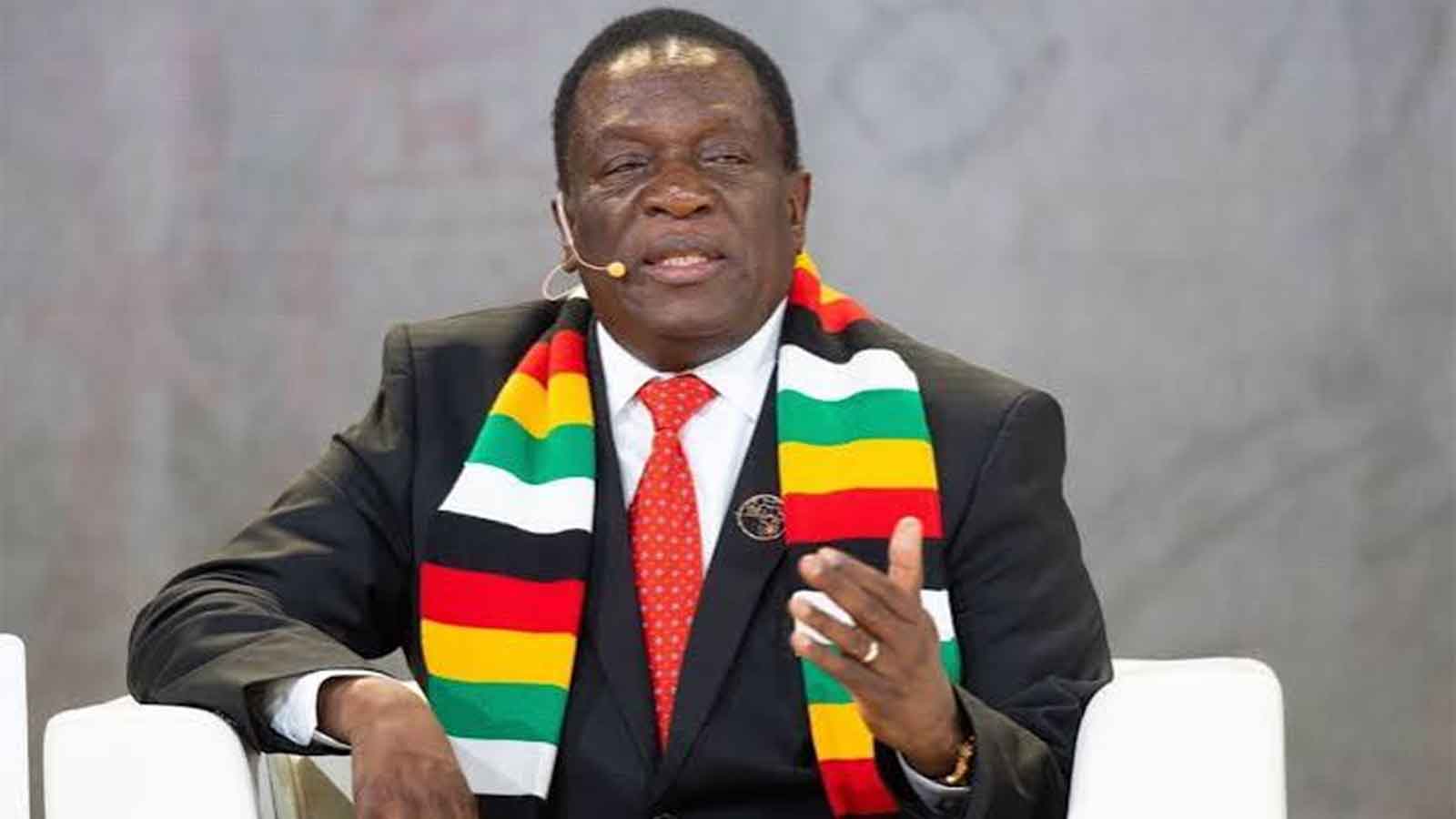
Addressing over 8 000 women attending the convention of Young Women for Economic Development on Tuesday, President Mnangagwa stressed the importance of including all women in Zimbabwe’s economic advance.
According to official census figures from the Zimbabwe National Statistics Agency (ZIMSTAT), women make up 52 percent of Zimbabwe’s total population hence the country cannot have just over half the population uninvolved, or not involved to the maximum degree.
Having far more open doors not only accelerates development nationally, but is critical to lifting families out of poverty into prosperity.
It is an individual, family and community challenge, not just a national target.
Women do make up a large part of the country’s workforce, and there are a lot of women involved in business.
But while they are well represented in the lower ranks of employment and in the micro-element of the sector of micro, small and medium enterprises, they thin out as you move up hierarchies and own or manage an ever-smaller number of businesses the larger the businesses become.
Women chief executive officers of top concerns are not unknown, at least in independent Zimbabwe, but their rarity makes them stand out.
Society attitudes of what many consider appropriate businesses and employment for women are still changing, but rather slowly.
The President, who does notice the graduates of State universities when capping them at graduation ceremonies, acknowledged that the number of women engineers, technologists and similar graduates is growing fast, although equality is not yet there and often not very close.
There has again been practical progress.
The public sector, as is often the case, has been a leader and the permanent secretaries or the two most technical ministries, which must be headed by engineers, are both women.
But when we look at economic sectors, percentages of women are possibly lowest in the productive sectors, at least outside tailoring and similar “women’s work” despite the women in overalls and hard hats seen in some concerns, and yet it is here that the value chains start. Again there are exceptions, and again these are usually rare enough to cause comment as some pioneering woman engineer moves forward, or a top-rated farmer is seen to be female. Mining is usually particularly bad at bringing in women.
So among the challenges laid down by the President was for a lot more women to become involved in the productive sectors, to take advantage of the skills they have been acquiring along with his encouragement for more to take up the training opportunities on offer. In other words, the generally desired gender equality in society needs more in society to think and act outside the box.
One highly practical element of support, and here the Government has been responding, is the financial backing.
For a start the many practical programmes launched under the Second Republic for farmers have made sure that women farmers are fully included, and that even smaller family farms should be far more of a partnership. That will lead the rural revolution, if nothing else.
But there are limits to what sort of money a Government can find to seed special programmes or even the necessary support for SMEs in general.
One major curiosity is that bankers in the private sector have not really noticed that the percentage of women defaulting on loans is far smaller than with male borrowers. For that matter, the number of women doing time in prison for fraud, embezzlement and other crimes of dishonesty, while not zero, is far fewer than the number of male crooks. Both sets of statistics tend to suggest that women-owned businesses should be a good bet, or at least a better bet than they are now regarded.
Far too many people say that change takes time, and that we must allow for this time. That is close to what even colonial liberal settlers said about black advancement and yet it was achieved in a very few years by some very determined young people who took matters into their own hands. That was another challenge thrown down by the President, that more women need to push harder and start their own businesses and enter production.
Government policies of making sure no one and no place are left behind are important, but also require the active involvement of those who might be left behind if they do not themselves press forward.