Vusumuzi Dube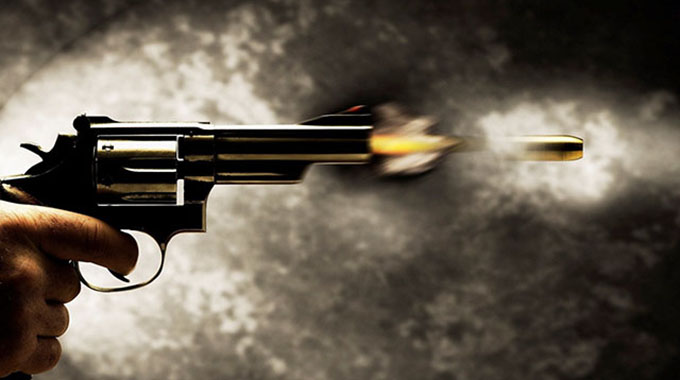
The images from Caracas are chaotic and grim: gunfire piercing the sky, a capital on edge, a president — Nicolás Maduro — arraigned in a New York courtroom claiming he was kidnapped from his own country.
This is not the result of a domestic coup or a regional intervention. It is the direct outcome of a dangerous and lawless foreign policy doctrine emanating from the White House, one that treats international borders, sovereign Governments, and the very foundations of global order as mere inconveniences to be brushed aside by American will.
The facts of the Venezuela crisis lay bare this new American imperialism. The U.S. engineered the capture of a sitting head of state, a blatant violation of international law and the sovereignty of Venezuela. Maduro, however odious his regime may be, was not overthrown by his people in that moment; he was extracted by a foreign power. His subsequent “not guilty” plea in a U.S. court sets a catastrophic precedent: that America believes it has the right to abduct and try leaders it dislikes, acting as global policeman, judge and jailer.
But the true scope of the threat is revealed not in Caracas, but in the accompanying rhetoric from President Trump. It is a series of pronouncements that should chill the blood of every nation, ally, or adversary. After asserting he is “in charge” of Venezuela, he turned his gaze across the hemisphere. He threatened military action in Colombia, a key Nato ally. He barked at Mexico to “get its act together.” He casually reiterated that the U.S. “needs Greenland,” a statement that treats the territory of a peaceful allied nation like a parcel of real estate.
This is not a coherent strategy. It is the doctrine of the strongman, unrestrained by law, alliance, or precedent. It declares that American power is unbounded and American appetite is unlimited. The message to the world is unambiguous: your sovereignty is conditional, existing only at the pleasure of the American president. Your domestic challenges are American pretexts. Your resources are American desires. Your land is America’s potential acquisition.
The immediate victims are the Venezuelan people, plunged into deeper instability, and nations like Colombia and Mexico, now subjected to public humiliation and threats. However, the ultimate casualty is the system of international rules that, despite its flaws, has prevented a return to the colonial scrambles and great-power wars of the past. By dismantling this system, Trump is not making America great; he is making the world profoundly more dangerous, unstable and hostile.
Allies who have long relied on U.S. leadership must now see it for what it has become: a capricious and overwhelming force that recognises no red lines of its own drawing. They must now ask, with urgent seriousness, who is truly in charge? Is it the international community, with its charters and courts, or is it the unilateral diktat of one man in Washington?
The spectacle in Caracas and the threats that followed are a wake-up call. They reveal an administration that has abandoned diplomacy for domination, and replaced the arduously built architecture of international law with the whims of presidential impulse. This path does not lead to security or prosperity. It leads to a world of perpetual conflict, where might makes right, and every nation — including, eventually, the United States — is less safe for it.


 Online Reporter