Vusumuzi Dube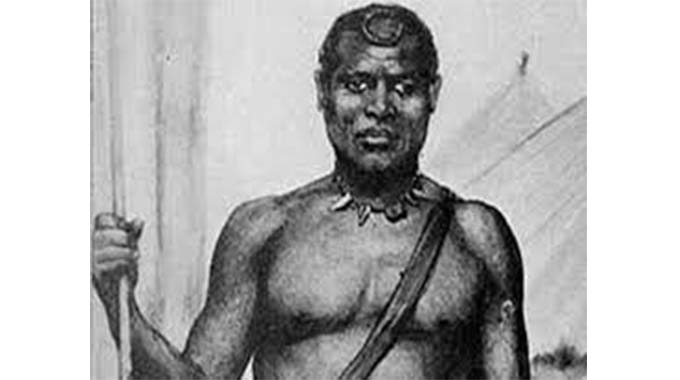
AFRICA’S cultural contributions have long been documented from a Eurocentric perspective. It’s time for Africans to empower themselves by writing about their own culture, says Deutsche Welle’s Harrison Mwilima in an online article.
He argues that colonialism uprooted African cultures and traditions in many countries, paving the way for the domination of European culture. Furthermore, the sin of the slave trade played a critical role in sending Africans to other parts of the world, robbing them of their identities by forcibly disconnecting them from their mother continent.
Despite its many contributions to the cultural world in terms of art, music, dance, language, literature, and more, African history is still perceived mainly within the context of colonialism and the slave trade.
Furthermore, many scholars concur that the systematic falsification of history has had a damaging effect on the self-esteem and opportunities of African people. As the cliché goes “until lions learn to speak, they will always come second best to rabbits in folklore stories.”
The move by the Government to correct the historical narrative of the battle of Pupu is therefore commendable. Pupu is situated less than 10km from Shangani River and it is where Major Allan Wilson and his troops were defeated by the Matabele army of King Lobengula on December 4, 1893.
The Second Republic, led by President Mnangagwa, took a bold step to correct a one-sided narrative of the famous Battle of Pupu when it made an undertaking to correctly portray and promote the country’s rich history and cultural heritage.
The President will soon commission the Shangani (Pupu) Monument, which was refurbished by the National Museums and Monuments of Zimbabwe (NMMZ). Government has also reconfigured the Shangani (Pupu) Monument, a place where King Lobengula’s Imbizo Regiment led by General Mtshane Khumalo killed settler forces’ commander Major Allan Wilson and his fighters on 4 December 1893, to represent the whole story.
Unlike in the past when the settler government portrayed Major Wilson and his forces as the heroes, the monument is now justifying the victors in that particular battle.
Until recently, a tapering stone pillar with names of a 34-soldier unit of the British South African Company (BSAC) that was ambushed and annihilated by more than 3 000 Ndebele warriors, was the only structure erected as a landmark by the Rhodesian government. The obelisk has 34 names of Maj Wilson’s patrol inscribed on it.
Some of the improvements include the erection of a perimeter fence, the construction of horseshoe-shaped exhibition wall panels at the site, ablution facilities, and the drilling of a borehole. The display panels show Ndebeles resisting colonial forces manifesting in the battle at Bonko by the Shangani River and at Gadade in Mbembesi. The exhibition also relives the burning of King Lobengula’s Royal capital at Emahlabathini in Bulawayo.
History tells us that when King Lobengula got the news of the defeat of the Ndebele army at Bonko and Gadade he ordered the burning down of the royal town as per tradition and fled towards the Shangani River accompanied by a force of about 2 000 to 3 000 men.
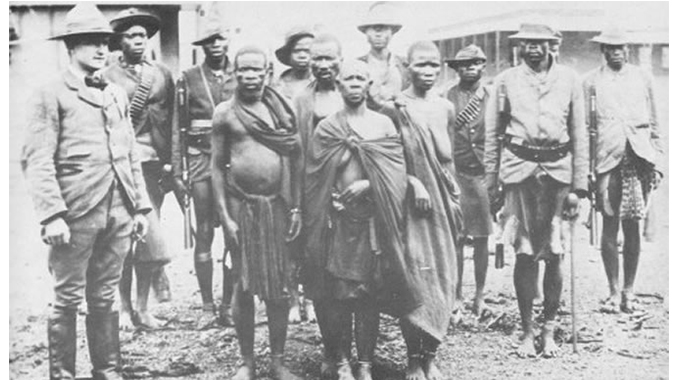
The rebirth of the Pupu Monument comes at a time the country commemorates Heroes’ Day and Zimbabwe Defence Forces (ZDF) Day on 14 and 15 August respectively.
It is a fitting tribute to the Ndebele warriors, and others across the country, who resisted settler rule from the word go and paved the way for nationalists who came in later to fight to the bitter end to liberate the country from colonial bondage.
It is behind that background that in 2020, during the country’s 40th Heroes’ Day and Defence Forces Day commemorations, President Mnangagwa posthumously conferred National Hero status on the revered military tactician, Gen Khumalo alongside Queen Lozikeyi, Mgandani Dlodlo and Mbuya Nehanda whose statue was erected in Harare at the intersection of Samora Machel and Julius Nyerere, where it is believed, she occasionally stopped to rest and drink water from a river that flowed through the site.



 Online Reporter