Online Reporter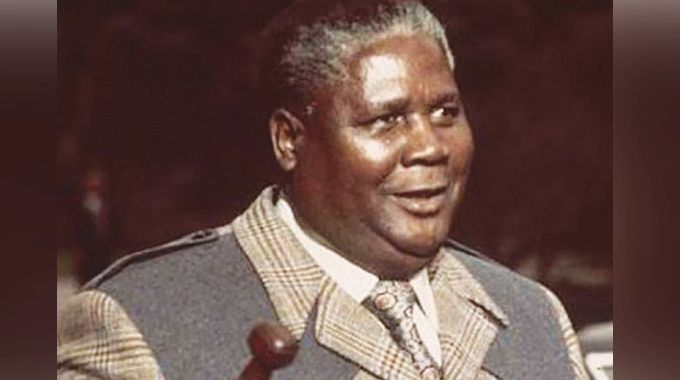
ZIMBABWE rightly remembers, especially on the July 1 anniversary of his 1999 death, Dr Joshua Mqabuko Nyongolo Nkomo, a towering figure in the nationalist movement and liberation struggle.
Father Zimbabwe was also instrumental in efforts to build the modern Zimbabwe after independence.
Among those efforts was his role as co-author of the Unity Accord of 1987, re-establishing the organic unity of the nationalist movement and ensuring that this movement was truly national in scope, encompassing all Zimbabwe and all Zimbabweans, regardless of their district of origin or home language. It also brought him back into Government as Vice President, part of the practical measures to cement that unity.
Known affectionately as Chibwe Chitedza or Umdala Wethu in commemoration of his role from the early days of the nationalist movement and the struggle for freedom, Dr Nkomo spent most of his life and made many sacrifices to push for the freedom and development of Zimbabwe.
Born in June 1917, just 27 years after the British South Africa Company’s invasion of Zimbabwe, Dr Nkomo spent most of his life under colonial rule battling to abate and negate that disaster.
Against difficult odds, and in early colonial days, he managed not only to gain a primary education in Zimbabwe but then moved to South Africa for secondary education.
He finally obtained an external BA from the University of South Africa as early as 1951, being among the first black graduates in the country. There was no university in Zimbabwe at that time. But he turned his back on the easier life that these educational achievements may have delivered.
Working for the railways, he soon saw that injustice was not going to drift away and became a leading trade unionist, seeking practical changes in the system as well as representing workers in their day to day dealings.
That, as was the case with other trade unionists, led to nationalist politics and, critically, this started largely with unifying the somewhat fragmented nationalist movement so it became effective and was able to mobilise support.
Unity has always been important.
Indeed, it became so effective that the original ANC was banned and Dr Nkomo was restricted to his family area in Kezi. He later served in far more remote and intolerable restriction areas designed to isolate the nationalist leadership in the intermittent incarceration and release.
But he persevered.
Pressing harder than many of his colleagues and supporters, he tried to gain Zimbabwean freedom through negotiations, going right to the limit but still insisting that majority rule itself was not negotiable.
While there was criticism, he helped ensure that when the decision was taken to move to the armed struggle, the nationalist movement had met the major condition for what theologians demand for a just war, that all other avenues for justice had been blocked.
When that armed struggle ended in victory and independence, he accepted the result of the first crucial elections, again setting an example that others should follow.
Dr Nkomo willingly joined the coalition government that brought together both wings of the nationalist movement. He is also credited for brokering the Unity Accord in 1987 which brought together the former PF Zapu and Zanu.
This laid the foundation for the peace and tranquility prevailing in the country today, displaying his personal selflessness and his recognition that without unity Zimbabwe would never develop.
The last years of his life, just over a decade, saw him return to the work of national development, converting political independence into the economic and cultural independence that went far beyond politics.
He continued pushing this, even as his health failed as cancer took hold.
As President Mnangagwa said in his message this week commemorating the 27th anniversary of the death of Dr Nkomo, the principles of peace, national unity and hard work championed by the late national hero and Vice President had to be upheld and promoted, as these safeguarded the stability and unity that underpinned socio-economic development.


 Bongani Ndlovu