Online Reporter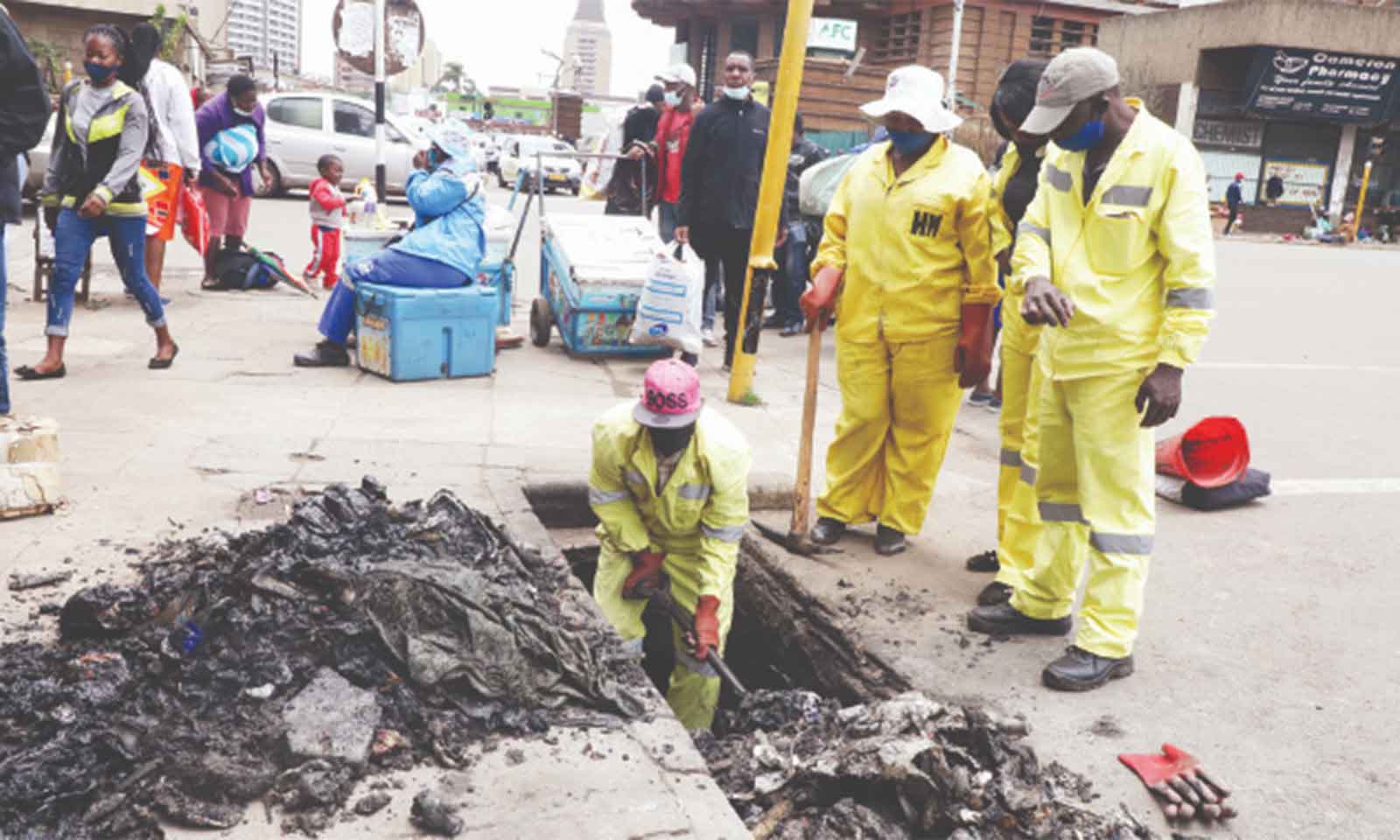
The flash floods in parts of Harare during periods of very heavy rain cannot be blamed solely on the city council; residents and the general public must also work with the council to fix the problem.
In the city centre, Harare City Council has made a determined effort. The catch pits along the underground stormwater drains, designed to trap debris and rubbish so they do not clog the pipes, were cleared in the early part of the season. Admittedly, sometimes the earth and rubbish removed were not instantly carted away, but generally the council did what it is supposed to do. Now council workers are back at the pits, clearing out the latest litter.
The problem in the city centre is that a large proportion of the public think they are entitled to dump empty takeaway cartons, bags, and drink bottles wherever they are standing, despite the determined effort by businesses to provide street waste baskets. More rubbish ends up on the roads and pavements than in the bins.
Somehow, we need to change attitudes. It can be done. In a Namibian city, for example, no one throws litter on the street. A drunk will even cross a major highway to dispose of the bottle cap from his latest beer, let alone the bottle itself. Street cleaners in Namibia are still needed, since the desert means there is a lot of sand building up, but they sweep sand, not litter.
The problem in Harare is worsened by engineering standards from more than 50 to 70 years ago, when most of the city centre street drains were laid down.
At that time, pedestrian density was far lower, so fewer people were around to throw rubbish into the street.
Takeaways were rare, and each meal produced far less waste, since food was sold in paper bags that rotted quickly.
Drinks came in glass bottles with deposits that often rivalled the price of the contents, so people were eager to salvage them.
Keeping city centre drains clear, therefore, requires the public to stop clogging them, while the council and businesses continue co-operating to move garbage out quickly.
In most suburbs, stormwater drains run alongside the roads. Residents should be far keener on keeping them clear as they pass their plots.
At times, serious silt clogs the drains, and the large-diameter pipes under driveways and entrances are completely filled. Geography dictates that one side of a road will be higher than the other. Those on the high side may not care much, except that they usually want their verge free of litter, while those on the lower side have learnt to go out with spades as soon as the ground is soft enough and dig out the silt.
Both the council and Geo-Pomona can help with effective advice and facilities. Council workers are generally willing to come out, or at least provide assistance, to a tricky stretch of road and offer solutions that residents can implement. Recently, Geo-Pomona has introduced skips, made in Zimbabwe, in some of the more difficult places where littering is extremely severe.
Most homeowners now engage with the vendors who operate on their road verges to see what can be done to limit rubbish on the streets and in the drains.
Handing out a large bin bag now and then, when relations are good, can work. Yet we still see ordinary people ambling along, eating a takeaway and sipping a drink, then dumping the containers. Even stranger are drivers hurling empty boxes and bottles out of their windows.
These same people would be horrified if someone did this where they live, and we doubt they fill their own yards with litter. But their sense of hygiene and decency disappears as soon as they are in surroundings where perhaps people do not know them as spreaders of dirt and filth.
New suburbs without proper roads, particularly those in land baron developments, face even greater flooding dangers. But again, a group of neighbours can dig a drain along the roadside. They do not have to sit idly by, paying nothing in rates, while hoping the council will turn up.
We could all vote for the council to hire huge armies of street cleaners and have their staffing costs added to our rates. Yet the present solution — a modest team largely in the city centre, combined with residents and the public working together to keep litter away in the first place — seems more affordable.
This means we must all stop pointing fingers, be willing to work with neighbours, and see what a team effort can do to reduce flooding.