

 admin
admin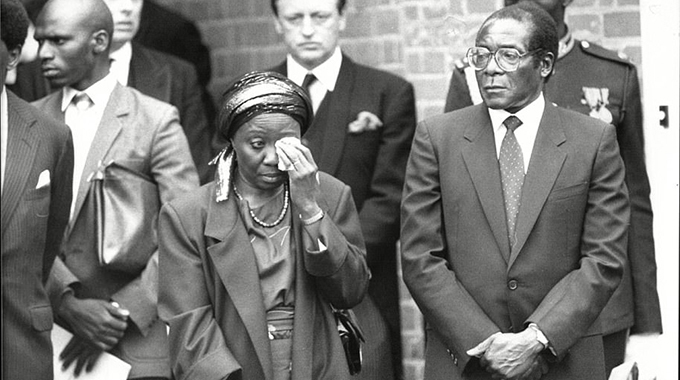
The death of founding father and former president of Zimbabwe Cde Robert Gabriel Mugabe should leave the world reflecting on his lifelong commitment to world justice.
Cde Mugabe will be missed, not only in Zimbabwe, but in Africa and throughout the world because of his stance on human equality and mutual respect.
Everyone should reflect on these principles that were being pushed by Cde Mugabe going back to his early years in politics until his death.
He was a man who stood for his people when it came to empowerment, and wanted to see them progressing together with the rest of the world.
This explains why at independence, one of his earliest economic blueprint was named “Growth with Equity,” which recognised that his Government had inherited a dual economy in which the white minority was privileged at the expense of the impoverished majority.
So, the first pre-occupation was to develop strategies that would address the colonial imbalances, in the process fulfilling the promises of the liberation struggle. Today, Zimbabwe boasts as being at the top in terms of literacy in Africa, thanks to Cde Mugabe’s stance which opened up schooling for the marginalised.
The free education policy that he implemented at independence is legendary and has managed to put Zimbabwe on the world map in terms of transferring skills to other countries.
New schools were built after independence, which ensured that as many people as possible accessed education in their localities. Many strides were made in the health sector, with rural areas having new health centres being built closer to the people. Cde Mugabe had interest in the empowerment of the local people so that they could compete with the rest of the world. His stance on issues like land and indigenisation is a reflection of this stance, which was meant to bring wealth under the control of the local people.
On the international scene, Cde Mugabe was revered for his role in bringing peace to countries like Mozambique, Angola, Somalia and the Democratic Republic of Congo. In most of these cases, he used his diplomatic skills to mediate for peace, as in the case of Mozambique, while in others he contributed in peacekeeping efforts.
Cde Mugabe was the face of regional resistance to apartheid in South Africa and Namibia by supporting liberation movements from the two countries.
As a result of his uncompromising stance when it came to the rights of Africans, Cde Mugabe was increasingly being referred to in the league of giants like former Ghanaian president Kwame Nkrumah.
He did not shy away from speaking against neo-colonialism at such meetings as the United Nations General Assembly, where he usually lambasted the West for being unfair to Africa and the whole of the developing world.
This earned him criticism from Western countries, who misunderstood his fight for equality as being undemocratic. On the contrary, Cde Mugabe was fighting for democratic principles as propagated by United Nations statutes that call for equality in the world to avoid conflicts.
The Western countries were obviously unfair on Cde Mugabe. Instead of rewarding him for pushing for a just world, they imposed illegal sanctions on him and Zimbabwe. This came to bear when Zimbabwe embarked on the Land Reform Programme which brought a new land tenure system favouring black people who were previously marginalised during colonialism. Indeed, the land question was a historical issue dating back to the 1890s when whites invaded the country.
Sanctions imposed as a result, are still haunting the country, and it is time they are removed in honour of his great idea of empowering people to avoid future conflicts over ownership of resources.
For Zimbabwe, we have learnt our lesson that there is nothing that beats an empowered nation, whose people can work and produce for themselves.
In Cde Mugabe, Zimbabwe has lost an icon of the liberation struggle and a Pan-Africanist who spoke for Africa and other developing countries.
There is no doubt that the former President dedicated all his life to the emancipation of his people, and was a giant of the African liberation movement. His quest for total freedom and prosperity should inspire future African generations if we are to establish permanent unity and peace.
Cde Mugabe’s star shone beyond the shores of Africa, and had many admirers, especially in developing countries that seek equality and a just world system. This earned him respect as one of the most influential and courageous African leaders who stood for his people against oppression.
His stance on reconciliation at independence in 1980 was unparalleled, as he urged people to unite for Zimbabwe’s prosperity.
There is no doubt that Cde Mugabe was an extraordinary human being, and as we mourn him, we must always remember that he stood for the creation of a good future for all of us.


 Peter Tanyanyiwa
 Online Reporter