Online Reporter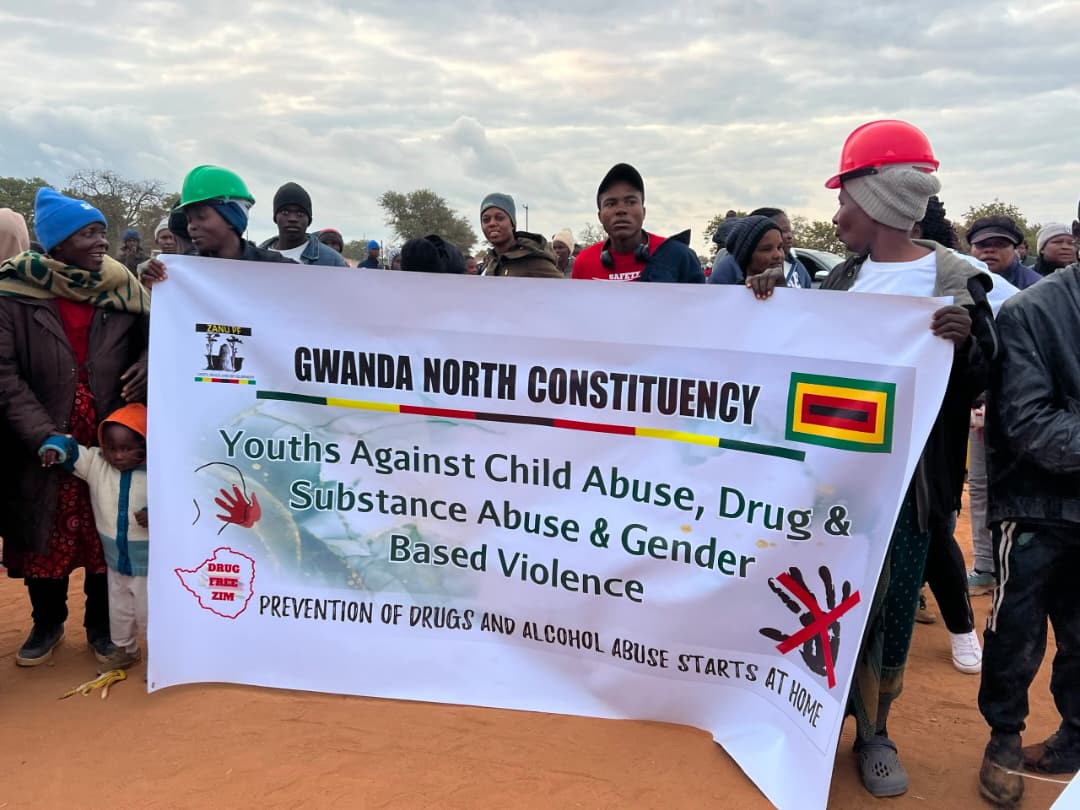
THE anti-drug march held in Makwe Village, Gwanda North, last Saturday sends a powerful and timely message: the fight against drug and substance abuse cannot be won by Government and law enforcement agencies alone. It demands the active participation of communities, families, traditional leaders, churches, schools and every citizen who cares about the future of Zimbabwe’s young people.
Drug and substance abuse has become one of the most serious social challenges confronting the nation today. Across urban and rural areas alike, young people are increasingly falling victim to dangerous substances that rob them of their potential, destroy families and undermine community development. The consequences are visible in rising school dropouts, crime, unemployment, mental health challenges and the erosion of social values.
The initiative by Gwanda North residents, led by Zanu-PF shadow MP Cde Lungisani Ncube and other community leaders, deserves commendation. More importantly, it demonstrates that communities are beginning to recognise that they have a critical role to play in protecting their children and securing their future.
Cde Ncube’s remarks struck at the heart of the problem. Too often, society focuses on those who consume drugs while ignoring those who cultivate, distribute and profit from them. The uncomfortable reality is that many drug networks thrive with the knowledge or involvement of community members. As long as individuals continue to grow, sell or facilitate access to harmful substances, efforts to eradicate the scourge will remain an uphill battle.
The call for communities to hold one another accountable is therefore both necessary and urgent. Parents must closely monitor their children, neighbours must report suspicious activities, and community leaders must refuse to shield offenders regardless of their social standing. Drug abuse is not a private problem; it is a community problem whose effects are felt by everyone.
Equally important is the emphasis on economic empowerment. Unemployment and a lack of meaningful opportunities often leave young people vulnerable to drug abuse and criminal activities. Encouraging youths to participate in productive ventures such as farming, mining and other income-generating projects can provide alternatives that help steer them away from destructive behaviour. The fight against drugs must therefore go hand in hand with efforts to create sustainable livelihoods.
The growing involvement of women in drug trafficking and distribution, as highlighted during the march, is another worrying trend that requires serious attention. Women have traditionally played a central role in nurturing families and communities. Their increasing participation in illegal drug activities represents a troubling shift that calls for targeted interventions, awareness campaigns and economic empowerment programmes.
Statistics showing that nearly 400 people were arrested for drug-related offences in Matabeleland South between January and April this year illustrate the scale of the challenge. However, arrests alone will not solve the problem. Effective rehabilitation, reintegration and support programmes are essential to help those already trapped in addiction reclaim their lives and become productive members of society once again.
The Government’s approach of combining enforcement with rehabilitation and community engagement is therefore the correct path. Yet success will ultimately depend on whether communities themselves embrace the responsibility of fighting the menace from the grassroots.
The march in Makwe Village should not be viewed as a one-off event but as the beginning of a sustained campaign. Awareness must be continuous, vigilance must be constant and community solidarity must remain strong. The future of Zimbabwe’s youth depends on the choices communities make today.
Drug and substance abuse threatens not only individual lives but also the nation’s social and economic progress. If communities unite, reject the drug trade and create opportunities for young people to thrive, the battle can be won. The message from Gwanda North is clear and one that deserves national attention: protecting the youth is