Chronicle Editor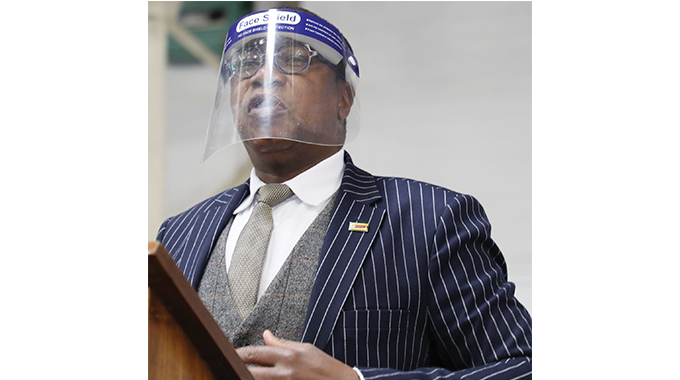
Finance and Economic Development Minister Professor Mthuli Ncube was in Bulawayo on Friday to interact with the local business community.
He met them at the Zimbabwe International Exhibition Centre and had a frank discussion with them over a wide range of issues. Among others, they discussed the future of the national currency 12 months after the Government restored it. Addressing that critical subject, Prof Ncube said the national currency is here to stay and that its future is bright while urging the private sector to support it. He also spoke about fiscal prudence as the basis for macro-economic stability and growth. The Government, he said, will continue to spend within its means.
Yet another matter he tackled was the Covid-19 outbreak and the measures that the Government has put in place to stimulate recovery and post-pandemic growth. In May, the Government came up with a Z$18 billion stimulus package under which companies could borrow at very attractive rates to enable them to weather the Covid-19 storm.
Recognising the adverse impact of the infection on economies worldwide, we were elated that the Government, despite the challenges it is facing, especially regarding the illegal Western sanctions, was able to put together the package. We imagined companies stampeding to seek their share of the package. We have used this space to express fears that the facility was probably too little to cover the needs of the private sector and urged the Government to consider increasing it.
However, the report that we got from the minister has got us thinking. Instead of being swamped with applications and the fund running out, the Government was dismayed by the slow uptake of stimulus package, he said.
“Generally, the private sector is a little bit slow in coming to us to request support from the stimulus package,” our sister paper Sunday News quoted the minister as saying.
“We are inviting you (businesses) to come forward. We want you to be proactive in making sure we support you to resuscitate the economy. This (stimulus package) is a present to you in terms of resuscitating the economy, that’s what we are doing as policy makers.”
When lending conditions were unveiled last month, economic expert and member of the Reserve Bank of Zimbabwe monetary policy committee, Mr Eddie Cross, said the fund was a giveaway.
He is right because successful applicants have a three-month grace period before starting to servicing the loans. Also, interest rates for the facilities will be capped at 20 percent.
Other normal conditions also apply. For example, borrowers are expected to have tax clearance certificates from the Zimbabwe Revenue Authority, be tax compliant and have valid compliance certificate from National Social Security Authority (NSSA). Borrowers must be registered with Zimbabwe Tourism Authority (ZTA) to benefit under the Tourism Sector Support Fund. Companies that have a record of defaulting under previous facilities or require funds for real estate, equities, illegal and speculative activities are not eligible to borrow.
Productive sectors will get the lion’s share at $10,6 billion, while $3,4 billion has been earmarked for budget reallocation, $2 billion set for banks liquidity support, $1,5 billion for wider relief measures, $2 billion to enable the Reserve Bank of Zimbabwe (RBZ) to perform its lender of last resort function, $500 million for tourism support and $200 million for the arts and sports sector. In the productive sectors firms in agriculture, mining and tourism sectors will be prioritised.
At a maximum 20 percent, the interest rate cannot be more attractive. A three-month grace period before paying back is flexible for the borrower.
We, thus, wonder why not many companies have come forward to apply for the giveaway that Mr Cross and many of us think the stimulus package is. If the private sector does not recognise these two major lending conditions — the low interest rate and the grace period — and other normal ones as good enough to raise their interest, it would be useful for them to approach Prof Ncube with suggestions to make the fund much more attractive.
Or is it that the private sector hasn’t been adversely impacted by Covid-19 that they don’t want to be bailed out? If that is so, we would be pleasantly surprised considering the obvious hit that economies worldwide have taken, including ours, because of the pandemic.
Prof Ncube, and we agree with him, is concerned over the poor uptake of the stimulus package. Our message to companies, which was the minister’s on Friday, is that they must apply for funding under the stimulus package now. If they are unhappy with any of the lending conditions, we are sure the Government is happy to engage so that it can me make the necessary changes.


 Online Reporter