Chronicle Editor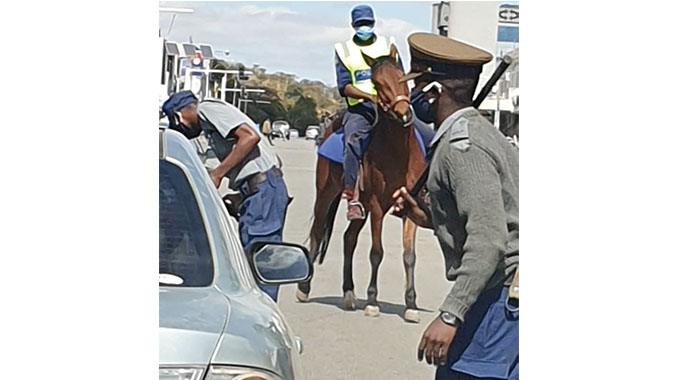
ONE of the reasons explaining the largely manageable Covid-19 cases in Africa has been early and strict lockdowns that countries instituted.
The lockdowns curtailed the spread of the highly infectious disease meaning that fewer people were exposed to it. China also succeeded partly as a result of a full, heavily-enforced lockdown.
In contrast, governments that took their time to lock down their countries or where citizens claimed “human rights” to brazenly violate restrictions in movement have seen high Covid-19 cases.
Tough lockdowns were enforced from January to June, but governments started easing them around July. They reopened their economies, schools, bars and so on but that easing has, unfortunately, triggered second waves of infections. We are seeing that in Europe and the US where, in response to a resurgence of infections, lockdowns are being reintroduced.
We have been blessed that total cases in our country are some of the fewest in the world at 8 786 by Saturday, up from 8 765 on Friday.
However, a worrying trend is emerging from the national figures. On Friday, Bulawayo, a city of 653 330 people according to the 2012 national census, had 13 new positive cases after 181 tests were done. Matabeleland North surprisingly led with 40 new infections on that day. On Saturday, Bulawayo had 12 new cases — the highest on the day — after 213 tests were conducted. The official figures also indicate that on Friday, Harare — a city of about 1,485 million people — recorded zero new cases after 635 tests were done. On Saturday, the capital again recorded zero new Covid-19 cases after 202 tests were conducted.
The statistics we cite are for the two main cities for the two days, but Bulawayo has in recent weeks led on a national scale in new and active cases. Bulawayo has been beating Harare even though the latter’s population is more than double that of the former.
This is concerning. As a result officials are considering to lock down Bulawayo or pick the suburbs with the highest Covid-19 cases for more localised lockdowns.
Minister of State for Bulawayo Provincial Affairs and Devolution, Cde Judith Ncube who chairs the provincial Covid-19 taskforce told our sister paper Sunday News on Saturday:
“We have since instructed the Bulawayo City Council’s health department to give us figures on the hotspot suburbs in the city, after which we will decide whether we do suburb specific lockdowns or lock down the entire city. What continues to be our worry is that the city’s statistics continue to rise hence the need for us to adopt a concerted effort in addressing this issue.”
She made the remarks a day after Vice- President Dr Constantino Chiwenga, who is also the Minister of Health and Child Care had decried complacency among many people. He warned that if people continue to refuse to wear face masks the right way all the time they are out in public spaces, fail to adhere to social distancing or fail to sanitise their hands or wash them regularly with soapy water, the country could be hit by a second Covid-19 wave.
“Despite the manageable casualty toll to date by Zimbabwe,” VP Chiwenga said, “the persistence and progression of the threat require our citizenry to remain alert. It is unfortunate though, that some of the people, in their own wisdom, decided to engage a relaxed mode. It has become a common feature to catch sight of some of our brothers and sisters disregarding wearing of masks. If they wear them at all, most of them are left sagging like a necklace. Scientists have said the virus targets easily those with a weaker health system, but I say it preys on more ignorance, denial and wishful thinking.”
It is most unfortunate that because of lockdown fatigue, some among us are ignoring measures that have served us well in controlling the spread of the disease. Bars are always full. Hundreds are attending funerals and parties.
However, the broad success that the country and others in Africa, have so far recorded thanks to early, strongly-enforced lockdowns should encourage authorities to actively consider tightening restrictions in Bulawayo.
It is tough living under lockdown, but the people of Bulawayo need to appreciate that if authorities take the decision to lock down the city or enforce the regulations more robustly given the worrying statistics, the idea would be to preserve their health and lives.
They must just look at the Covid-19 toll in Europe and the US to begin to sober up, wear the face mask always and the right way, respect that one-metre apart rule, wash their hands regularly with soapy water and stay at home when they do not have anything pressing to do out.
If they are to get out of the home, they must avoid crowded places.



 Online Reporter