

 admin
admin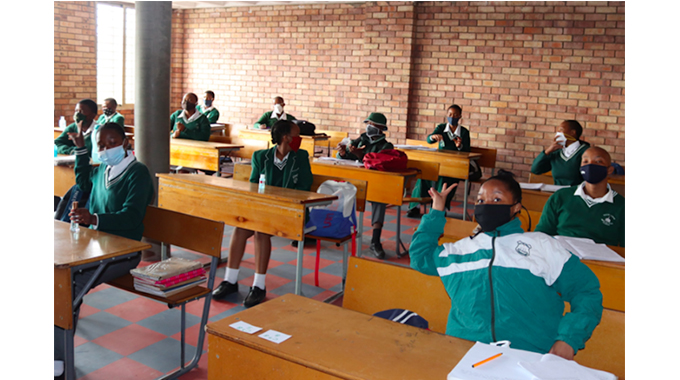
Living in uncertain times where certain variables are always on the move calls for greater versatility and dynamism and thinking completely outside the box. We refer here to the Covid-19 pandemic and the havoc the infection continues to wreak on the world economy, individual countries, different sectors and the toll it has taken on lives. We have lost so much and we continue to lose much more.
The Government has reviewed its earlier stance regarding the reopening of schools, preferring to err on the side of caution by deferring the reopening. This is in view of the rising cases of Covid-19 , now over 1 000. When the pandemic broke out earlier this year, much of the world considered the infection a temporary inconvenience that would soon be gone so that we could go back to our usual routines. We are having to unlearn several assumptions about Covid-19, and also slowly but surely coming to grips with having to adapt to the new reality that Covid-19 will be with us for years to come.
It is against this background that instead of making short-term plans and hope for some magic wand, we should be focusing on longer term plans that accommodate this permanent discomfort of Covid-19. Our budgets are already tailored to cater for infections such as TB, malaria and HIV and Aids, and it is about time we make provision for Covid-19 and treat it as an emergency that shall linger at least a decade so that such projections can assist us in our planning.
For example, while we applaud the Government for deferring the reopening of schools due to rising cases, we should have a vision beyond just this term, beyond even next year on how we shall handle this new disruption. What educationists, just like industrialists, should be doing is to ride the storm but also review the way we have been doing things in our education system. Very few ever imagined people would be forced to work from home this year. We see a gap in our education system whereby parents should be capacitated to educate their children to either maintain their knowledge levels, or at least maintain their interest in formal education.
We need a serious rethink of our education system and structure of delivery, assuming Covid-19 will be with us for much longer than we think.
Our call to parents is that we need to educate ourselves differently, and very quickly, to bridge the gap left by the teachers so that we at least keep our children engaged, and away from delinquency. We cannot come up with new ways if we keep thinking of temporary solutions. Even in South Africa, calls have grown louder for the closure of schools in the face of growing cases. If we do not adapt, we may end up closing our homes. The question is how do we make our educational institutions safer going forward, even in a Covid-19 environment? Food for thought.



 Blessing Chizhande
 Online Reporter