Online Reporter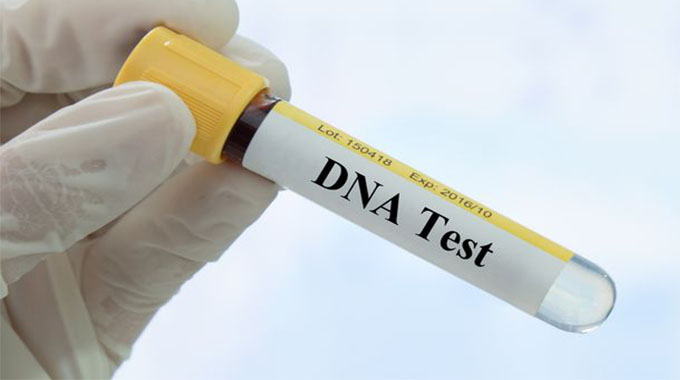
BEHIND the clinical term “backlog” at the National University of Science and Technology’s Innovation Hub lie hundreds of living rooms filled with silence, suspicion, and splintering trust. The delay of over 300 DNA test results is not merely an institutional bottleneck; it is an active agent of familial decay.
For the families caught in this agonising limbo — some waiting since October — every day of uncertainty pours poison into the foundations of their relationships, turning homes into courtrooms of doubt.
DNA testing, at its core, is often a last resort for seeking truth to heal or to resolve. A child’s identity, a father’s responsibility, a sibling’s bond, or an inheritance’s rightful path — these are the intimate building blocks of family. When the objective scientific answer to these profoundly emotional questions is suspended indefinitely, the vacuum is filled with anxiety, accusation, and corrosive speculation.
“The uncertainty is agonising for my family,” one client confessed in a story we carry today. This agony is the real cost of the delay.
The promise of the test was closure. Its prolonged absence becomes a form of psychological torture. A man awaiting a paternity result may distance himself emotionally from a child, fearing attachment to a potential heartbreak.
A woman may interpret her partner’s anxiety as a sign of guilt. Siblings may begin to view each other with sideways glances, wondering about shared blood and divided loyalties. The very act of waiting becomes a daily reminder of the fracture, preventing any natural healing or forward motion. Life decisions — from financial planning to emotional investment — are put on hold, freezing relationships in a state of conflicted paralysis.
This crisis exposes a painful truth: our systems forget that scientific services like DNA testing are not just about producing a report. They are about providing a definitive point from which families can begin to rebuild — whether that means embracing a newfound connection or finding the strength to move apart with clarity.
The anonymous client who stated, “We just need closure,” captured the universal plea. Closure is the antidote to limbo. It allows for honest conversations, painful adjustments, and, ultimately, the reconstruction of trust on a foundation of verified truth, however difficult that truth may be. Without it, families are left in a purgatory of suspicion where trust, once eroded, may never fully reform.
Nust’s commitment to clear the backlog by month’s end is a technical solution to an administrative problem.
But for the families affected, the damage wrought by months of uncertainty may linger long after the results are emailed.
This episode must serve as an urgent lesson: when we invest in national scientific capabilities, we are also investing in social stability.
A reliable DNA testing service is, fundamentally, a service for family preservation and clarity. Its consistent operation must be prioritised not just as a matter of logistics, but as a matter of national welfare.
While reagents can be imported, and backlogs can be cleared, the trust broken between a parent and a child, or among siblings, is infinitely harder to rebuild.