Chronicle Editor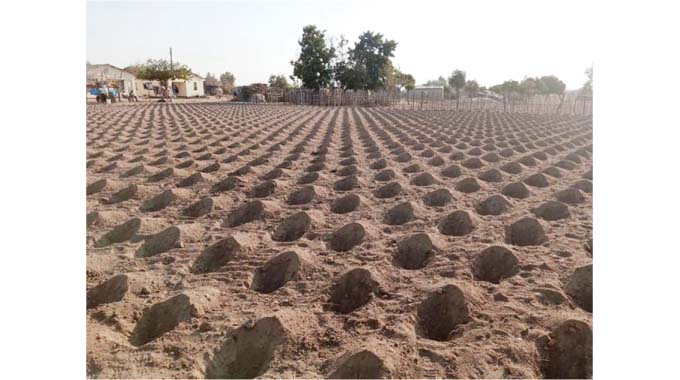
Government has started distributing inputs under the Climate Proofed Presidential Inputs Scheme popularly known as Intwasa/Pfumvudza ahead of the 2022/23 cropping season. Farmers should have long started preparing land for planting especially those that have adopted the climate proofing agriculture.
Government has said it is targeting three million tonnes of maize this coming season in order to ensure the country produces a surplus. Zimbabwe requires 2,2 million tonnes of maize for both human and livestock consumption.
The Intwasa/Pfumvudza programme is this coming season expected to benefit 2,3 million households. Under the programme farmers will receive seed maize, sorghum, pearl millet, soya beans, sunflower or castor beans, sugar beans as well as cowpeas or roundnuts.
The country is expecting to receive normal to above normal rains this coming season hence is expecting a bumper harvest. We have already stated that farmers should have long started preparing land to enable them to plant with the early rains.
Government on its part has already started distributing inputs to ensure farmers receive the inputs before the onset of the rains. Farmers have in the past complained of late distribution of inputs which they say adversely affects yields.
In order to guarantee a bumper harvest this coming season, farmers should not just wait for Government inputs but should instead also buy their own to complement Government support.
Farmers have over the years been receiving Government support and we believe most of them have now been capacitated to fund their farming operations. Farming is a business and as such every year farmers should invest in both equipment and inputs to increase production.
After selling their produce, farmers should set aside enough resources to fund the next season’s production as opposed to just waiting for Government support. Companies involved in the production of inputs such as seed and fertilisers, we want to believe, have produced enough to meet the national demand.
We do not want a repeat of the past when the country ran out of inputs such as Ammonium Nitrate (AN) in the middle of the season thereby affecting yields. Those buying inputs to augment inputs from Government should not wait until the onset of the rains but should instead be buying their requirements now.
Zimbabwe’s envisaged US$8,2 billion agriculture economy can only be realised if all those allocated land fully utilise it.



 Online Reporter