Chronicle Editor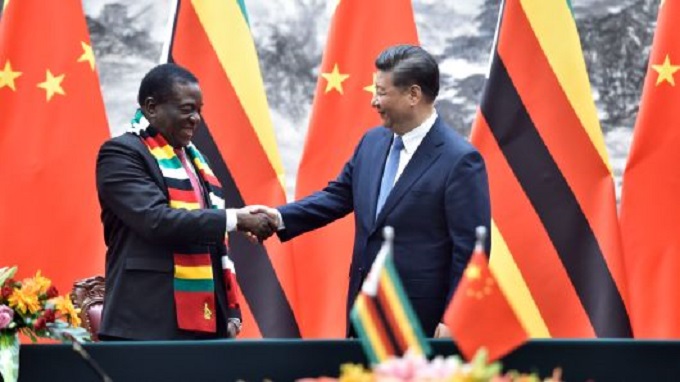
Briefing the media on Covid-19 in Tanzania on April 22, President John Magufuli urged the International Monetary Fund (IMF), World Bank and other international lenders to write off debts owed to them by African countries.
It made sense, he said, for lending institutions to cancel the debts instead of giving Africa fresh loans to help fight the coronavirus outbreak.
Noting that his country pays about US$300 million to international lenders annually, he said that sum, if written off, could boost Tanzania in its fight against the pandemic.
Indeed, Covid-19 has exacerbated the pressure on already vulnerable public health systems in Africa. Governments are having to increase their spending on health, in many cases cutting spending to some economic sectors to focus resources on Covid-19.
The IMF projected recently that Africa’s economic growth will shrink by 1,6 percent this year because of tighter financial conditions, a sharp decline in key export prices and severe disruptions to economic activity linked to the pandemic. With that in mind the IMF, World Bank and other institutions and creditor governments have called for debt relief to encourage post-coronavirus economic recovery. On April 14, the IMF approved US$500 million to cancel six months of debt payments for 25 countries, 19 of which are in Africa.
On its part China, one of the biggest creditors to Africa, has set in motion a programme to do exactly what President Magufuli asked for in April. We have no doubt that he spoke for many of his colleagues across the continent whose economies are suffering as a result of the pandemic and might take a number of years to recover from its adverse, wide-ranging impacts.
Chinese President Xi Jinping announced at a virtual Extraordinary China-Africa Summit on Solidarity Against Covid-19 last week that his government will cancel the debt of relevant African countries in the form of interest-free government loans that are due to mature by the end of 2020. He added that African countries that are hardest hit by coronavirus and are under heavy financial stress, would receive support.
“China hopes that the international community, especially developed countries and multilateral financial institutions, will act more forcefully on debt relief and suspension for Africa. China will work with the United Nations, World Health Organisation and other partners to assist Africa’s response to Covid-19, and do it in a way that respects the will of Africa,” he said.
We feel that Zimbabwe meets the conditions for countries to benefit under the Chinese government’s debt cancellation agenda as enunciated by President Xi. Zimbabwe obviously owes China some debts which Harare has been repaying over the years. However, the Government is likely to struggle to keep pace with those obligations because of the debilitating impact of Covid-19.
Zimbabwe’s sovereign debt to multilateral financial institutions as well as some governments is around US$8 billion, which is a huge sum of money given the prevailing economic challenges. The Government has been fighting hard to repay that debt.
To add to the country’s financial stress, which is one of the pillars of the Chinese debt cancellation programme, Zimbabwe is suffering under illegal western sanctions. China has spoken multiple times and eloquently against the ruinous sanctions and called for their unconditional removal.
The other key condition for countries to benefit under the Chinese debt cancellation plan is that a country must have been hard hit by Covid-19. For now, we can say Zimbabwe hasn’t been hit severely by coronavirus in terms of the number of infections, hospitalisations and fatalities.
As of Monday, the country had tested 63 347 people, 512 of whom tested positive for coronavirus, including 64 recoveries and six deaths. With such figures, we can say yes our country cannot be classified as being “hardest hit” by the disease. Be that as it may, we argue that Zimbabwe broadly meets the criteria President Xi spelt out if one considers the state of our economy and more importantly, the fact that no one knows yet how the disease will progress over the next few months.
That is why we hope that the talks that have started, as our sister paper, The Sunday Mail reported at the weekend, between Harare and Beijing over possible debt forgiveness of the former’s debt to the latter will bear fruit.
We, too, hope that other lenders including the Bretton Woods institutions, the Paris Club, African Development Bank and sovereign creditors will take the route that China is taking.
Our point is Zimbabwe, like many African countries, needs debt cancellation to be able to effectively fight Covid-19 and develop socially and economically in the post-Covid-19 era. Mere debt relief as advanced by the IMF, World Bank and other Western institutions is insufficient to facilitate the swift recovery of African economies and growth post Covid-19 that we aspire for.



 Online Reporter