Chronicle Editor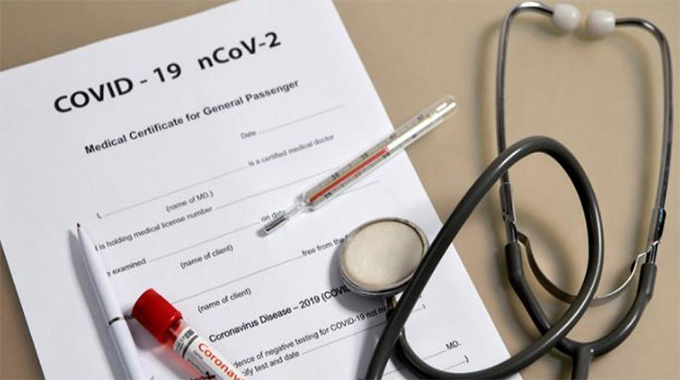
Covid-19 has been a massive opportunity for some businesses.
Technology firms are bouncing as the need for social distancing and imposition of travel restrictions have moved business to online platforms.
Amazon, Apple, Facebook and Google released their financials recently, showing how they have benefited from the coronavirus pandemic. Also, the fortunes of the world’s billionaires and their number have surpassed records despite the pandemic that has, most ironically, sent record numbers of the world’s people into extreme poverty for the first time in more than two decades.
Reports say the world’s richest saw their wealth climb 27,5 percent to US$10,2trillion from April to July this year, up from the previous peak of US$8,9trillion at the end of 2017. Also, the number of billionaires has hit a new high of 2 189, up from 2 158 three years ago.
Locally, we don’t think technology companies such as Econet are doing badly. Businesses that are making products needed for the control of Covid-19 such as hand sanitiser are making it big.
Thus, while Covid-19 has been the worst public health crisis the world has seen in 102 years, it has also been an opportunity. It, however, hurts that criminals see the crisis as an opportunity as well.
When countries reopened their borders recently, at the same time mandating that travellers must present Covid-19-free certificates at ports of entry, the criminals started to make fake certificates and selling them to desperate travellers.
Our sister paper, Sunday News carried a story at the weekend of the arrest of two people and confiscation of 334 blank stamped Covid-19 certificates. It is alleged that the duo were forging the documents and selling them to travellers intending to cross the borders.
They may have started their criminal enterprise last week when the Government reopened land borders for travellers who present valid Covid-19 free certificates obtained within 48 hours. Most laboratories charge around US$60 for a certificate but the scammers are selling them for US$20.
National police spokesman Assistant Commissioner Paul Nyathi said Simbarashe Tsetse (24) and Freddy Katamanga (31) were arrested after originating fake Covid-19 certificates for travellers at Chirundu Border Post.
He said the duo was arrested after a tip-off from members of the public leading to the recovery of 334 blank stamped Covid-19 certificates, two tubes containing glass capillaries, two testing kits, two receipt books, three plastic capillaries, Covid-19 test record register, a methylated spirit bottle and one pack of new needles at their offices.
Just like Covid-19 itself, the production of fake Covid-19 certificates has become some sort of global pandemic as well.
In October, over 100 passengers to Dubai, United Arab Emirates (UAE) were stranded at an Indian airport after the airline they had wanted to fly on rejected their pre-travel Covid-19 test certificate as they were fake. In Kenya last month 21 people were arrested, accused of attempting to use fake Covid-free certificates to travel from that country to the UAE.
Also, a top British newspaper reported in the same month that travellers could use fake Covid-19 certificates in order to board flights from Britain to countries that require passengers to present evidence of a negative test result.
The paper said it had seen evidence of passengers using another person’s negative test result and doctoring the name and date to match their own.
The arrests of Tsetse and Katamanga could only be a tip of the iceberg. It is possible that there is a growing band of criminals who are manufacturing the certificates, selling them to the desperate. These are not common criminals, we say; they are dangerous criminals who must be treated as such.
Their business is dangerous in that some travellers who are Covid-19 positive can be able to travel abroad, facilitating the export the infection to other countries. This can get our country being held in bad light abroad.
Their business is dangerous also because infected travellers can beat the system using the forged papers to then mingle with fellow travellers, who could get infected and return home to infect their families, friends, relatives and their other contacts. This can lead to an explosion in the number of infections in the country.
Their business is hurtful too in that it is theft. By making and selling the certificates, the con artists are stealing from people, some of whom end up being turned away at border posts. They would have lost their hard-earned money buying the fake Covid-19-free documents as well as travelling to the border posts only to be barred from travelling abroad.
However, such losses are avoidable if our people play to the rules – presenting themselves at accredited health facilities for them to be tested for the coronavirus and getting the certificates if they, indeed, are not infected. We appreciate that there is a huge difference between US$60 for a legitimate certificate and US$20 for a fake one but the former would be cheaper in the end.
Production of fake Covid-19-free certificates is a global challenge, we noted earlier, as evidenced by the unearthing of such scams in India, UAE, UK and other countries. This means that there is a big risk of some people seeking to travel or actually entering our country bearing certificates that claim they are Covid-19-free when they, in fact, are infected.
We therefore call upon our border personnel to be extra vigilant in their inspection of Covid-19-free papers so that only those travellers presenting legitimate ones, and only those travellers who are Covid-19 negative are allowed to enter the country without the need for quarantine.


 Online Reporter