admin
admin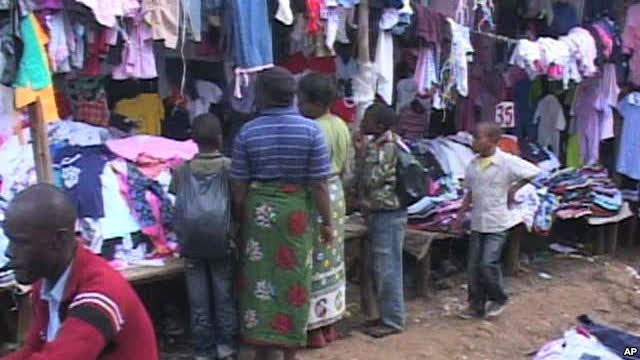
 The country’s clothing industry used to be vibrant, employing up to 35 000 people taking advantage of the high grade cotton produced in fields scattered across the cotton producing belt. In Bulawayo’s industrial sites, many clothing and textile companies thrived, providing a livelihood to thousands. However, since the start of the new millennium, most of these companies have faced problems which have seen them scaling down operations or shutting down completely.
Among the plethora of challenges facing the clothing sector have been obsolete equipment, lack of access to capital and affordable raw materials and the opening up of markets, allowing in foreign competitors with access to new machinery and cheap finance.
While in the early 1990s, local industry was shielded from foreign competition, globalisation has seen the opening up of markets. Most of the clothing items being sold in the country are now imported.
Local manufacturers still in business are finding it difficult to stand their ground in the face of imports. Some of the prices on imported clothing are akin to dumping.
Despite these massive challenges, the local clothing sector reckons it is on the road to recovery. According to the chairman of the Zimbabwe Clothing Manufacturers’ Association, Mr Jeremy Youmans, 600 new jobs have been created in the industry since the beginning of the year.
While 600 jobs might seem paltry for a sector which employed almost six times the number at its peak, creation of new jobs, no matter how few, is better than loss of jobs.
If things were the other way round, the sector could have lost jobs. One sign that things are looking up for the clothing sector is the fact that while the average national capacity utilisation is pegged at about 39 percent, in the clothing industry it’s at 50 percent. This indicates that the clothing sector is faring better than other sectors.
What is now needed is for the momentum gathered so far in the quest to resurrect the clothing industry to be maintained. Financial institutions must help clothing companies secure affordable funding to acquire new machinery that would make the manufacturing processes efficient and enable them to compete with imports.
In this day and age of globalisation, protectionism is out of the question. Companies should not expect the government to protect them from foreign competition by imposing punitive duties and tariffs on imports as happened in the past. However, what the Government can do is to ensure that our borders are not porous so that clothing items are not smuggled into the country.
Rules of origin must also be tightened so that foreign clothing manufacturers do not take advantage of the various trade protocols in the Southern Africa Development Community to get their clothes into the country duty free. Already, they have been reports that some clothes made in the Far East are labelled as having been made in the Sadc region to evade payment of duty.
Once clothing items come into the country duty free, it is virtually impossible for local manufacturers to compete with them on pricing, hence the situation where some clothing items are sold for a “dollar for two”. It does not need an economic fundi to question how an item made tens of thousands of kilometres away can be sold for 50 cents after factoring in transport costs and various duties and the seller still makes a profit.
We believe if the government deals with the issue of smuggling of goods, the textile industry may once again be vibrant. One advantage local clothing has over imports is the quality. Before the turn of the millennium, Zimbabwean clothes used to be exported to lucrative overseas markets where they were highly valued and we believe that with support, the same can happen again.



 Online Reporter