

 Online Reporter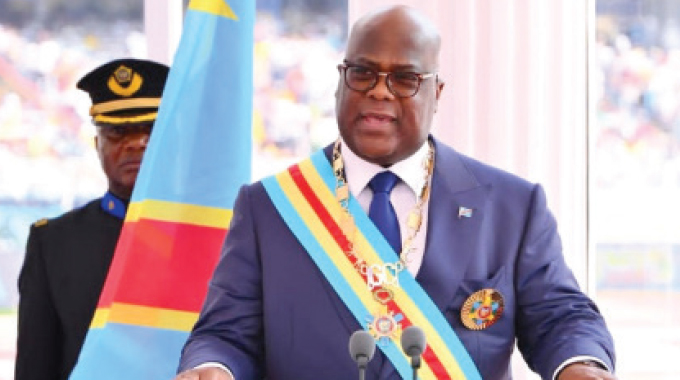
Richard Muponde, Zimpapers Politics Hub
THE crisis in the eastern region of the Democratic Republic of Congo (DRC) needs President Felix Tshisekedi to call for an all-inclusive dialogue involving all warring parties and political formations in the country including M23 and form an all-inclusive government to address the escalating violence.
The M23 rebels, alleged to be backed by Rwandan forces have captured three major towns of Goma, North Kivu and Bukavu, which allow access to Lake Kivu, the commercial hub for DRC and the outside world.
The towns also form the border with Rwanda, which accuses DRC government of harbouring Hutu militia responsible for the 1994 Tutsi massacres and are accused of constantly attacking Rwandan villages across the border.
On the other hand, President Tshisekedi’s administration in Kinshasa is accusing Rwanda of backing M23 rebels to plunder the country’s vast mineral resources.
With reports that over 7 000 people have been killed since January this year and above 7 million internally displaced, is it not the time for President Tshisekedi to call for an all-inclusive dialogue?
The swift advance of the M23 has raised alarm over the possibility of a wider regional conflict, with fears that the violence could spiral outside DRC’s borders.
If dialogue is to be conducted, it surely needs to include DRC political parties, all warring parties, the M23 and Rwanda so that their interests are taken care of to curb future incursions.
SADC and the East Africa Community (EAC) are doing their best to end the war through various initiatives and have ordered an immediate ceasefire and withdrawal of the M23 and Rwanda army from the DRC territory.
The United Nations Security Council has called for a ceasefire, urging all parties involved to halt hostilities and engage in dialogue.
Unconfirmed reports suggest President Tshisekedi is not averse to the idea of a Government of National Unity (GNU).
The proposed, GNU which reportedly aims to include a broader range of political factions within the government, reflects President Tshisekedi’s desire for a more inclusive approach to end the war and achieve peace.
What is worrisome is that the M23 rebels, that has been branded a terrorist organisation, might be included in the government as per the country’s constitutional provisions. Analysts have, however, argued that dialogue with armed groups like the M23 is essential to achieving lasting peace.
Violence in the eastern DRC has intensified in recent months, with reports indicating more than 7 000 people have been killed since January. Despite the SADC, EAC and UN calls for a ceasefire, the M23 rebels have shown no signs of backing down, with calls for an emergency dialogue to avoid the escalation of the conflict.
President Tshisekedi’s engagement in an all-inclusive dialogue involving political parties, armed groups like the M23, and neighbouring states like Rwanda is a crucial step toward achieving sustainable peace. Without such dialogue, resolving the conflict will remain an elusive goal, perpetuating cycles of violence, displacement and economic stagnation.
An all-inclusive dialogue matters because engaging political parties ensures that domestic governance issues are addressed, such as disputed elections, corruption and power-sharing.
Including armed groups like the M23 provides an opportunity to address their grievances and integrate them into peace processes, instead of leaving them to operate as perpetual spoilers.
Rwanda, which has been accused of supporting armed groups like the M23 should also not be left out as it ensures that regional dynamics are addressed and fosters accountability in cross-border relations.
A dialogue that excludes key stakeholders, risks deepening mistrust and prolonging the conflict. Bringing all actors to the table builds confidence and demonstrates a genuine commitment to peace. The DRC conflict is driven by complex factors such as ethnic tensions, resource control and regional rivalries. An all-inclusive approach ensures that the underlying causes are tackled comprehensively, rather than merely addressing the symptoms.
To achieve this, the DRC’s President Tshisekedi should establish a neutral mediation framework consisting of respected mediators from neutral parties (SADC, EAC and international organisations or religious leaders) to foster impartiality.
Already, former presidents Uhuru Kenyatta of Kenya and Olusegun Obasanjo of Nigeria and former Prime Minister Hailemariam Desalegn of Ethiopia were appointed last Monday by the Southern African Development Community (SADC) and East African Community (EAC) blocs as facilitators of the regional peace process in eastern DRC.

The move follows an extraordinary summit of Heads of State and Government from the EAC and SADC held in Dar es Salaam, Tanzania earlier this month to address the ongoing conflict in eastern Congo, where the M23 rebels are battling government forces.
SADC Member states like South Africa and Angola can act as mediators and guarantors of the peace agreements. The EAC can address regional economic integration, fostering cross-border trade and economic development to reduce the incentive for armed conflict.
The EAC’s military force, which is already deployed in parts of eastern DRC, can help enforce disarmament agreements and protect civilians during the transition. Both organisations can monitor the implementation of resolutions, ensuring that commitments made during the dialogue are upheld. They can also provide technical expertise for rebuilding state institutions and reforming resource governance.
The M23 rebel group is the major destabilising force in eastern DRC and excluding them from peace efforts risks continued violence, as they have shown their capacity to disrupt peace and security.
The DRC has some of the largest reserves of cobalt, copper, gold, diamonds, and coltan in the world, essential for industries like electronics and renewable energy. If peace were achieved, the DRC could become an economic powerhouse, contributing significantly to global supply chains.
Decades of war have led to the exploitation of resources by armed groups and foreign actors, depriving the state of revenue and fuelling corruption. Peace would allow the government to regulate resource extraction, attract foreign investment, and use revenues to fund infrastructure, education and healthcare.
An all-inclusive dialogue is critical for achieving peace in the DRC, as it addresses the interests of all stakeholders, including political parties, armed groups like the M23, and regional players like Rwanda.
With the support of organisations like SADC and the EAC, President Tshisekedi can create a framework for lasting peace and security. Ending the conflict would unlock the DRC’s immense potential, transforming it into a global economic powerhouse.
At this moment, a GNU might not be just necessary but an urgent need to abate the continued loss of lives. It can pave the way for a prosperous, peaceful DRC that contributes significantly to the global economy while uplifting its people from decades of suffering.


