Chronicle Editor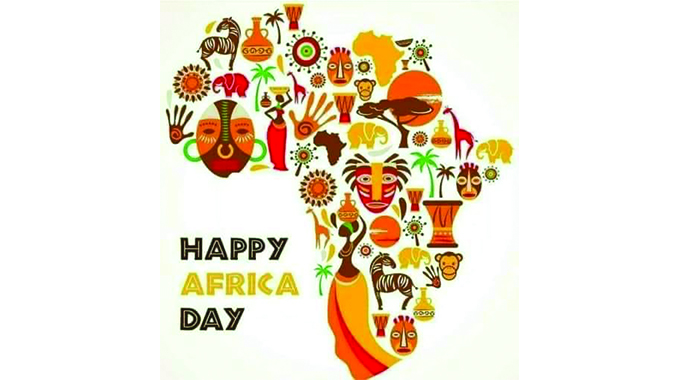
Zimbabwe and the rest of the continent today mark 58 years since the formation of the Organisation of African Unity (OAU), transformed into the African Union (AU) in July 2002.
At its formation in Addis Ababa, Ethiopia on May 25 1963, the OAU’s goal was to coordinate the fight for political liberation of the continent. Then, a few African countries had attained their political freedom, with a majority of them still under the yoke of white colonialism. The few that had won their independence took it upon themselves to help towards the attainment of freedom by others and that thrust was coordinated and amplified through the OAU.
Africa has largely won political freedom, but the continent is still to be free economically hence the continuing efforts to build strong economies that do not rely too much on former colonial masters. We are seeing growing intra-Africa trade and investment which is great towards the new goal of African economic freedom. The African Continental Free Trade Area which started operating at the beginning of this year is yet another concrete step towards that goal.
However, as we march towards economic freedom, it is noteworthy that we locate African heritage and culture in that quest. That is why this year, the AU came up with a theme “Arts, Culture and Heritage: Levers for Building the Africa we Want.” This theme recognises the criticality of African culture and heritage in defining who Africa is. Yes, the continent is free politically, save for Western Sahara, which remains under Moroccan control; yes the continent is moving on the road to economic independence but culture is important in the understanding of what it means being African.
We can actually argue that a people’s culture is their everything. It is their politics; it is their economics; it is their aspirations; it is their symbols. Everything. Without a distinct culture, a people cannot have an economy, cannot have political power.
We are thus, happy with this year’s theme.
Speaking about Zimbabwe, we have been at the forefront of preserving our heritage, specifically liberation heritage, over the past year, even before the AU came up with this year’s theme for Africa Day. Speaking on Heroes Day last year, President Mnangagwa said the Government would honour all freedom fighters starting from the first wars against white domination.
He said the Government will erect statues of eminent liberation icons from the First and Second Chimurenga/Umvukela such as Mbuya Nehanda, Queen Lozikeyi Dlodlo, Mtshane Khumalo, Sekuru Kaguvi, Chaminuka, Mkwati, Chinengundu, Mashayamombe, Mgandani Dlodlo, Chiwashira, Muchecheterwa, Chingaira Makoni and Mapondera.
From the Second Umvukela/Chimurenga, he said, the Cdes Josiah Magama Tongogara, Alfred Nikita Mangena, Robert Gabriel Mugabe, Joshua Mqabuko Nkomo and Simon Vengesai Muzenda will also be honoured.
Today, the President unveils the statue of Mbuya Nehanda in Harare, a momentous occasion that, as indicated, speaks to the theme of Africa Day this year. The timing of the unveiling today could not be more fitting. After today, the Government will intensify work on the statue of General Mtshane Khumalo, the commander of King Lobengula’s Imbizo Regiment which defeated the colonialist Allan Wilson Patrol at the Battle of Pupu in Lupane on December 4, 1893.
Zimbabwe is leading in the writing of the Africa Fact Book, which documents African liberation stories, told by Africans themselves. Also, Zimbabwe was chosen to be the host of the Museum of African Liberation.
Today is also a huge moment as the continent marks Africa Day a few months after the Charter for African Cultural Renaissance entered into force.
The Charter, adopted by the 6th AU Assembly held in Khartoum, the Sudan in January 2006 entered into force in October 2020 upon receipt by the AU Commission of the 15th instrument of ratification of the arts, culture and heritage cultural policy instrument.
The main focus areas of the Charter for African Cultural Renaissance are: promotion of African identity, shared values, the spirit of Pan-Africanism and African Renaissance; development of the creative economy of the continent; protection and conservation of African World Heritage Sites and increasing of African sites in the World Heritage List; development and continued dissemination of regional and continental programmes for the promotion of African identity, shared values, cultural and creative industries and heritage.
The event, according to the AU, will also provide an opportunity for member States to share best practices in the ratification and implementation of the Charter.
We call on all Africans to celebrate today, happy that the continent is basically free politically and is marching towards economic freedom but remembering the place that African culture and heritage holds in that scheme of things.
Let us tell our stories. Let us be proud of our diversity as Africans. Let us be proud of our languages, our food, our attire, everything that defines Africa.



 Online Reporter