Chronicle Editor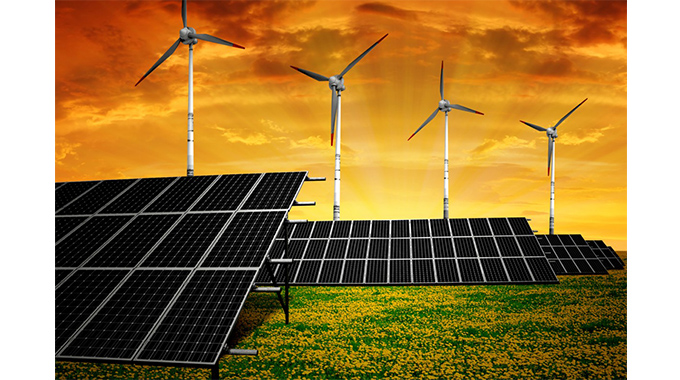
EXPERTS say renewable energy is energy produced from sources that do not deplete or can be replenished within a human’s lifetime. The most common examples include wind, solar, geothermal, biomass, and hydropower. This is in contrast to non-renewable sources such as fossil fuels, according to online blog, Student energy.
It is said renewable energy accounts for 13,5 percent of the world’s total energy supply, and 22 percent of the world’s electricity. In addition, wind and solar are powering a clean energy revolution. Renewable energy systems are a major topic when discussing the globe’s energy future for two main reasons: Renewable energy systems provide energy from sources that will never deplete and renewable energy systems produce less greenhouse gas emissions than fossil fuel energy systems.
Student energy says while renewable energy systems are better for the environment and produce less emissions than conventional energy sources, many of these sources still face difficulties in being deployed at a large scale including, but not limited to, technological barriers, high start-up capital costs, and intermittency challenges.
It is behind that background that we applaud the Government for granting a national status to a renewable energy project being implemented in Bulawayo. Our sister paper, Chronicle reported last week that Government has granted national project status to Bulawayo’s first-ever solid waste-to-energy project, which is being developed by United Kingdom-based Pragma Leaf Consulting Zimbabwe under a special purpose vehicle, Diverseflex Resources (Pvt) Ltd, at a cost of US$150 million.
The project, which will among other things convert council waste to biodiesel, electricity and biogas, is expected to bridge the energy gap in the country while creating more than 2 000 jobs. Projects awarded national project status get preferential treatment, which includes exemption from paying import duty and other taxes. The status is awarded to projects which have significant capital outlay in terms of equipment, services, and skills not presently available within Zimbabwe.
The national project status, granted by the Ministry of Finance and Economic Development, confers on Diverseflex Resources a five-year duty-free window to import eligible equipment and other benefits in terms of Sections 140 and 141 of the Customs and Excise (General) Regulations.
We note that the granting of national project status to the Bulawayo waste-to-energy project demonstrates Government’s support for innovation and economic empowerment of indigenous people. According to Pragma Leaf, up to US$150 million value of investment will be channelled into Bulawayo under the project while more than 300 jobs would be created at the plant and about 2 000 jobs downstream.
The Bulawayo waste-to-energy plant will be the first of its kind in sub-Saharan Africa. It will lead to the safe treatment of waste to produce liquid fuel, green jobs, and ensuring a clean environment. The proposed W2E (Worst to Energy) Plant will process 325 tonnes of waste per day and generate 78 000 to 110 000 litres of biodiesel per day, 6 000 cubic metres of biogas, as well as 11,35 Megawatts (MW) of electricity.
The technological assessment also recommended an operational model that has a phased approach production of organic compost from the 20 percent organic waste generated.
Bulawayo Town Clerk Mr Christopher Dube said the granting of national project status was recognition of the project as being of national interest and due to its great economic impact.
“Once it is complete and up and running, this project will be the first of its kind in the country. It will have a great economic impact, not only on Bulawayo, but on the entire country through import substitutions as well as the introduction of new and innovative technologies,” he said.
We believe more investments should be channelled towards renewable energy projects as they are the future. Authorities should also make sure that the implementation of the renewable energy policy is expedited so that it creates a conducive environment for development of renewable energy in Zimbabwe.


 Online Reporter