Online Reporter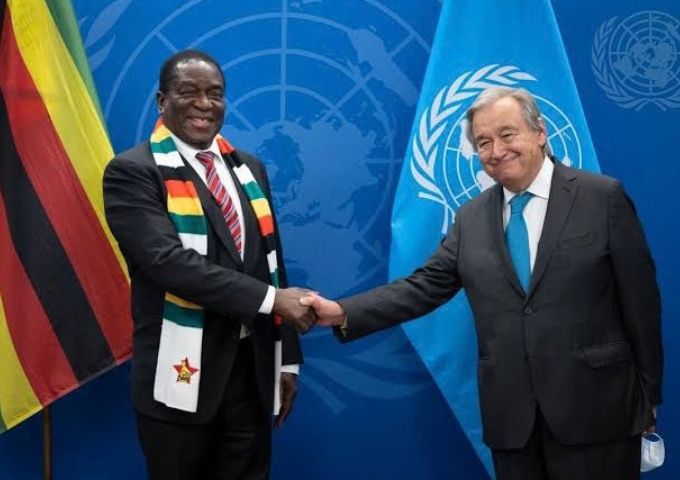
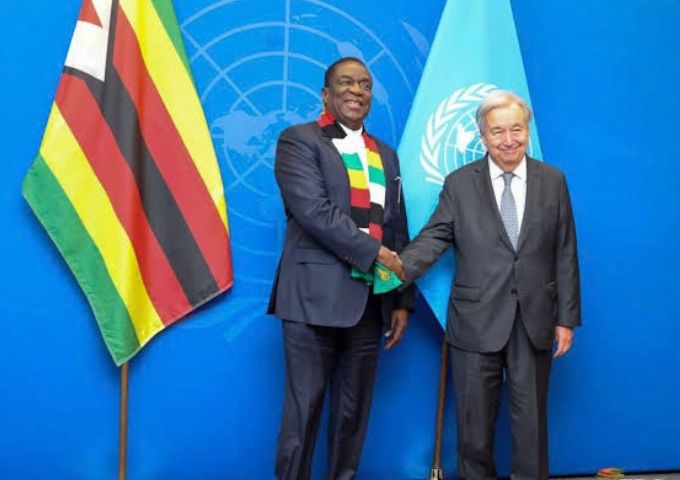
PRESIDENT Mnangagwa’s address to the 81st session of the United Nations General Assembly came at an important moment for Zimbabwean diplomacy.
With Zimbabwe preparing to take up a non-permanent seat on the United Nations Security Council for the 2027-2028 term, the speech was more than a routine statement of foreign policy.
It was a definition of the principles Zimbabwe intends to bring to the Council and, more broadly, to position the country within an international system increasingly marked by conflict, geopolitical rivalry, economic inequality and distrust in multilateral institutions.
The central argument of the address was straightforward: international relations should be governed by dialogue, peaceful settlement of disputes, sovereign equality and respect for international
law rather than confrontation and unilateralism.
The President also argued that the United Nations needs reform if it is to retain the confidence of its members, particularly developing countries.
These themes are hardly unique to Zimbabwe. They are longstanding features of African diplomacy and of debates over reform of the international system. Yet their relevance has grown as wars, economic fragmentation, technological disruption and climate-related pressures expose the limitations of existing global institutions.
One of the most consequential elements of the speech was the President’s emphasis on Africa’s representation in global decision-making. Zimbabwe will join the Security Council alongside the
Democratic Republic of Congo and Liberia as part of the African presence on the Council in 2027. The Council has 15 members, including five permanent members with veto power and ten elected members serving two-year terms.
Zimbabwe therefore enters an institution in which Africa has rotating representation but no permanent seat with veto power.
President Mnangagwa’s reference to the Ezulwini Consensus consequently carries considerable diplomatic weight. African governments have for years argued that the continent should have permanent representation on the Security Council. Zimbabwe’s pledge to advance that position is consistent with the established African Union position rather than an isolated national initiative.
The practical question, however, is how Zimbabwe will translate this principle into diplomacy capable of building coalitions beyond Africa.
That question matters because Security Council reform is not a matter of making a persuasive speech. It requires sustained negotiation among States with very different interests. Zimbabwe’s forthcoming Council membership will provide an opportunity to demonstrate how African priorities can be articulated while still engaging constructively with all members.
Its stated doctrine of being “a friend to all and an enemy to none” is particularly relevant in this regard.
The President’s emphasis on preventive diplomacy and mediation is another potentially significant aspect of the speech. Zimbabwe says it intends to prioritise preventive diplomacy, strengthening the United Nations and African Union, promoting the peaceful use of Africa’s natural resources and encouraging the participation of women and young people in peace processes.
These priorities broadly correspond with the UN Charter’s emphasis on peaceful settlement and with the African Union’s longstanding interest in conflict resolution.
The President was also right to connect peace and development. Conflicts cannot be considered separately from poverty, debt, food insecurity, climate vulnerability and limited access to development finance.
His remarks on the financing gap for the Sustainable Development Goals reflect a wider concern among developing countries that global development commitments are not being matched by adequate resources.
The President also highlighted the importance of adding value to critical minerals in producing countries rather than exporting raw materials without substantial local beneficiation.
For Zimbabwe, this is an especially pertinent argument. The country has sought to present its mineral resources as part of a broader industrialisation strategy.
The same principle applies to President Mnangagwa’s appeal for a more equitable international order.
The speech’s discussion of unilateral coercive measures also reflects Zimbabwe’s longstanding objection to sanctions and other external economic pressures.
The Government argues that such measures harm ordinary citizens and constrain development.
Ultimately, the importance of the President’s UNGA81 address lies less in its rhetoric than in what follows. Zimbabwe has secured a significant diplomatic platform through its 2027-2028 Security
Council membership. The country now has an opportunity to turn familiar African demands — greater representation, fairer financing, respect for sovereignty, peaceful conflict resolution and equitable access to global resources — into practical diplomacy.
The speech therefore establishes a useful framework, but it is only a beginning.
UNGA81 has indeed, given Harare a larger microphone. The next challenge is to demonstrate what it can accomplish with it.