Chronicle Editor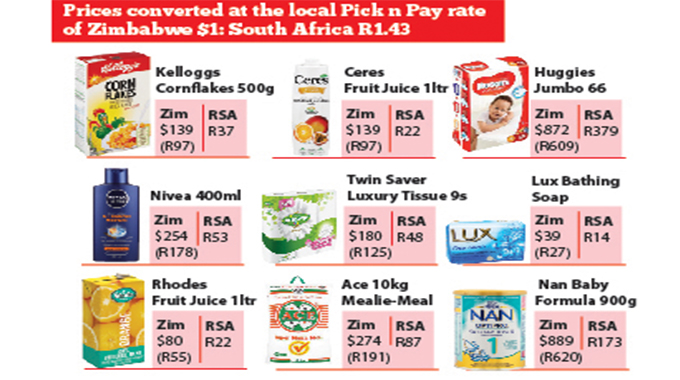
Two American brothers made news last month when they hoarded 17 700 bottles of hand sanitiser and started selling it on Amazon at multiple times higher than the price at which they had bought it.
They had anticipated that Americans grappling with the Covid-19 pandemic would buy the sanitiser at any price.
This angered the general public and authorities in that country who accused the siblings of price gouging, a malpractice where businesses seek to take advantage of demand and supply shocks caused by natural disasters to unjustifiably increase prices of their stock.
Amazon, one of the world’s biggest online stores, immediately pulled down the sanitiser. After being exposed and widely vilified, the siblings offered to donate the items. This week they avoided prosecution and a hefty fine after they reached a price gouging settlement with the US government.
In the US as well, the Texas Attorney General on Thursday filed a lawsuit accusing that country’s largest egg producer of price gouging. It said the company was illegally profiting off the coronavirus pandemic by selling eggs at more than 300 percent of their normal cost.
In South Africa, the national competition commission on Wednesday referred pharmaceutical retailer Dis-Chem to the Competition Tribunal for prosecution for excessive pricing during the coronavirus outbreak. The commission said since the end of last month, it received several complaints against Dis-Chem for engaging in excessive pricing of face masks and other essential hygiene items. It said before the South African government declared the Covid-19 outbreak a national state of disaster, Dis-Chem was selling three types of masks at reasonable prices. However, the price of the surgical face mask blue 50PC had been increased by 261 percent from R43,47 for a unit containing 50 masks in February to R156,95 per unit of 50 masks in March.
Earlier on March 19, President Cyril Ramaphosa’s government had imposed regulations to limit unjustified price hikes and product stockpiling to protect consumers amid the pandemic.
“We are doing this to ensure that we don’t have unjustified price hikes or stockpiling of goods. We are doing this to protect consumers and ensure fairness and social solidarity during this period,” said Trade, Industry and Competition Minister Ebrahim Patel adding that a breach of the regulations could see the concerned party incurring heavy sanctions ranging from R1 million fines, 10 percent of a company’s turnover and jail sentences of a year.
At the same time, authorities in that country imposed controls on the prices of a number of goods that include mealie-meal, cooking oil, wheat flour, rice, sugar; toilet paper, baby formula and disposable nappies among others.
In Rwanda on March 17, President Paul Kagame moved to mitigate the possibility of price gouging during the shutdown period by effecting fixed prices on food goods across the nation and also capped the amount of items an individual could buy per day. Rwanda fixed prices for 17 food items including rice, sugar and cooking oil.
In our country, most retailers are clearly guilty of price gouging, a crime that, as indicated earlier, attracts hefty fines in the US and South Africa. Luckily for local business and most unfortunately for consumers, cases of price gouging companies being prosecuted and heavily sanctioned are rare. Local retailers have price gouged consumers for decades, ignoring Government calls for them to behave. Consumers have become accustomed to the malpractice and business is getting away with it.
Luckily again for local retailers, the Government, instead of prosecuting offenders as is common practice in most jurisdictions, this week persuaded them to reduce prices that had risen unjustifiably during the lockdown that started on March 30. They reached a deal under which business would revert to the prices of basic commodities that were being charged on March 25 and placed a moratorium on the cost of the goods.
We demand that local business sticks to the agreement they reached with the Government by reducing their prices as, by their own admission, the recent increases are unjustified, speculative and not informed by any reasonable economic imperatives.
If any of them choose to violate the agreement which they voluntarily signed up to, the Government would have to harden its position against them. Price gouging is a serious crime in the US, South Africa and elsewhere, attracting enormous punishments for those found committing it. In fact, transgressors quake in their books when found, as the American brothers did to later donate the hand sanitiser they had hoarded and attempted to sell as an unjustifiable price.
There is absolutely no reason why price gouging should be tolerated here.



 Online Reporter