IN the relentless battle against climate change, the Zimbabwean Government has drawn a line in the sand or rather, in the dust. With forecasts pointing to a punishing “Super” El Niño during the 2026/27 summer season, the
Cabinet-approved Summer Plan has rightly placed the preservation of our national cattle herd at the forefront of our climate adaptation strategy.
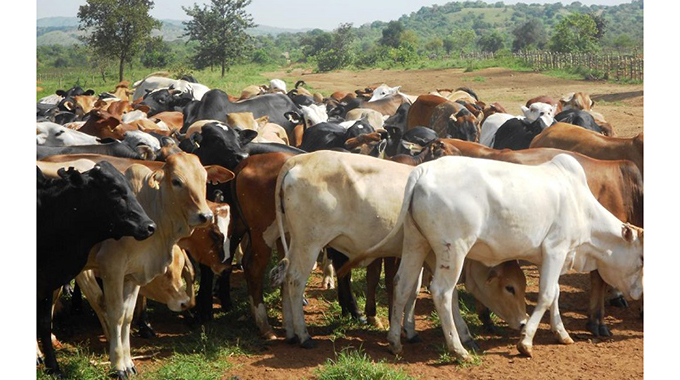
With an estimated value of US$920 million, these 2,24 million cattle are not just livestock; they are the engine of rural livelihoods, the backbone of our agricultural economy, and a strategic national asset.
President Mnangagwa’s administration is demonstrating that it understands a fundamental truth: crop failure is a crisis, but livestock loss is a generational catastrophe. When a farmer loses his herd, he doesn’t just lose income; he loses draught power for the next planting season, milk for his children, and a savings account that accrues interest in the form of calves.
It shatters the resilience of our communal farming systems and sets back rural development by decades. It is heartening, therefore, to see the Government treating livestock protection with the same urgency as crop production.
Permanent Secretary for Agriculture, Professor Obert Jiri, captured this sentiment accurately when he noted that while farmers focus on crops, they often underestimate the delayed impact of drought on animals.
The plan to accelerate fodder production, rehabilitate boreholes and dip tanks, and solarise strategic water points is a pragmatic approach to the immediate crisis. However, for this to succeed, it cannot be a top-down effort. It requires a social contract between the State and the farmer. Professor Jiri’s call for farmers to work closely with veterinary and extension officers is not merely advisory; it is existential.
Critics might point to the enormous feed deficit and question the feasibility of the plan. But to do so would be to miss the point. The Summer Plan is not a guarantee of a rain-free season; it is a mitigation framework. The emphasis on growing traditional grains in agro-ecological regions 4 and 5 is a mature admission that we must farm according to our environment, not against it.
Ultimately, protecting the US$920 million herd is about more than just economics. It is about food security. It is about ensuring that the protein supply chain remains intact so that beef and dairy production does not collapse under the weight of the dry season. It is about sustaining the livelihoods of millions of communal farmers who depend on their cattle for survival.
As we brace for the 2026/27 season, the message is clear: Zimbabwe is no longer a passive victim of weather patterns. Through targeted investment, disease surveillance, and a renewed focus on climate-smart agriculture, we are building an agricultural sector that is modern, productive, and resilient.
In this fight for climate resilience, our livestock are the frontline troops, and we must equip them for battle.