Vusumuzi Dube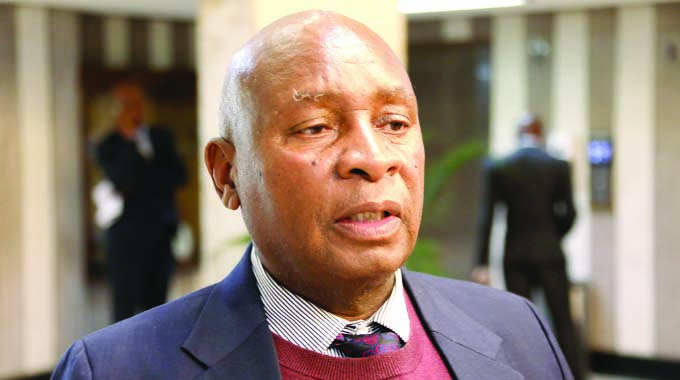
THE Government’s decision to begin re-grading the civil service workforce and implement salary increases from April represents one of the most significant and necessary reforms in Zimbabwe’s public sector in more than a decade. At a time when the country is striving to rebuild state capacity, restore service delivery and advance towards Vision 2030, investing in the welfare and motivation of civil servants is not only prudent, but essential.
For years, Zimbabwe’s public service has operated under a compressed remuneration system that paid vastly different roles almost uniformly, largely ignoring qualifications, responsibility and job complexity.
This system, introduced during the emergency period following the 2009 dollarisation, may have been useful as a temporary stabilisation measure, but it outlived its relevance. The new job evaluation framework corrects this imbalance by aligning pay with skills, experience and job value – a move that brings fairness, transparency and modern human resource practice into the public sector.
A motivated civil service is the backbone of any functional state. Teachers, nurses, engineers, administrators and technical professionals are the frontline drivers of national development. When they are inadequately remunerated, service delivery inevitably suffers. By rationalising salaries and restoring professional differentials, Government is reinforcing a simple but powerful principle: competence and responsibility must be recognised and rewarded. This helps retain critical skills that would otherwise be lost to the private sector or foreign markets.
Beyond individual welfare, the pay review has broader economic benefits. Civil servants form a substantial part of the country’s employed population. Improved earnings mean enhanced purchasing power, which stimulates demand in local economies, supports small businesses and strengthens the tax base. In this way, salary adjustments function not as a cost but as an investment with multiplier effects across the economy.
Equally important is the message this reform sends about governance. Linking remuneration to job evaluation introduces accountability and performance consciousness within the public service. It dismantles the culture of entitlement and replaces it with a system grounded in merit. As Minister of Public Service, Labour and Social Welfare Edgar Moyo observed, the reforms are part of a broader effort to modernise the public service and build a responsive, effective state.
Critics often argue that salary increases strain the fiscus. However, stagnation carries its own cost. An underpaid, demoralised civil service undermines policy implementation, discourages innovation and fuels inefficiency. Sustainable development requires a capable public workforce that sees a future in serving the nation.
The re grading exercise also reflects policy consistency. It dovetails neatly with the National Development Strategy 2, which recognises human capital as a central pillar of growth. Infrastructure, industry and technology cannot advance without skilled people to plan, manage and maintain them.
Paying civil servants fairly is therefore not a luxury but a strategic necessity.
As the reforms take effect, the focus must now shift to ensuring transparency, continuous engagement with workers and fiscal discipline. If managed well, this salary overhaul will be remembered as a turning point – one where Zimbabwe chose to rebuild its institutions by first valuing the people who keep them running.
In strengthening the civil service, the Government is strengthening the nation itself.



 Online Reporter