

 admin
admin
THE adoption of resolution 27/21 and Corr.1 on human rights and unilateral coercive measures by the United Nations Human Rights Council on September 26, 2014, will go down in history as one of the most important days in the history of mankind.
The Human Rights Council resolved that: “. . . unilateral coercive measures and legislation are contrary to international law, international humanitarian law, the Charter and the norms and principles governing peaceful relations among States, and highlights that on long-term, these measures may result in social problems and raise humanitarian concerns in the States targeted.”
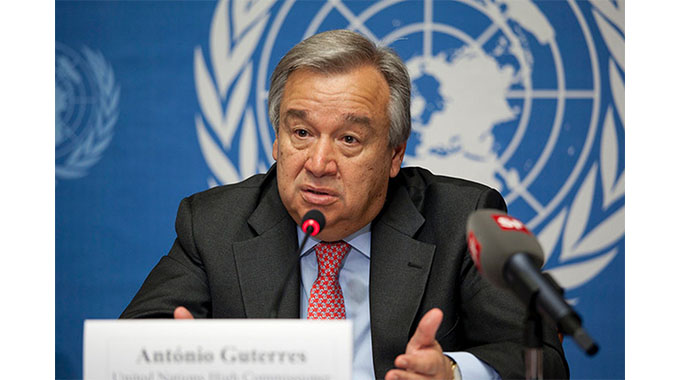
So bad are humanitarian concerns as a result of sanctions imposed on developing nations by Western powers, in 2020 UN Secretary-General António Guterres wrote to G-20 countries calling for the removal of international sanctions to allow countries to fight the coronavirus pandemic.
Such initiatives resulted in the International Monetary Fund (IMF) providing debt service relief to 25 member countries to help them fight Covid-19.
Countries affected by Western sanctions include Cuba, Iran, North Korea, Venezuela, and Zimbabwe.
The African Union Bureau of Heads of States and Governments time and again called for the immediate lifting of economic sanctions on Zimbabwe and Sudan to assist the two countries in fighting the Covid-19 pandemic, but to no avail.
United Nations Special Rapporteur Dr Alena Douhan’s visit to the country to get first-hand information on how sanctions are affecting ordinary Zimbabweans also gave insight on the effects of coercive measures.
Reads a Reliefweb summary of her final report: “She concludes that sanctions, including secondary sanctions, and different forms of overcompliance by foreign banks and companies have had a significant impact on the population and the Government, exacerbating pre-existing economic and humanitarian challenges. She recommends lifting unilateral sanctions in line with the principles of international law; avoiding de-risking policies and overcompliance in accordance with the due diligence rule; and engaging in meaningful structured discussions on political reform, the rule of law and human rights.”
Social problems and humanitarian concerns caused by illegal sanctions imposed on Zimbabwe by the US and her allies, took centre stage yesterday during the second day of the Sharm El Sheikh Implementation Summit at the UN Climate Change Conference COP 27.
Addressing the summit, President Mnangagwa said the country’s efforts in mitigating climate change have been hampered by illegal sanctions.
As we report in this issue, the President further said the agriculture sector — a major pillar of Zimbabwe’s economy — is facing a serious threat from climate change.
“My Government is implementing various programmes, including extensive dam construction projects towards climate change adaptation and mitigation for sustainable food and nutrition security. Further, Zimbabwe is expanding the production and use of renewable energy,” he said.
“Greater progress would have been made on our climate goals were it not for the albatross of illegal economic sanctions imposed on our country. We demand the immediate lifting of these unwarranted and punitive sanctions.”
What the President said is in line with the demands of the African Union, which has condemned the negative impact of continued sanctions.
What the President said is in line with what the United Nations Human Rights Council said about the long-term effects of these coercive measures which “are contrary to international law, international humanitarian law, the Charter and the norms and principles governing peaceful relations among States”.
What the President said is in line with United Nations Special Rapporteur Dr Alena Douhan’s findings that sanctions imposed on Zimbabwe are “exacerbating pre-existing economic and humanitarian challenges”.

The UN Climate Change Conference must condemn illegal sanctions imposed on Zimbabwe by America and like-minded Western nations. The climate change crisis is already doing enough harm on Zimbabwe.
To add sanctions to the country’s problems, is plain evil.


 Blessing Chizhande
 Online Reporter