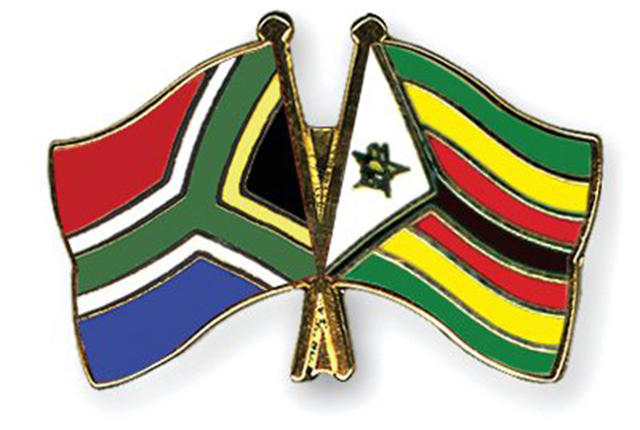
SOUTH AFRICA and Zimbabwe are not just close neighbours, but for most of the last 135 plus years have had exceptionally close economic and trade ties.
Where we have managed to do things well, creating extra value on both sides of the Limpopo River, everyone wins because as close neighbours with similar markets, when our peoples have more money the neighbour picks up a decent chunk of the extra spending simply because we can be each other’s most efficient supplier.
Where we drift into strong protectionism, national autarky and other restraints, we both lose out.
In the colonial-settler and apartheid days there was a tendency for quite large blocks of South Africa business to see Zimbabwe as a captive market, and while in more recent decades this has been diminishing and in some cases completely overturned, traces remain.
Political relations have been very good since 1994, when South Africa achieved full democracy, and this can be seen right across the full range of Government interaction right up to the present determination to open borders as widely as possible.
Business-to-business relations can be sometimes more difficult although when there is determination in any particular relationship they can be the practical way of leading both countries towards more prosperous futures.
More trade, closer economic ties, with neighbours in both directions is not a zero-sum game working out how to divide a static fixed combined market. Rather it must be seen as adding value on both sides of the border and creating new wealth, which creates jobs and markets on both sides of the border.
Competition will always be there, but it needs to be competition on quality, price and value not on artificial barriers.
Zimbabwe’s exceptionally high rate of economic growth is built on the Second Republic’s determination to get this right, opening up to investment and making sure that our now accelerating industrial concerns understand these fundamentals.
We can see smarter business ties in the South African investment into some of our more traditional mining operations, including platinum group metals, and the astonishingly close relationship between South Africa’s largest agro-industrial company and Zimbabwe’s largest agro-industrial company.
When everyone is adding value and making money the neighbourly relations obviously get warmer.
But we can go further in both the present sort of business-to-business relations and by opening new doors and new areas of business co-operation at ever higher levels.
During the recent Business Forum running alongside the Fourth Zimbabwe-South Africa Bi-National Commission both President Mnangagwa and President Cyril Ramaphosa enthusiastically urged the 250 business leaders present from both countries to move beyond just traditional trade into investment, industrialisation, innovation and value addition.
This again has to be part of the regional and continental response to modern global changes, fragile supply networks and the like.
SADC is already shifting into becoming a serious advocate for far more regional industrialisation.
Even the most industrialised regional economy, that of South Africa, is way behind advanced developed countries when measured against its potential.
Zimbabwe probably has the second largest industrial base, but it is only very recently that manufacturing became the largest single contributor to the national economy and there is a long way to go before it overtakes, say agriculture, as the largest employer.
Other countries in the region are building their industrial bases, both in consumer products and in processing their huge agricultural and mineral riches.
We tend to complement each other in resources so marching forward together is not impossible or even that difficult.
It is in fact the smart way forward, as a richer region, better off populations and the like mean we can advance ever faster.
But we also need, as the two Presidents noted, move far beyond bilateral and regional agreements and do far more on the practical side, the business and investment side, to make all our dreams a reality in the modern world.