Online Reporter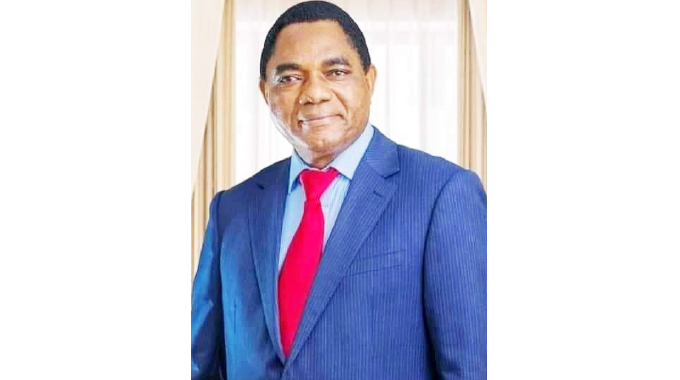
Clarkson Mambo
PRESIDENT Hakainde Hichilema has secured a second five-year term in office following the August 13, 2026 general elections, which regional and international observers largely endorsed as peaceful, credible and well organised, reinforcing Zambia’s reputation as one of southern Africa’s most stable democracies.
According to final results announced by the Electoral Commission of Zambia (ECZ), Hichilema garnered 2 965 326 votes, representing 60,7 percent of the total vote, comfortably defeating his closest challenger, Brian Mundubile of the National Reconciliation Party for Unity and Prosperity (NRPUP), who received 1 856 217 votes or 38 percent.
A total of 5 028 616 ballots were counted, of which 4 902 050 were declared valid while 126 566 were rejected.
Hichilema’s vote tally surpassed the 50 percent-plus-one threshold required under Zambia’s Constitution for the outright election of a president, enabling him to avoid a run-off and secure victory in the first round.
“I, therefore, declare Hichilema Hakainde S, to be president-elect of the Republic of Zambia this 18th day of August 2026,” ECZ Chairperson Mwangala Zaloumis said.
Reacting to his victory, Hichilema thanked Zambians for the confidence they had placed in his leadership.
“This election showed the world who we are: a nation of peace, a nation of law and order, a democratic nation that settles our differences at the ballot box, and nowhere else,” he said.
The Zambian leader pledged to govern inclusively and ensure that all citizens benefit from national development programmes regardless of political affiliation.
“The people have spoken and we now turn our focus to building even greater peace and prosperity, and we remain One Zambia, One Nation, One people.”
In a message issued before the final results were announced, Mundubile appealed for calm among his supporters and urged them to respect the rule of law.
“Remain calm and remain peaceful. Do not take the law into your own hands.”
The remaining 12 candidates on the presidential ballot each failed to secure more than 20 000 votes, highlighting the extent to which the contest had become a two-horse race between Hichilema’s UPND Alliance and the Tonse-Pamodzi Alliance led by Mundubile.
Results from five constituencies representing 84 224 votes were still outstanding at the time of the official declaration, but the ECZ said these would have no material effect on the final outcome.
The commission had yet to release the full results of the parliamentary elections.
Voter turnout stood at 57,23 percent, with 5 028 616 of the country’s 8 786 300 registered voters casting their ballots. The election was particularly significant as it was the first to be conducted under the Constitution of Zambia (Amendment) Act 2025, which introduced far-reaching reforms to the country’s electoral system.
Among the major changes was the expansion of the National Assembly from 156 to 226 constituency-based seats, alongside the creation of 40 proportional representation (PR) seats reserved for women, youths and persons with disabilities.
These PR seats comprise 20 seats for women, 15 for youths and five for persons with disabilities.
The seats are not presidential appointments but are allocated to political parties according to their share of the national vote, using party lists submitted before the election.
According to the ECZ, the arrangement “broadens democratic participation by enhancing inclusivity and ensuring improved representation of women, youths and persons with disabilities.”
The constitutional amendments also imposed a ceiling on presidential nominations to Parliament, limiting nominated members of Parliament to a maximum of 11, or five percent of constituency-based seats. The measure is intended to reduce executive influence and strengthen elected representation.
The National Assembly now comprises elected members, proportional representation members, the Vice President, Speaker and two Deputy Speakers under the revised constitutional framework.
Regional and international observer missions broadly endorsed the elections while identifying governance and legislative issues requiring attention ahead of future polls.
The Southern African Development Community (SADC) Electoral Observation Mission (SEOM) noted that the political environment in most deployment areas was generally peaceful, with many stakeholders describing conditions as improved compared to the 2021 elections.
The mission also highlighted several positive aspects of the electoral process, including the preparedness of the ECZ, transparent verification and handling of election materials, and the effectiveness of conflict-management committees.
However, SEOM identified the absence of legislation governing political party funding and accountability as “the most significant structural gap in the framework governing these elections.”
The mission also recommended reforms relating to media freedom, ballot secrecy and the timing of electoral law amendments to ensure stakeholders have sufficient time to prepare for future elections.
SEOMs are mandated to assess elections against the SADC Principles and Guidelines Governing Democratic Elections, regional standards adopted to promote transparent, peaceful and credible electoral processes across member states.
Several countries in the region, including Malawi, Botswana, Mauritius, Mozambique, Namibia and South Africa, have conducted credible elections over the past three years, reflecting a broader trend towards democratic consolidation in southern Africa.
The Electoral Commissions Forum of SADC Countries (ECF-SADC) urged “all electoral stakeholders to exercise restraint and address all grievances through the legally established mechanisms” after the ECZ temporarily suspended vote counting on August 14 due to security concerns.
The Joint African Union-COMESA Election Observation Mission (AU-COMESA EOM) also praised Zambians for peacefully exercising their democratic rights but cautioned that “the integrity of the results management process depends on strict adherence to the legal framework.”
The mission similarly drew attention to the continued absence of legislation regulating political parties.
Hichilema’s victory concludes a campaign anchored by the broad-based UPND Alliance, which expanded to 15 member parties ahead of the elections, including a Patriotic Front (PF) faction led by Miles Sampa.
The alliance campaigned on a platform centred on economic stabilisation, job creation, debt restructuring achievements and the enactment of legislation making free education a legal right. It also faced criticism over the high cost of living and restrictions on outdoor political rallies.
Mundubile, meanwhile, led the Tonse-Pamodzi Alliance, formed through a merger of the Tonse Alliance and the PF Pamodzi Alliance after the ineligibility and subsequent death of former president Edgar Lungu fractured the original opposition coalition.
The Tonse-Pamodzi Alliance campaigned on pro-poor economic policies and the infrastructure development legacy associated with former presidents Michael Sata and Edgar Lungu, while smaller political groupings, including the Socialist Party-led People’s Pact under Fred M’membe and the Orange Alliance led by Harry Kalaba, mounted more limited challenges to the UPND’s dominance.