Online Reporter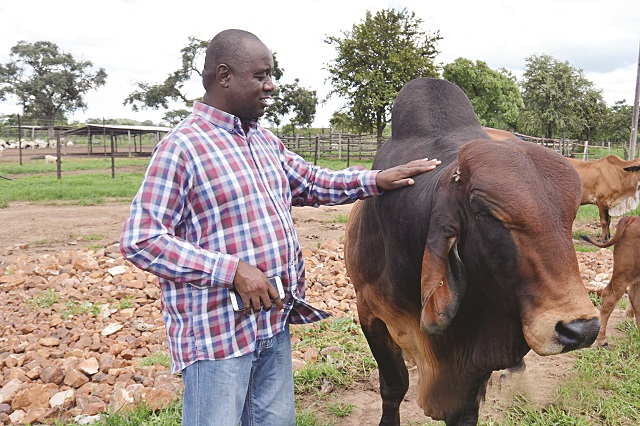
Lonster Mutata
Herald Correspondent
A bold shift towards commercially driven communal livestock production took centre stage at the country’s inaugural communal beef field day held at Sonke Farm in Zvavahera, Masvingo Province, recently.
This comes as the Government has intensified efforts to transform cattle rearing into a high-value, market-oriented enterprise anchored on productivity, value addition and rural industrialisation.
Deputy Minister of Lands, Agriculture, Fisheries, Water and Rural Development, Davis Marapira, said the field day marked a practical demonstration of the country’s transition from subsistence livestock keeping to commercial beef production systems.
“We are here to witness a clear transition from subsistence to commercial beef production — from simply rearing cattle to adding value through pen fattening,” he said.
“What is happening at this farm sets a pace that other communal livestock farmers must emulate.”
Deputy Minister Marapira said the initiative aligns with national development goals under Vision 2030, positioning livestock as a key pillar for inclusive rural transformation, while announcing a strategic push towards decentralised agro-processing, including the upcoming commissioning of a butchery in Gutu on 9 May 2026.
Providing technical guidance, Director for Livestock and Fisheries Production, Mr Milton Makumbe, said the country is focusing on unlocking value within the national herd, which stands at 5,7 million cattle, through structured herd management and market-oriented disposal of unproductive stock.
“We want farmers to start selling excess cattle, including surplus bulls and oxen, as well as unproductive cows,” he said.
“This will reduce pressure on grazing land and improve overall herd efficiency.”
Mr Makumbe noted that low cattle consumption rates, estimated at 41 percent, reflect both nutritional and production inefficiencies, urging farmers to adopt better breeding ratios and improve herd productivity through strategic culling and controlled breeding systems.
He added that feedlot success depends on selecting suitable animals, ensuring consistent feed supply, and guaranteeing adequate water access, adding that while indigenous breeds remain valuable for grazing systems, crossbreeding and continental breeds perform better under pen fattening conditions due to higher feed conversion efficiency.
Farm manager Mr Gamaliel Makuvara said the Sonke Farm model is not only advancing commercial communal beef production but is also actively transferring skills to surrounding communities through free training programmes.
“We do not buy feeds; we do on-farm feed formulation,” he said, noting that the approach has strengthened cost efficiency while improving farmer learning and adoption of modern livestock systems.
The field day concluded with a strong consensus that Zimbabwe’s communal livestock sector is entering a new era defined by discipline, productivity, and value addition — with Sonke Farm emerging as a practical blueprint for rural industrialisation and livestock commercialisation.