Online Reporter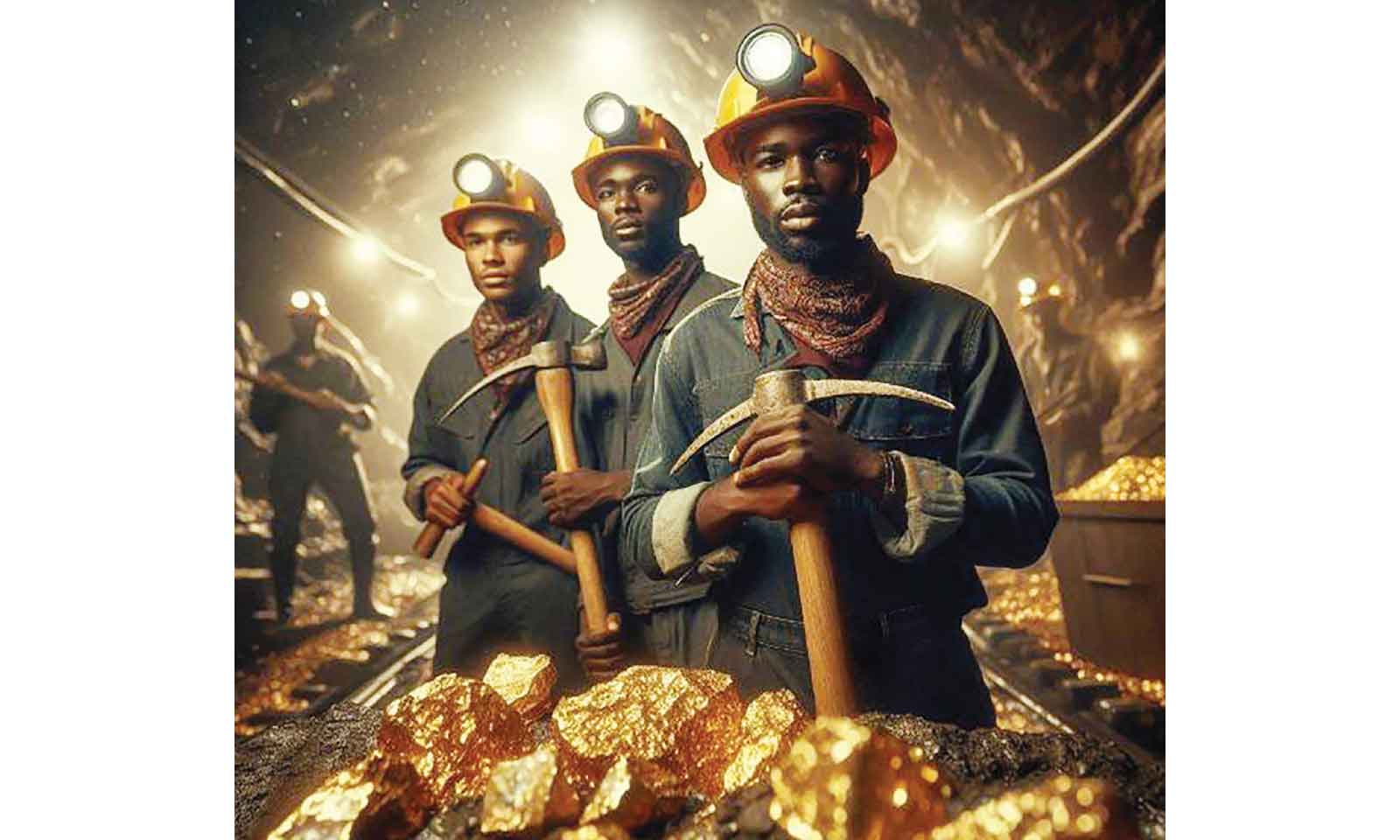
Communion with Bishop Lazarus
Phew!
What a tumultuous year it has been for the world this year, what with the erratic and volatile man that currently occupies the White House.
Washington has been extraordinarily busy of late, churning one absurd policy after the other with obscene regularity and haste, and the world does not know what to expect next.
We are really living in strange times.
And for a man who came to power promising world peace and coveting the Nobel Peace Prize, Trump, like a firebug, has ironically been lighting new fires around the world.
The war in Eastern Europe, which began when Russia launched its special military operation in Ukraine on February 24, 2022, is dragging on, with a seemingly Russophile Trump sending mixed signals to Washington’s proxy, Kyiv, which he wants to concede.
On its part, Russia, which has pivoted to a war economy to both sustain its military campaign and insulate itself against the avalanche of sanctions from Washington, London and Brussels, has continued its siege of embattled Ukraine.
In all this, Moscow has shown its redoubtable might against the warmongering NATO.
Mindful of the fact that China might overtake the United States and become the world’s biggest economy by 2030, as forecasted by economists at HSBC Holdings and the International Monetary Fund in 2018, Trump this year continued his trade war with Beijing, but it did not quite work out as planned.
The imposition of steep tariffs on China by the US — part of broad measures curiously dubbed “Liberation Day tariffs” introduced on April 2 and ostensibly meant to narrow trade deficits with its trading partners — was met with a proportionate but devastating response from Beijing on April 4, which placed export restrictions on rare earth elements, squeezing supply to the West of minerals used to make weapons, electronics and a range of consumer goods.
Remember, China is the world’s largest producer and processor of rare earths, controlling roughly 70 percent of mining and over 90 percent of refining, making it dominant in the entire supply chain from raw ore to finished products.
The Asian giant also added 16 US entities, including 15 companies from the defence and aerospace sectors, to its export control list, blocking the export of dual-use items to those companies. An additional 11 US companies were placed on China’s “unreliable entity” list, giving Beijing the right to impose penalties such as bans and fines. Faced with such a huge and potentially paralysing blow, Trump blinked first and sued for peace.
It effectively delivered the message home that China cannot be messed with and that a multipolar world is now here with us.
China could not have made the point clearer by showcasing to the world its impressive advanced military capabilities through the Victory Day Parade on September 3, which was also attended by President ED. Much of the post-parade attention was on its new long-range nuclear-armed weapons, like the DF-61 intercontinental ballistic missile, as well as the new mobile truck- and ship-mounted laser air defence weapons.
Missiles with hypersonic glide vehicles, which can carry warheads at speeds greater than five times the speed of sound, were also on display, including an impressive array of drones and state-of-the-art stealth fighters.
“What the Chinese are demonstrating here is an ability to develop advanced military capabilities by themselves, deploy them operationally and do it faster than what you are seeing happen in the West,” Malcolm Davis, a senior analyst in defence strategy at the Australian Strategic Policy Institute, later told CNN in an interview.
Hypocrites
Clearly fearful of picking on a country its own size, the US is now intimidating little Venezuela, which is obviously being targeted because of its fabulous oil resources.
With the world’s largest proven oil reserves, estimated at over 300 billion barrels and exceeding those of Saudi Arabia, Venezuela finds itself facing the same calamitous fate as Iraq, Libya and Syria, whose regimes were toppled to facilitate the industrial-scale pillage of their oil resources by the West, led by the US.
As Bishop Lazi writes this, Washington has already amassed an unusually large force in the Caribbean Sea and waters off the coast of Venezuela.
And the reason the Americans are using to justify the potential invasion of this South American country is as absurd as it is ludicrous.
Venezuela President Nicolás Maduro, we are told by Trump, is part of a drug cartel that is supplying drugs to America.
So, a possible war against Venezuela is being framed as part of an anti-drug trafficking campaign. Dear reader, you can only believe this mendacious claim if you are oblivious of the history of America’s Central Intelligence Agency (CIA)’s role in drug trafficking for nearly a century. You see, the CIA’s relationship with drug trafficking is not a myth.
It is a documented pattern, primarily arising from its purportedly tactical and strategic alliances with drug-producing or drug-trafficking assets during proxy wars.
History provides us with substantial proof of systemic tolerance, protection of known traffickers and a subordination of counter-narcotics to geopolitical goals.
A few examples might suffice.
In the late 1940 and early 1950s — a time during the Cold War period, which pitted the Soviet-led Eastern bloc against the Western-led Western bloc — the spy agency protected Corsican criminal syndicates in Marseille, France, especially figures like Paul Carbone who were involved in the heroin trade, in exchange for help fighting French Communists and controlling the vital port forming part of the infamous “French Connection” heroin network that supplied the US.
During the Vietnam War in the 1960s and 1970s, the CIA conducted a “Secret War” in Laos, supporting Hmong tribes and other forces against Pathet Lao communists.
Its principal tribal proxy, General Vang Pao, and other allies were deeply involved in opium production and trafficking in the Golden Triangle — Laos, Thailand and Burma.
CIA-supplied aircraft were sometimes used to transport the drugs.
Investigative reporting, congressional testimony and declassified documents have since substantiated these connections.
Also, in the 80s, during the Soviet-Afghan War, the CIA, through Pakistan’s Inter-Services Intelligence, funnelled billions in weapons and aid to the Afghan Mujahideen rebels.
To fund their war, many Mujahideen commanders turned to opium cultivation and heroin production.
The agency, which was obsessed with expelling the Soviets, paid a blind eye to the opium trade. Not surprisingly, the period saw a massive expansion of Afghan opium production, leading to a glut of heroin in Europe and, later, globally.
Probably the most common and famous scandal that even led to official investigations in the US during the same period was the Ronald Reagan administration’s support for the Contra rebels fighting Nicaragua’s Sandinista government.
As was the script elsewhere, CIA-linked Contras and their suppliers were involved in smuggling cocaine into the US to fund weapons. The CIA’s own Inspector-General report in 1998 found that the agency “did not inform on or take action to stop” known drug traffickers, and that “officials did not treat the drug issue as a high priority”.
It identified more than 50 Contras and Contra-related entities implicated in the drug trade.
Similarly, in Panama, the agency supported their long-time asset, Manuel Noriega, a military leader who provided intelligence and support for Contra operations.
Ironically, Noriega was also known to US drug agencies as a major facilitator of the cocaine trade. The CIA continued its relationship with him despite evidence of his drug trafficking, until his activities and political actions finally led to the US invasion of Panama in 1989. Kikikiki.
You might say the Bishop is just bringing up old cases to sully the image of the CIA and the US.
Far from it.
There is actually a recent case that shows us that a leopard will never change its spots.
Well, exactly 20 days ago, on December 1, Trump pardoned former Honduran president Juan Orlando Hernández who was servicing 45 years in a US prison for helping move tonnes of cocaine to America.
Trump’s political calculus was premised on the assumption that releasing Hernández would boost his party’s prospects to win the election against the ruling LIBRE party in the just-ended elections.
How absurd!
Sum total, it is not about drugs but about oil.
Jeremiah 9: 3-6 says: “‘They make ready their tongue like a bow, to shoot lies; it is not by truth that they triumph in the land. They go from one sin to another; they do not acknowledge me,’ declares the Lord. ‘Beware of your friends; do not trust anyone in your clan. For every one of them is a deceiver, and every friend a slanderer. Friend deceives friend, and no one speaks the truth. They have taught their tongues to lie; they weary themselves with sinning. You live in the midst of deception; in their deceit they refuse to acknowledge me,’ declares the Lord.”
Elephants fighting
So, overall, despite the US’ hook-and-crook tactics, China’s rise has proved irrepressible.
Its trade surplus has surpassed US$1 trillion this year for the first time.
In November alone, its trade surplus rose US$111,7 billion to notch up a cumulative surplus of US$1,08 trillion in the first 11 months of the year, up 22,1 percent from the same period last year.
The Asian giant’s full-year trade surplus is set to rank as the largest (as a percentage of global GDP) in recent history and will be roughly on par with the extraordinary surpluses that the US recorded during the Second World War.
This tells us one thing: As the competition for global pre-eminence takes centre stage, the scramble for resources will only get worse, which is ominous to this part of the world scandalously blessed with strategic minerals.
This has largely shaped Washington’s dealings and relations in this part of the world — the supposed mediation in the conflict in the eastern DRC and the massive investment in Angola’s Lobito Corridor, a critical railway connecting mineral-rich DRC/Zambia to Angola’s coast.
This is also what has informed the evolving relationship between Washington and Harare, where the former is now becoming increasingly transactional in its relations with the latter.
The US top envoy to this teapot-shaped Republic, Pamela Tremont, did not mince her words recently when she said, in no uncertain terms, that key minerals are crucial to relations between the two countries.
Spoiler alert: We have numerous untapped rare earth minerals, among other strategic minerals. So, we must not let our guard down.
As we transition to the National Development Strategy 2, which is much about boosting our industrial capacity, our minerals can undergird our own development.
We need to be smart about our minerals.
So, as we take a break for the holiday period, the Bishop included, we have a lot to think about.
The Bishop wishes you all happy holidays.
Stay blessed, stay safe and stay vigilant.
Bishop out!