COMMUNION with Bishop Lazarus
However important it might be, the term “territorial sovereignty” does not quite fully capture the deep spiritual connection between a people and their land.
Here, in our teapot-shaped Republic, there is a quiet but powerful claim in the rituals that frame life from birth to death: the land is not merely property.
It is kin, memory, sanctuary and covenant.
In the old days, when a baby’s umbilical cord fell off, it was typically buried in the earth near the homestead — often close to the kitchen hut.
This not only mirrored the biological link between mother and child but also tied the new life directly to ancestral land.
So, a child, in addition to being born into a family, was planted into a place.
That same logic runs through death.
In some cultures, roughly a year after a person dies, rituals are conducted to bring their spirit back home through a process that formally transitions the deceased into a guardian ancestor.
The ceremony essentially anchors the spirit back to the family homestead and land, where the ancestor supposedly continues to protect living descendants.
Even after harvests, we similarly had traditional thanksgiving rituals before anyone eats the new crops, honouring the ancestors for the rain and fertile soil that yielded the food.
So, for us as a people, home is a place where our ancestors are buried.
This is why African belonging cannot be reduced to economics or legal title.
To be African in this deep sense is to be inextricably linked to ancestral lands — lands that receive the newborn’s cord, feed the living, receive the dead and host the spirits who guard the generations.
Therefore, when the white man dispossessed our forebears of the land circa 1890, this represented more than a loss of mere acreage.
It was a rupture of ritual, memory and identity. And the ensuing struggles to reclaim our ancestral lands — the First Chimurenga (1896-1897) and Second Chimurenga (1964-1979) — should be understood within this deeper grammar and context.
The land issue was a question of burial grounds, umbilical cords, harvest thanksgiving, guardian spirits and the covenant between the living, the dead and, most importantly, the soil.
This is why the liberation struggle took on a spiritual and eschatological dimension.
People were prepared to shed blood to reunite the people with their land, because the land was understood as the ground of their being — the place where ancestors slept and where descendants must stand.
In Zimbabwean memory, the First and Second Chimurenga, therefore, became a sacred pyre that sanctified and consecrated the land as quintessentially African.
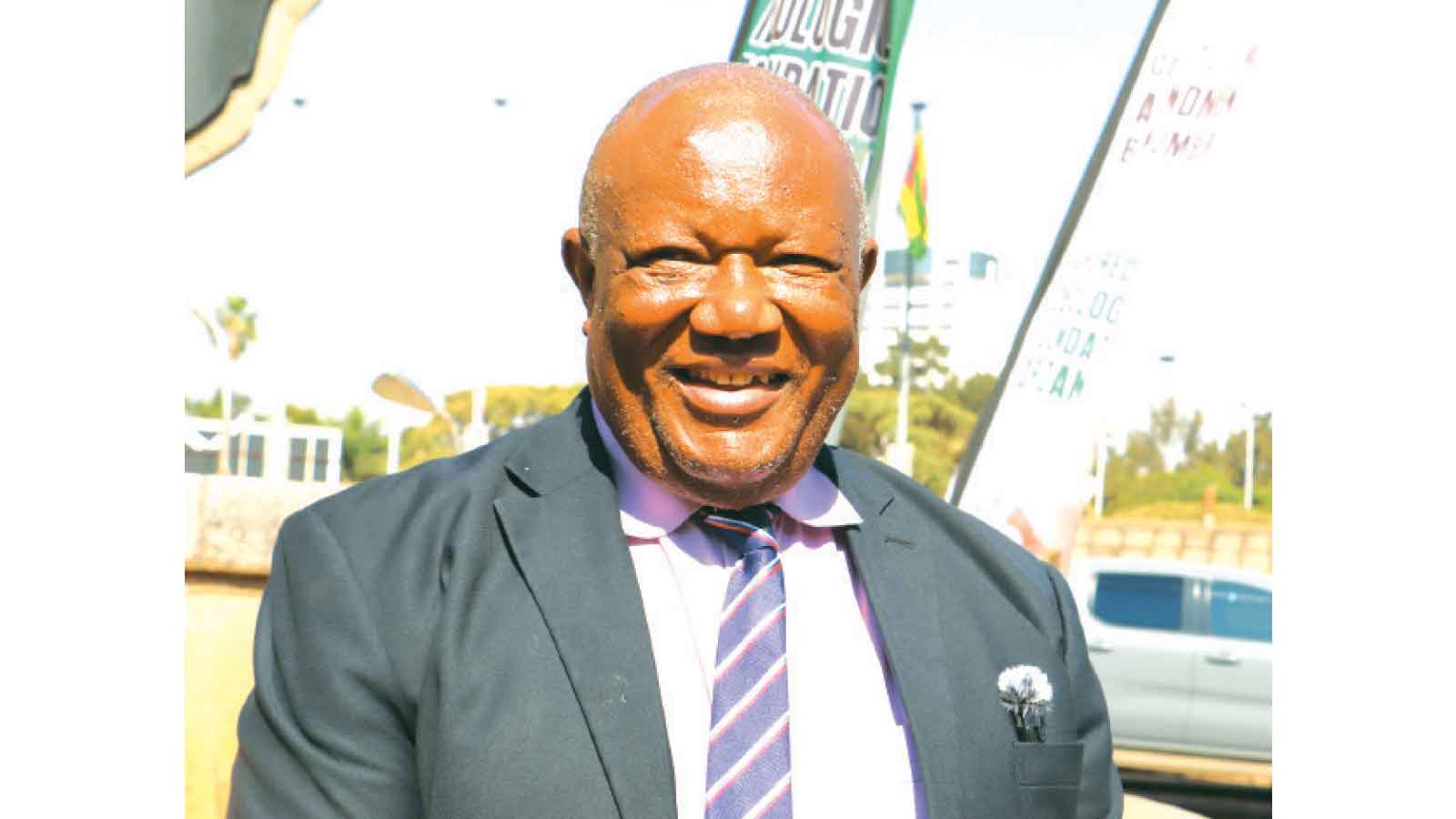
For Bishop Lazi, there is also a biblical resonance here that should not be dismissed.
Genesis 3:19 says: “In the sweat of your face you shall eat bread, until you return to the earth. For out of it you were taken because you are dust, and to dust you shall return.”
That dust is not abstract.
Out of it we receive life and sustenance; from it we eat and to it we return.
A closed chapter
So, Zimbabweans were never going to rest before reclaiming their land, which is exactly what they did at the turn of the millennium when the late Chief Svosve (Enock Gahadza Zenda) and his subjects moved from villages like Magorimbo, Mupazviriho, Chematanda, Kanjiva and Nyabonde, Choto, Mumvuma and Mareverwa in Mashonaland East province — from whence they had been shunted by racist colonial settlers — to four sprawling white-owned farms such as Bruce Farm, Daskop Farm, Igava and Homepark.
This subsequently snowballed into a consequential and historic revolution that culminated in the reclamation of our ancestral land, a development that distinguished Zimbabwe as the only post-colonial state to repossess its land at such a scale.
The whites, however, did not take kindly to it; they naturally fought back through their kith and kin in Britain, Brussels and Washington, who slapped us with sanctions.
A bilateral dispute between Harare and London over land had unfortunately mutated into an international issue.
The Zimbabwe Democracy and Economic Recovery Act (ZDERA), enacted by George Bush on December 21, 2001, remains a centrepiece of those callous coercive measures, whose consequences we continue to live with today.
But, as the tenacious people that we are, we began to systematically chip away at the sanctions since the advent of the Second Republic by both seeking rapprochement while, at the same time, working on our strengths to stabilise, recover and grow an economy that had been buffeted by sanctions for the best part of two decades.
Zimbabweans endured punitive measures precisely because they had dared to restore the ancestral covenant — because they had taken back the soil that holds their dead and feeds their children.
But the worst is now behind us and the best lies ahead.
The progress is now there for the world to see. Our economy has grown in size from US$16 billion in 2017 to the current US$66 billion.
Last year, our economy expanded by a remarkable 8,3 percent and is projected to grow by 5 percent this year.
Annual exports have jumped by an incredible 1 000 percent, from US$2 billion in 2017 to over US$20 billion.
Perhaps the most remarkable development of late, especially for a country that, at one point, experienced insane and ridiculous levels of hyperinflation, has been the collapse of annual inflation to the current 2,8 percent.
This has resultantly ushered in an unprecedented period of rare price stability since September last year.
So, for the past year, Zimbabweans have been spared the angst and anxiety that comes with vertiginous inflation and volatile prices.
It is a welcome relief that has given back Zimbabweans the power to plan, budget and spend on things that matter in their lives. Symbolically, all this recovery is rooted in the land itself, out of which comes our food and minerals.
In mining, for example, strategic exploration and local beneficiation — covering lithium, gold, platinum and coal — have driven unprecedented growth.
Roads, dams, energy grids, as well as housing and irrigation projects, are also scaling up through innovative financing models.
In other words, the same land that was consecrated by struggle is now yielding the harvest of reconstruction.
And, as Zimbabwe has gained in strength, it has managed to afford the wherewithal to put closure to the Land Reform Programme by paying out close to US$1 billion to white former commercial farmers for the investments they had made on farms that have since been redistributed to locals.
Shifting tide
But the diplomatic tide is clearly shifting.
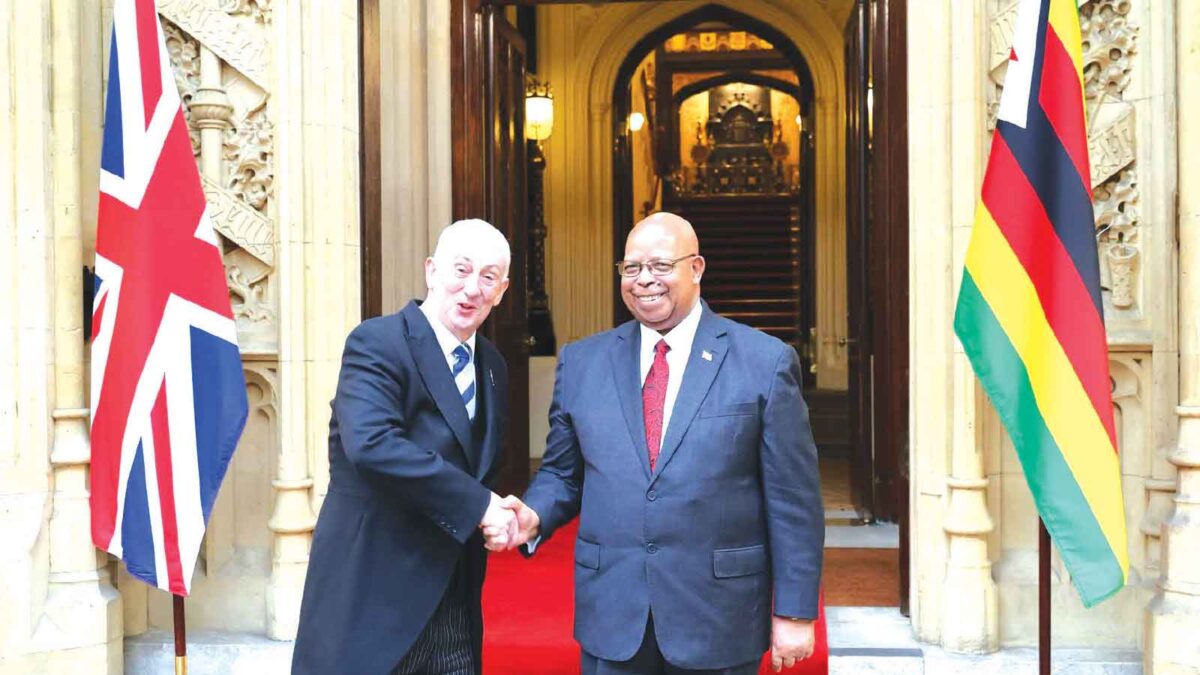
The relationship between Zimbabwe and the United Kingdom has effectively thawed and bilateral ties have normalised.
The historic three-day working visit to London by Speaker of Parliament Jacob Mudenda, at the invitation of the Speaker of the House of Commons, Sir Lindsay Hoyle, is the latest and most concrete sign.
It is the architecture of restored parliamentary diplomacy.
Earlier this year, we also saw the resumption of Air Zimbabwe flights to London, restoring the people-to-people relations of the two destinations and a vital economic and cultural link.
This thaw, therefore, makes the continued sanctions against Zimbabwe by the United States untenable.
The circumstances under which the sanctions arose have changed.
What is clear, however, is that sooner, rather than later, there will be no justifications whatsoever to maintain the sanctions in place.
It is time for the US to read the room.
In the spirit of Ronald Reagan at the Brandenburg Gate on June 12, 1987, when he challenged Soviet General Secretary Mikhail Gorbachev to open and dismantle the Berlin Wall, we now say to Donald Trump: President Trump, tear down ZDERA.