Chronicle Editor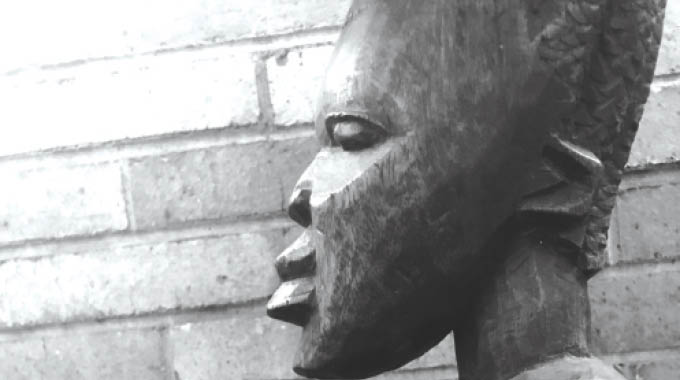
Itai Gwetai
MANKIND has always been driven by different forces that motivate them to think and act in certain ways. Our thought process has always been motivated by different schools of thought that manipulate how we see the world.
When an artist creates, an idea is planted and meaning is bestowed upon the sculpted object, upon the painted canvas, upon the performed theatre and upon the written and spoken word.
Most of these genres of art have a common factor in common when it comes to their success and that is their ‘‘meaning’’ and ‘‘purpose’’. Meaning and purpose are disguised into the fibre of the creations through elements such as ethics, morals and activism. It is these elements that give the artists creations more dialogue and purpose.
This is what we term as the “concept” behind the art.
Art transcends its literal meaning and physicality when the creations are given symbolic purpose to their creations. The ‘‘concept’’ of an art form can be loosely defined as being “the story behind the story”.
The success of most art has been as a direct result of the discourse that is created surrounding the art form. Music, theatre, literature, painting and sculpture are all art forms that narrate and tell stories to people and the ‘‘concept’’ plays an integral role in ensuring effective transfer of meaning.
In these modern times art is no longer designed for its aesthetic purpose but for their ‘‘conceptual’’ purpose.
This is the aspect of the art form that is dedicated to the mind. The mind needs to be fed and nourished so as to be mentally challenged and perturbed.
Artists from Africa have traditionally been creating conceptual art ‘‘sub-consciously’’ in the context of the ‘‘art world’’.
Throughout Africa artefacts from ancient times have been archived, collected and interpreted. It is through the academic research that we learn of the symbolic meanings and utilitarian intentions behind the art form.
Masks were one of the sculptural art forms that partnered well with theatre, song, dance and poetry. The fusion of all these amazing forms of art results in a new powerful ‘‘art work’’.
The masks are created with exaggerated effects for emphasis of the character or the role that the character plays. Each character plays a role in this elaborate performance and each role alludes to a ‘‘concept’’. Each character or mask represents an idea or moral campus to guide the “concept”.
It is this same reason why art from Africa has always fascinated the Europeans. The potency of the work from Africa was what truly fascinated and captured the intellectual parts of the European mind.
The sole purpose and drive behind the raiding and theft of art from Africa was not only driven by the thirst for monetary gain but driven by a thirst for knowledge and intellectual understanding of our African culture, our African gods and our African beliefs. It is here where the strength of our “concepts” have such immense power and stories to tell.
The concepts behind art from Africa had humanism elements that dealt with issues such as love, hate, deception, spiritual journeys, mythical creatures and ubuntu/Unhu.
Western artists have recently publicly shared their debt to the African arts. The brave use of colours, conceptual ideas and abstraction that appeared in Western art are confirmed legacies of African art.
Conceptual art takes its roots from Africa and therefore not an emerging art in the African experience as it is perceived. Conceptual art had been in active practice for centuries in African art long before it was seemingly reinvented in Western art in the twentieth century.
The art was not originally named conceptual art by its African originators.
To the African, the art was a lived experience and manifested in their everyday art. It took both performative and visual form.
The emergence of the great European academies of art reflected the gradual upgrading of the subject.
New and enlightened branches of philosophy also contributed to this change of image. By the mid-18th century, the mere demonstration of technical skills was insufficient to qualify as art — it now needed an “aesthetic” component — it had to be seen as something “beautiful’ with a strong concept to back it up.
At the same time, the concept of “utilitarianism” (functionality or usefulness) was used to distinguish the more noble “fine arts” (art for art’s sake), like painting and sculpture, from the lesser forms of “applied art”, such as crafts and commercial design work, and the ornamental “decorative arts”, like textile design and interior design.
Cubism’s main contribution was to act as a sort of catalyst for a host of new movements which greatly expanded the theory and practice of conceptual art, such as: Suprematism, Constructivism, Dada, Neo-Plasticism, Surrealism and Conceptualism, as well as various realist styles, such as Social and Socialist Realism.
Artists suddenly found themselves with far greater freedom to create paintings, music, theatre and sculpture according to their own subjective values. It is up to artists from Africa to uphold and push concepts that tell our story ‘‘for us by us’’.
[email protected]/
mailto:[email protected]


 Online Reporter