

 Online Reporter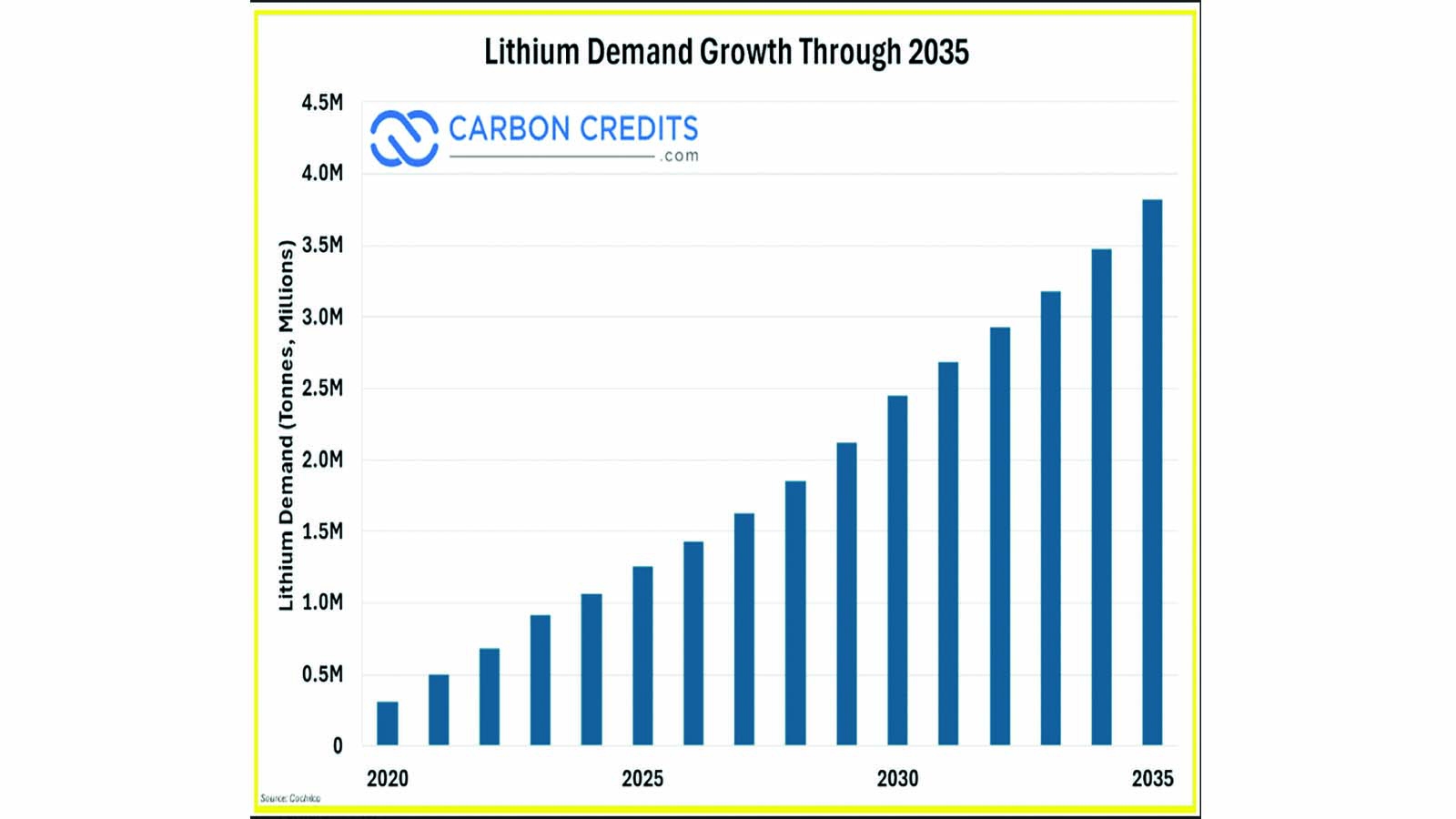
Martin Kadzere
Zimbabwe has issued a conditional reprieve to lithium producers, which could allow for a temporary resumption of exports in exchange for firm commitments to value addition and transparency.
The window comes with a stringent set of conditionalities aimed at accelerating local beneficiation and curbing the plunder of undeclared minerals.
The Ministry of Mines and Mining Development has since communicated the new conditions to the Chamber of Mines of Zimbabwe.
Deputy Minister of Mines and Mining Development, Mr Fred Moyo, confirmed the new conditions, which includes the declaration of all minerals contained in export consignments, the publication of financial statements, and establishment of laboratories for rigorous assay testing.
“I can confirm that we gave some conditions . . . that position is correct,” said Mr Moyo in an interview.
The producers affected by the ban are Bikita Minerals, Prospect Lithium Zimbabwe, Sabi Star, Kamativi, Sandawana, and Gwanda — the majority of which are owned by Chinese industrial giants.
Firms such as Zhejiang Huayou Cobalt, Sinomine Resource Group, Chengxin Lithium and Sichuan Yahua Industrial Group have invested over US$1 billion in the sector since 2021, positioning Zimbabwe as a vertically integrated node within China’s battery ecosystem, with Zimbabwe providing approximately 15 percent of all spodumene imported into the Chinese market.
The ban in February this year was imposed to halt what the Government described as the plunder of raw minerals, where lithium was being exported without the declaration of valuable by-products like tantalum and niobium. The immediate suspension triggered a supply shock in the global market.
Spodumene and lithium carbonate prices surged as spot availability tightened.
In a move towards flexible regulation, the Government is now applying a “case-by-case” evaluation for lithium producers, mandating the submission of “tight plans” to ensure all major miners remain on track to meet the January 2027 lithium sulphate production deadline.
Lithium sulphate is a critical intermediate product required for battery-grade manufacturing.
Lithium is considered crucial for Zimbabwe because the country holds the largest lithium reserves in Africa, placing it at the centre of the global green energy transition and making it a vital player in the electric vehicle (EV) battery supply chain.
As global demand for lithium surges, Zimbabwe is leveraging its resources to drive economic development, attract foreign investment — primarily from China — and achieve its goal of becoming an upper-middle-income economy by 2030.
Recognising that producers are at varying stages of development — with Huayou Cobalt (Prospect) and Sinomine (Bikita) already leading — the Government will evaluate each mine’s progress.
A central pillar of the new rules is the mandatory declaration of all minerals contained within export consignments. This follows widespread reports that lithium ores were being exported with significant undeclared values of minerals such as tantalum, niobium, and rare earth elements.
To enforce this, the Government is mandating the establishment of additional laboratories for assay testing.
This move is expected to close loopholes used for transfer pricing and ensure that the national fiscus receives the full value of its mineral wealth. In a move towards greater corporate accountability, the government has introduced social and financial governance benchmarks
All major producers are now required to publish annual financial statements to ensure transparency in revenue reporting and the provision of decent employee accommodation, safe working environments, and competitive decent salaries.
Export quotas will be communicated to each miner to prevent the stockpiling of resources across borders and to curb mineral pilferage.
A 10 percent export tax will remain in effect for all lithium concentrate shipments until the comprehensive ban on unprocessed exports comes into force in January next year. Officials have reiterated that these new measures are not a policy reversal but a “regulatory correction.”
By bringing forward the beneficiation agenda, Zimbabwe—which holds Africa’s largest lithium reserves—aims to transform from a raw material exporter into a key player in the global electric vehicle supply chain.
Some producers are already scaling up their infrastructure to meet the 2027 ultimatum. Huayou Cobalt (Prospect Lithium) is currently leading with the development of a US$400 million lithium sulphate plant at its Arcadia mine, which is projected to produce 50 000 tonnes annually.
No comment could be immediately obtained from the Chamber of Mines. In 2025, Zimbabwe exported 1,128 million metric tonnes of lithium-bearing spodumene concentrate to China.



This is typically a policy reversal. The government wants to take us for fools.