admin
admin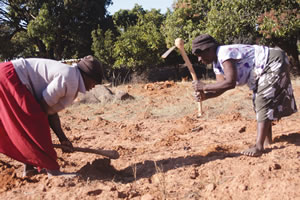
They say this is more reliable than the former in the face of adverse weather conditions.
In a recent tour of the district, The Herald discovered that the majority of the farmers had already started digging planting basins in their fields ahead of the 2011/12 agricultural season.
However, a few were still sticking to draught power and using oxen to winter plough their fields.
Mr George Zvemhara of Chimedza Village under Chief Ndanga, whose family was busy digging basins, said the non-governmental organisation, CARE had introduced the method to them.
He said many families had improved their yields after adopting the new farming method.
“Our yields have vastly improved and we are now reaping adequate grain for our domestic purposes. We have been doing this for the past three years.
“Last season I even held a maize field day. I had an acre and a quarter that yielded one and half tonnes, which is enough to feed my family until the next harvest,” said Mr Zvemhara.
He said conservation agriculture had come as a blessing to his community as most of them had no resources to buy fertilisers and enable them to salvage some grain even in very difficult seasons.
“The method also allows those who do not have draught power to plant with the first rains as they only need to dig their planting basins during the dry season and wait for the rains,” he explained.
A Zaka district Agritex officer concurred.
“This area falls under natural farming region 3 that has an average annual rainfall of 650 mm and above but very erratic in most cases so the method allows farmers to beat planting deadlines.
“It also helps control soil erosion and promotes the use of minimal moisture, which is good in the face of the current global warming challenges.
“With this method the farmer only disturbs the soil where he intends to plant and leaves the rest of the land untouched, which allows it to re-gain its old structure,” said the Agritex official who preferred to be anonymous.
Additionally, the method promotes the efficient use of manure as only the planting station receives either the manure or fertiliser, he said.
He, however, said the method was labour intensive and needed farmers to have reliable sources of manpower.
“But farmers seem to have found an answer to this challenge and are working in groups. They use their numbers to make the task less cumbersome,” said the official.



 Online Reporter