

 Chronicle Editor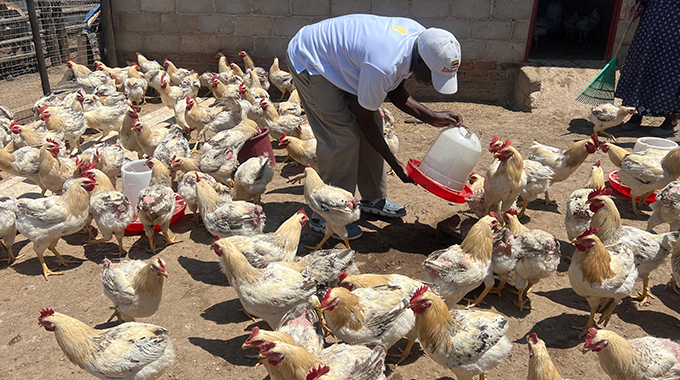
Sukulwenkosi Dube-Matutu, [email protected]
FARMING couple, Mr Jacob Gwara and his wife, Rosemary, are transforming their community with an ambitious poultry project that has grown from 130 chickens in July last year to 1 300 birds.
Their vision extends beyond poultry, as they aim to establish a diversified agricultural hub that incorporates goat, piggery, cattle and horticulture ventures.

The Gwaras’ poultry project, specialising in Sasso chickens, currently produces around 500 eggs daily, which translates to 15 000 eggs monthly.
The eggs are sold at Mawabeni Business Centre, meeting a high local demand while keeping prices affordable.

Mr Gwara, who has over 40 years of poultry farming experience, shared his goal to expand production to 3 000 birds by the end of next year, targeting a daily egg collection of 1 000. Two local youths are employed at the farm, with plans to increase employment as the business grows.
“My primary goal was to have a viable farming project starting with poultry. At the moment, we are focused on improving our production and sharing skills with young people in our area,” said Mr Gwara.
“I started working in poultry in 1979 and at that time I was employed. I later decided to start my own enterprise in Bulawayo.

“Last year, I moved to Mlomoliwoto Village in Mawabeni after securing space.”
To ensure sustainability, the Gwaras are enhancing their water supply system, which is critical for their integrated business hub.
Mrs Gwara said it is important to introduce high-grade breeds for their goat and cattle projects, as well as cultivate a variety of cash crops to boost returns.
“Farming requires consistency and hard work. We are hands-on in running our projects and always seek better solutions to improve production,” she said.
She said plans are underway to expand their fowl runs to accommodate more chickens, as they aim to scale up operations and meet growing demand.
“Chickens are delicate and they need a lot of care. Our business is still growing and we are yet to invest more into this business so that we can get the desired results,” she said.

“For our goat and cattle projects, we are working on introducing breeds that will improve our grades. For our horticulture project, we want to introduce a wide variety of cash crops, which will help us to bring high returns. Farming requires consistency and hard work.”
Umzingwane Agritex officer, Mr Bhekilizwe Ncube, praised the Gwara family for aligning their efforts with the Government’s rural industrialisation strategy. He said such projects are important in transforming rural economies, particularly in light of climate change.
“We are encouraging farmers to diversify and focus on small livestock production, which offers quick returns and lower costs.
“The Gwara family project is a great example of this shift,” said Mr Ncube.
He said practical farming solutions, such as those demonstrated by the Gwaras, play a crucial role in achieving meaningful change and improving rural livelihoods.



 Online Reporter