Online Reporter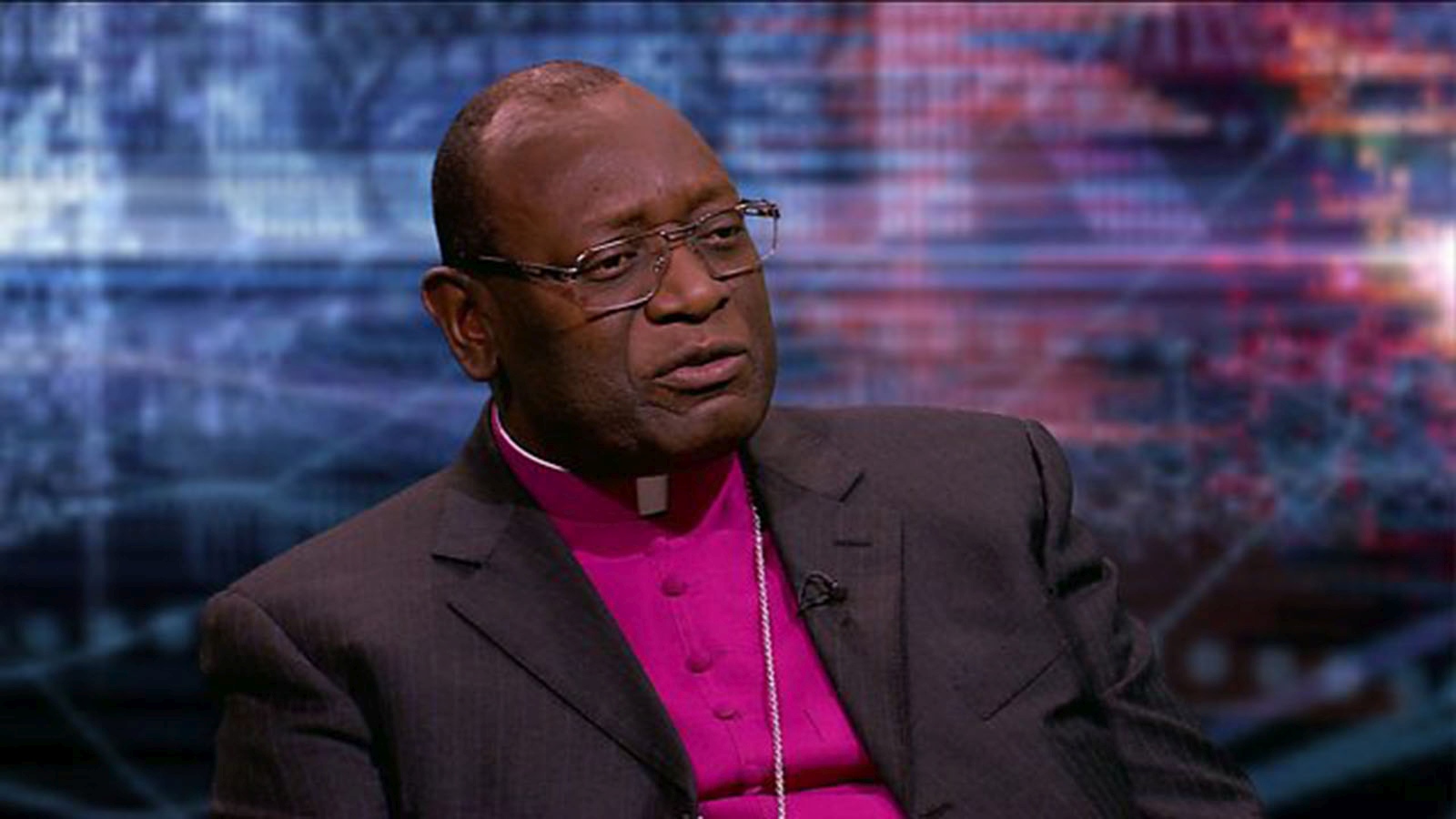
Yeukai Karengezeka
Court Correspondent
The Constitutional Court has dismissed an application by Anglican bishop and former banker Julius Tawona Makoni seeking to overturn a Supreme Court decision that recognised the enforcement in Zimbabwe of a divorce and property distribution order made in a British court.
The English court order favoured Bishop Makoni’s ex-wife Ms Pauline Mutsa Makoni. In its judgment handed down on January 20, 2026, the court found that Bishop Makoni had failed to demonstrate any violation of his rights, ruling that his application for direct access had no prospects of success.
The Constitutional Court determined that the Supreme Court had not infringed Bishop Makoni’s constitutional rights to a fair hearing, equal protection of the law, or the right to a home. It also upheld the English court’s jurisdiction to dissolve the marriage and distribute the couple’s assets.
“The applicant has failed to demonstrate any violation of his constitutional rights under sections 56(1), 69(2), or 74 of the Constitution,” the court ruled. “Consequently, no basis has been laid for interfering with the judgment of the court a quo.”
Bishop Julius and Ms Pauline Makoni were married in Zimbabwe in 1983, amassing substantial assets both locally and abroad during their marriage.
In 2006, Bishop Makoni moved to the United Kingdom, where Ms Makoni later filed for divorce in 2010.
A UK court granted the divorce decree and issued a financial order the distribution of assets.
Under the financial order, Ms Makoni was awarded the London matrimonial home, the Harare house in Chisipite, and a stand in Shawasha Hills.
Makoni, however, retained significant assets, including Omega Cottages in Nyanga, various properties in Zimbabwe and the UK, offshore bank accounts, and a substantial shareholding in NMB Bank.
The UK court also criticised Bishop Makoni for failing to fully disclose his assets during the proceedings.
Following the UK ruling, Bishop Makoni approached the Zimbabwean High Court seeking a declaration that the award of the Harare matrimonial home to his ex-wife was contrary to public policy and unenforceable.
The High Court initially ruled in his favour, but this decision was overturned by the Supreme Court, which ordered recognition and enforcement of the UK judgment.
Dissatisfied with the outcome, Bishop Makoni sought direct access to the Constitutional Court, arguing that the Supreme Court had violated his rights by denying him an opportunity to challenge the UK court’s jurisdiction and by allegedly leaving him homeless.
The Constitutional Court rejected Bishop Makoni’s claims, ruling that his constitutional rights were not violated. It found that delays by the Supreme Court in delivering its reasons did not prejudice Bishop Makoni’s right to a fair hearing.
“A mere delay, without evidence of actual prejudice, does not automatically amount to a violation of the right to a fair hearing,” the court stated. It noted that the Supreme Court eventually provided comprehensive reasons that supported its decision.
On the issue of jurisdiction, the court determined that Bishop Makoni was domiciled in the UK at the time the divorce proceedings were initiated and had lost his Zimbabwean domicile by operation of law.
“The facts indisputably establish loss of the applicant’s domicile in this country,”the judgment read.
“He voluntarily departed from Zimbabwe, remained outside the country for well over five years, established his home and livelihood abroad, and conducted himself in a manner entirely consistent with the abandonment of his Zimbabwean domicile.”
The court also dismissed Bishop Makoni’s argument that the UK court’s application of English matrimonial law violated Zimbabwean public policy, emphasising that the two legal systems are strikingly similar.
“The English law is strikingly similar to our own. No injustice was therefore occasioned,” the court ruled.
Additionally, the court rejected Bishop Makoni’s claim of being rendered homeless, describing the argument as untenable given his substantial remaining assets.
“It seems almost risible to suggest that the divorce order rendered the applicant destitute, let alone homeless,”the court noted.
The court underscored that Bishop Makoni retained assets worth well over US$1 million including NMBZ shares valued at over US$1.3 million and offshore accounts holding hundreds of thousands of pounds.
Advocate Thabani Mpofu represented Ms Makoni, while Bishop Makoni was represented by Professor Welshman Ncube and Advocate Lewis Uriri.
In dismissing the case, the Constitutional Court declined to award costs, stating that while the litigation appeared protracted, insufficient grounds existed to depart from the general rule in constitutional matters.