

 admin
admin
Leonard Ncube, Victoria Falls Reporter
GOVERNMENT is excited by the contract farming schemes that have re-energised the country’s agricultural sector and boosted production, setting the country back on track to food sufficiency and regaining its status as the breadbasket of Southern Africa.
There are a number of farming schemes run by the Government and some in partnership with the private sector where farmers are given inputs with a ready market for produce.
This has also improved livelihoods and created jobs not only in the agriculture sector, but also in downstream industries.
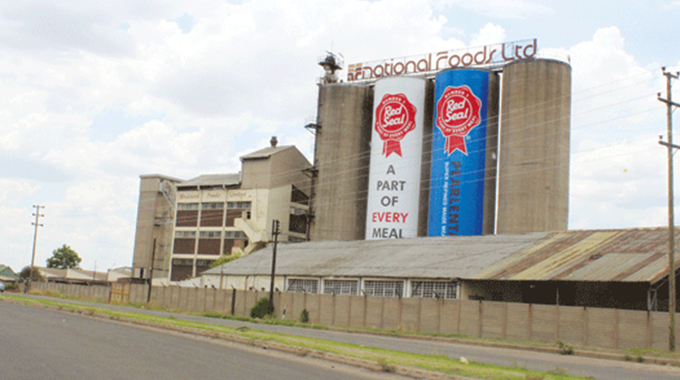
Speaking during a ceremony to mark the official listing of National Foods Limited (NFL) on the Victoria Falls Stock Exchange recently, Lands, Agriculture, Fisheries, Water and Rural Development Deputy Minister Vangelis Peter Haritatos said the development trajectory of agriculture is clearly outlined in the Agriculture and Food Systems Transformation Strategy, which seeks to achieve an US$8.2 billion agriculture economy by 2025.
He commended NFL for supporting the agricultural sector and being one of the leading proponents of contract farming in the country, having supported 4 300ha of maize, 7 500ha of soya beans and 770ha of sorghum with an investment of over US$12 million this summer.

“There is no secret that sustainable growth and development of the sector hinges around the key pillars of agricultural investment and the participation of value chain players is strategic for the achievement of this. National Foods Limited has worked with A-Growth and PHI Commodities for many years in supporting local contract farmers,” said Deputy Minister Haritatos.
“Today this scheme is the largest private sector-driven contract farming arrangement in the country and farmers are provided with seed, fertiliser and chemicals by A-Growth and PHI whilst National Foods acts as an off-taker for the product.”
Deputy Minister Haritatos said the ministry is committed to presenting and tabling all key and necessary incentives to enhance investments in the agricultural sector.
“This is the main blue-print anchoring the sector’s delivery guaranteeing its contribution towards the achievement of President Mnangagwa’s Vision 2030 of Zimbabwe becoming an upper middle income economy,” he said.
The Deputy Minister noted that the contract farming arrangement has also contributed immensely to wheat production.
“The country is now wheat self-sufficient courtesy of the incredible participation of private players such as National Foods, PHI and A-Growth. The record harvest of wheat was the highest ever in the history of Zimbabwe. Over the years, the contract scheme has become a key contributor to National Foods’ raw material requirements and currently provides around one-third of the company’s raw material needs,” he said.
“This is in line with the new Government policy where off-takers of agricultural commodities are required and mandated to fund production of at least 40 percent of what they require annually.”
Agriculture, alongside mining, manufacturing and tourism are key economic enablers in the Second Republic’s National Development Strategy 1 (NDS1), feeding to Vision 2030.
Industry and Commerce Minister Dr Sekai Nzenza called for strong linkages between ministries in pushing the Government agenda.

She said initiatives such as contract farming, have put the country on the road to achieving food security using technology and value addition, local production, import substitution, and accessibility to basic foods.
NFL chief executive Mr Mike Lashbrook said the company had embarked on an intense era of development driven by optimism for the future of Zimbabwe.

He said the company has contracted farmers countrywide and benefits have been significant, especially empowering farmers who supply raw materials to the food processor and downstream industries.
“Our contract farming is run across the country and the Ministry of Agriculture is a key stakeholder of National Foods.
We would like to reassure you of National Foods’ ongoing support of contract farming and indeed to the continued growth trajectory of agriculture in Zimbabwe,” he said.
“We have a full set of manufacturing in Bulawayo and get significant volumes of produce in Matabeleland where we buy from local farmers.” – @ncubeleon



 Blessing Chizhande
 Online Reporter