admin
admin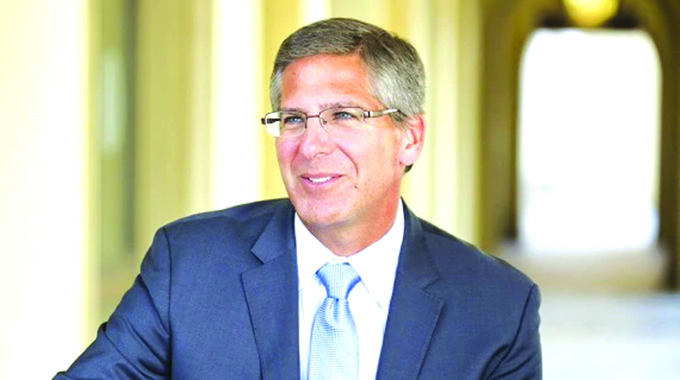
As this year’s World Economic Forum (WEF) annual meeting commenced at Davos, Switzerland on Monday, a series of issues that perplex humanity have come under global spotlight, including the energy crisis, high inflation and geopolitical conflicts.
Under the theme of “Cooperation in a Fragmented World,” the annual meeting focuses on solutions and public-private co-operation to tackle the world’s most pressing challenges.
Many expect to get more insights from the five-day event on how countries could join hands to strive for a brighter future for globalization and the world economy.
Bleak economy
Two-thirds of the chief economists from private and public sectors expect a global recession in 2023, according to a survey released on Monday at the annual meeting.
According to a World Economic Forum statement on the survey, there was a strong consensus that the prospects for growth in 2023 are bleak, especially in Europe and the United States.
The surveyed economists anticipate further monetary tightening in the United States and Europe this year, and they see the geopolitical tensions continuing to shape the global economy.
Some 18 percent of the respondents, more than twice the number in the previous survey in September 2022, considered a world recession “extremely likely.”
Only a third of them viewed it as unlikely this year.
“The current high inflation, low growth, high debt and high fragmentation environment reduces incentives for the investments needed to get back to growth and raise living standards for the world’s most vulnerable,” WEF managing director Saadia Zahidi said in the statement.
“Leaders must look beyond today’s crises to invest in food and energy innovation, education and skills development, and in job-creating, high-potential markets of tomorrow. There is no time to lose,” she added.
However, there are still positive signs. China’s optimised Covid-19 strategy and further opening will have “a very positive impact” on the world economy, said Leslie Maasdorp, vice president and chief financial officer of the New Development Bank.
“There will be a much faster pace of recovery in the Chinese economy,” Maasdorp said, adding that many institutions predicted that China’s economic growth in 2023 will be much higher than originally projected.
Besides, a number of modestly encouraging data released in the final quarter of 2022 provided some room for optimism about the medium-term inflation outlook in 2023, according to the survey.
According to an IMF forecast in October 2022, global inflation is projected to decline to 6,5 percent in 2023 from 8,8 percent in 2022 due to rapid, synchronised monetary tightening, stabilising supply conditions and commodity prices, as well as easing demand pressures, said the survey.
Calls for globalisation, co-operation
The manifold political, economic and social forces are creating increased fragmentation on a global and national level, said Klaus Schwab, founder and executive chairman of the WEF, ahead of the annual meeting.
Schwab stressed the need to reinforce co-operation between the government and business sectors.
“At the same time there must be the recognition that economic development needs to be made more resilient, more sustainable and nobody should be left behind.”
Protectionism and geopolitical conflicts are slowing global growth, WEF President Borge Brende said prior to the annual meeting’s opening, stressing that “what we hope for our annual meeting in Davos is that nations should again try to find areas to co-operate and not only work against each other.”
China’s optimisation of Covid-19 response will contribute to global growth and “will lead to stronger and more prosperous growth, even if this immediate situation is a bit challenging,” said Brende ahead of the WEF.
Brende also expressed his recognition of China’s viewpoint that the only way to deal with global problems is through multilateral co-operation among countries.
“The one positive lesson we can learn from Covid-19 is the interconnection of the world and the need for us to come up with multilateral solutions,” Maasdorp said, adding global challenges cannot be solved by one country alone.
Maasdorp also noted that China has played a critical role in multilateral institutions like the World Bank and the New Development Bank, stressing the country’s commitment to globalisation and profound integration into the global supply chains.
Bob Moritz, global chairman of PricewaterhouseCoopers, emphasised the importance of globalisation, as more trade and business co-operation between China and the rest of the world will be needed.
“Globalisation has been thought about sometimes . . . (as having) no meaning anymore. I would disagree with that,” he said. “The world needs global trade.”
“The world is dealing with problems that are not country specific and bounded by geographic borders . . .
“We have to rewire the world thinking about how to solve our problems. We have to get all the players at the table,” he said. — Xinhua



 Online Reporter