Online Reporter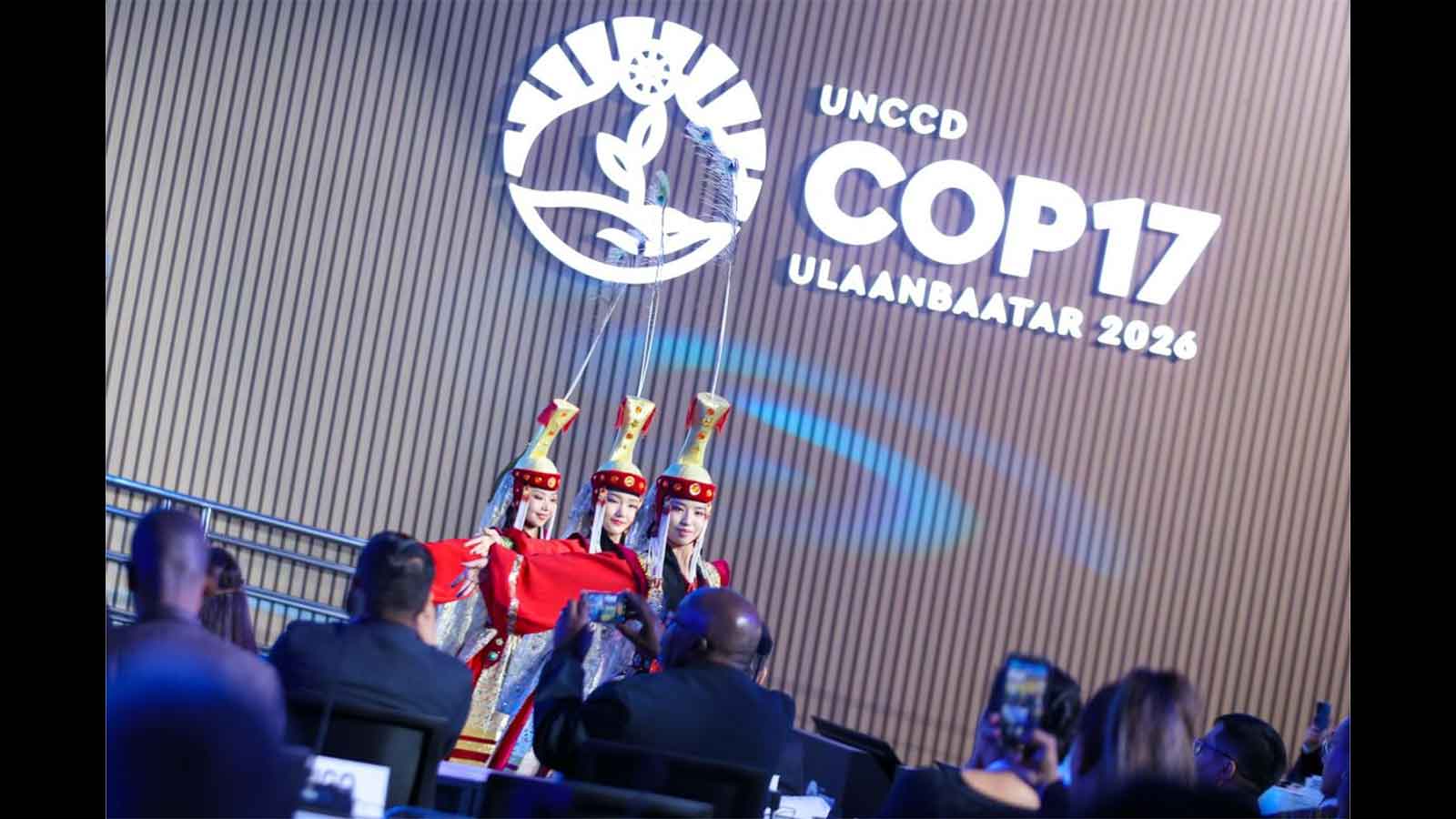
Sam Matema recently in Ulaanbaatar, Mongolia
IF what Mongolia, South Korea, China and, closer home, Ethiopia and Niger, have done over the years, and what they are seized with, is any kind of barometer on matters of land restoration, then as we left Ulaanbaatar, Mongolia, when the curtain came down on the 17th session of the Conference of the Parties to the United Nations Convention to Combat Desertification on August 28, we returned to Zimbabwe with renewed hope.
The war against environmental degradation, expressed through desertification, biodiversity loss, food insecurity and related challenges, can be won. Indeed, the future of environmental protection and restoration could not be more inviting.
It admits no debate that we have been found wanting when it comes to breathing life into the commitments we make under international conventions. We have been long on speeches, brilliant at producing documents and presentations, but short on delivery, execution and implementation.
However, the renewed hope we carry is informed by the lessons we borrowed from Ulaanbaatar.
Mongolia, South Korea, China, Niger and Ethiopia present interesting success stories, with their progress predicated on discipline, patience, clear intentions and deliberate approaches to land degradation. They have laid down SMART plans with clear targets and deliverables for on-the-ground activities that are time-bound.
All we need to do is tap into their experiences, and perhaps copy, improve and adapt them to our own circumstances.
Mongolia
Mongolia is a country sandwiched between Russia and China, with a small population of about 3,5 million people. Its landmass is the 18th largest in the world, but about 30 percent of it is arid desert or desert-steppe. Some 77 percent of Mongolia is degraded, affecting pastures, forests and grasslands.
As host of COP17, Mongolia spearheaded the Steppe Action Agenda and the Rangelands Flagship Initiative, which secured US$1,2 billion in regional green and drought-resilience investments.
Its positioning strategy was anchored on diplomacy as a global leader on nomadic and dryland cultures, particularly around forests and rangelands. Domestically, one percent of total gross domestic product goes towards a fund for environmental conservation.
There is deliberate expenditure tracking to monitor green budgets and resource deployment through the Environmental Budget and Expenditure Database.
The Natural Resources Use Fees (NRUF), collected from mining and agricultural revenues, are reinvested into restoration projects.
Mongolia also secured US$71 million in transition funds from private and global donors, while the External Mongolia Initiative secured US$198 million in funding through The Nature Conservancy.
These examples demonstrate a deliberate approach to mobilising resources for nature conservation, and there are valuable lessons for us to draw from such success stories.
Geopolitical order
That the United States, the European Union, the United Kingdom, Australia and their ilk in the Global North are trying to frustrate and suffocate the United Nations Convention to Combat Desertification (UNCCD) in favour of the other two Rio Conventions, the United Nations Framework Convention on Climate Change (UNFCCC) and the United Nations Convention on Biological Diversity (UNCBD), cannot be denied.
This was on full display when issues were raised around Conference agenda items.
The United States and Russia were in different positions, as were the United States and the Africa Group.
The United States tried to block possible avenues for civil society participation and global funding collaboration, which is consistent with America’s conduct after it pulled the plug on USAID and other forms of global support. It is trying to influence other economies not to render support and funding.
The United States and its partners are trying to portray global drought as fundamentally a domestic and regional issue that does not require global oversight, arguing that it is not a transboundary issue.
Hence, their efforts to block the proposed Global Drought Framework, whether voluntary or binding.
Put bluntly, they see the UNCCD as an African or regional project dealing with desertification, land degradation and drought. This is precisely why the Global Drought Framework debate was deferred to COP18 for resolution and adoption.
South-South cooperation is, therefore, the way to go, given that trust and faith in Western-led climate finance are wearing thin on the back of the United States’ climate alignment.
Such cooperation is critical in de-risking private capital through multilateral development banks to make environmental restoration viable and bankable. This is exactly why the African and Asian development banks came to the party with their different purses.
Resource mobilisation
This is where our conversations and efforts should be directed. We need to budget-tag all sectors of the economy with respect to environmental issues. We cannot continue to ignore the contradiction between where we are as Africa in general, and Zimbabwe in particular, and the natural resources at our disposal.
That contradiction must be interrogated, ventilated and corrected at African union level, regionally and domestically.
Mongolia has done well in respect to internal resource mobilisation and external multilateral support from non-state actors, notwithstanding the pressures of desertification.
Having said that, in Zimbabwe there is a need for convergence on the interconnectedness and intersectional nature of the impacts of land degradation, biodiversity loss and climate change.
Across ministries, it is important to appreciate that their very existence and survival are interwoven with, and are a function of, the integrity of the environment.
A healthy natural environment supports sustainable growth and development. The natural environment, on its own and without human interference, has the capacity for self-regulation and correction.
We, therefore, need to pause and initiate serious conversations that lead to a localised Zimbabwe Conference of Parties (ZCOP). We should measure and track the stock, condition and economic value of our natural environment — natural capital accounting.
What is the value of the natural capital in our seven different catchment areas, for example? What is the natural capital value of the Great Dyke? What is the natural capital value of Buhera District?
This is critical information that facilitates data-driven decision-making on investment across different spaces and socio-economic categories.
Private sector participation in this space is equally critical, especially what banks can do as individual corporations or through syndication by raising capital for local projects.
How can our local banks raise capital for afforestation projects and tie that to carbon projects?
How can banks partner with the Government and mobilise capital to revamp urban transportation through green vehicles while tapping into the carbon market?
How can local banks support the green energy transition and recover the investment through the carbon market?
Zimbabwe Conference of Parties should get us to a position where we all agree that Mother Nature raises us on account of how we carry ourselves in her face — our ecological behaviour.
We should be responsible stewards across all ministries, working collectively, leaving no one and no place behind, towards land degradation neutrality.
But first, we must understand what land degradation neutrality is and how it impacts our daily lives.
Parliamentary oversight
It is the role of Parliament to legislate in a manner and fashion that speaks to the realities of the day.
Budgets generated domestically and externally should be tracked to ensure that the relevant ministries access the resources and deploy them efficiently and transparently.
This is the oversight role that Parliament must play. For example, the African Development Bank availed US$500 million at COP17.
International protocols should be ratified for the benefit they bring to the country.
This is precisely why Zimbabwe should support the position of the Africa Group on the Global Drought Framework.
Political will
Restoration of hope will take root only if, as political leadership, we lead by example in the way we carry ourselves.
We must show that we are genuinely disturbed and burdened by the rate of environmental degradation occasioned by human activities, and begin to walk the path of land restoration, starting with our homes, fields, villages, wards and constituencies.
We should declare a truce and make peace with nature in our quest for land restoration, with land degradation neutrality as the immediate target.
We have to create a path; otherwise, nature will create one for us in its frustration and anger, and walk that path as it delivers its harrowing invoice for the work we have done, and continue to do, in terms of land use.
The devastating landslides at the Tibet-Nepal border, occasioned by melting glaciers in the Himalayas because of climate change and rising temperatures, are a sad example of what Mother Nature can deliver in her anger and frustration.
We have no other choice but to smoke the peace pipe with her and commit to being responsible stewards in word and deed for the sake of achieving land degradation neutrality and building a better future.
It is possible!
Sam Matema is the National Assembly Member for Buhera Central constituency, ZANU PF Manicaland Province Secretary for Administration, Climate Parliament Zimbabwe Chapter chairman and chairperson of the Parliamentary Portfolio Committee on Environment, Climate and Wildlife. He writes here in his personal capacity.