admin
admin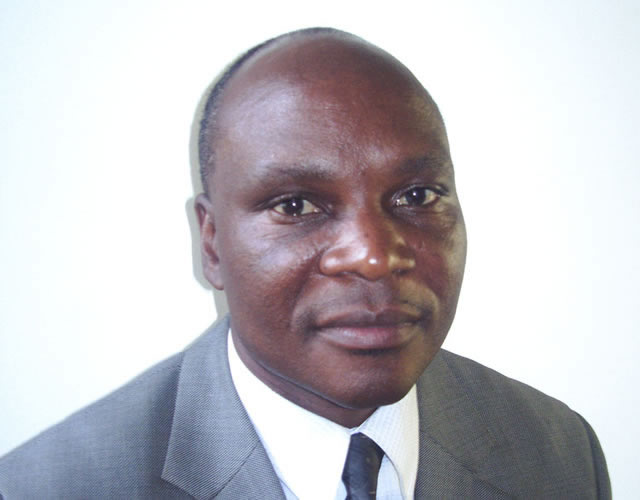

Business Reporter
THE Ministry of Mines and Mining Development will work towards putting to an end alleged corrupt tendencies involving some mining commissioners, a Cabinet Minister said yesterday. Briefing delegates during the Confederation of Zimbabwe Industries (CZI) annual congress, Mines and Mining Development Minister Walter Chidhakwa said corruption was depriving the country its potential to derive full value from its resources.
“If you have corruption you will not be able to derive the benefits that this country deserves. As the new Minister of Mines and Mining Development, one of the things that I will spend my time on is ensuring that the mining sector is corrupt free.
“One thing that I have said to the mining commissioners is I have been told that you are corrupt. They have said no boss and I said if you were corrupt stop it henceforth,” he said.
Minister Chidhakwa said corruption was being created in different spheres.
“We need to have a corruption free mining environment, a corruption free manufacturing sector. Corruption is being created between you (industrialists) and the mining sector and corruption also existed between the mining sector and Government,” he said.
He said his ministry would also ensure that there was no double allocation of mining claims and special grants to different stakeholders.
“Today, we have a problem where a mining claim has been given to three different people and it is important we address that in order to attract investment in the extractive sector.”
The congress, which ends today, is being held under the theme, “Imperatives For Reversing De-Industrialisation”.
Mr Chidhakwa told the delegates that it was imperative for the industry to promote value addition of raw materials in all sectors.
“There is an undoubted symbiotic relationship between mining and manufacturing sector and also agriculture. The manufacturing sector is there to value add raw materials from the mining and agriculture sectors. There is also the linkage that some of the equipment from the mining industry is produced by the manufacturing sector,” he said.
“As a country or Africa, there is a tragedy that we went through because we inherited it from the colonial system. Today we are producing raw materials that will go elsewhere. In that scheme of things, some of the developed countries took the responsibility of value adding those raw materials thus bringing development within themselves. If we are to succeed in developing our countries, we need to reverse that responsibility. In my view, we need to have a paradigm shift that promotes value addition locally.”
Minister Chidhakwa said the country was struggling to reduce its trade deficit adding that it was high time strategies to address the anomaly were sought. In the first half, Zimbabwe recorded a $2,4 billion trade gap. Last year Zimbabwe’s trade deficit was $3,6 billion. Stakeholders expressed concern over Zimbabwe’s huge trade deficit saying the scenario was unsustainable as it leaves the country highly vulnerable to negative developments in other countries.


 Online Reporter