admin
admin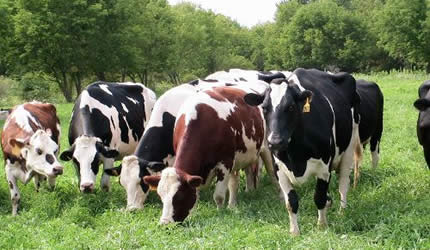
Simbarashe Mudzivo Features Correspondent
Dairy farming is big business in Zimbabwe, but smallholder farmer dairy co-operatives need support to make it in a competitive environment characterised by an influx of cheap imported milk products. A case in point is the Chikwaka Kuba-tana Dairy Association at Juru Growth Point, commonly referred to as KwaBhora about 50km east of the capital along the Harare- Nyamapanda highway.
The co-operative-run Chikwaka dairy centre opened in 1983 amid high hopes of growth and potential to transform the livelihoods of smallholder farmers in the area.
Lack of access to finance, equipment, lucrative markets and rising input costs has left the centre teetering on the verge of collapse.
The dairy co-op is battling to keep afloat.
It is faced with hard choices. Smallholder dairy farmers here have at least two options for selling their produce.
One option is “hawking” (selling milk to local regulars or passers-by), which offers high prices per litre.
However, demand is relatively low and involves risks for the consumer, since the milk is unpasteurised.
The more stable option is the co-operative arrangement which offers a set demand and supply model with a price agreed upon with a major dairy buyer.
The co-operatives also guarantee the quality of milk, as it is tested upon purchase and processed industrially before being resold.
Prices offered by one of the major dairy firms in this country is said to be not viable.
Ms Eunice Masenyama, a dairy farmer at Chikwaka project who has three cows, supplies 20 litres of milk daily for the market and keeps one litre for domestic use for a family of three. She laments how poor funding has negatively impacted on the project.
“Since its inception the project has been poorly funded. We closed down in 2007 due to lack of funds as charges for services were escalating,” she said.
“A bag of straight feed costs US$22 and farmers have to collectively buy the stock- feed to reduce transport costs.
“We hire transport as we do not have our own. It costs US$80 to transport up to 25 bags of stockfeed,” she said.
The choice of stability over irregular profitability explains the importance of co-operatives for most smallholder farmers.
Dairy co-operatives assist farmers in issues such as loans, artificial insemination and livestock rationing with direct implications for milk production.
Livestock experts say a well-fed cow can produce as much as 40 litres of milk a day, while a cow without appropriate dry food risks producing as little as 8-10 litres — only 25 percent of the targeted.
The farmers who said if they get funds to buy stock feed, vaccines and other services have the capacity to surpass their current milk production of 1 000 litres per week, are currently working with experts in livestock on how to reduce the quantity of commercial concentrate needed to feed the animals as they introduce the indigenous stock feeds.
Research experts from Agricultural and Rural Development Authority and some agricultural research institutions such as Land O’lex,
International Livestock Research Institute, International Maize and Wheat Improvement Centre (CIMMYT) and International Crop
Research Institute for the Semi Arid Tropics (ICRISAT) have launched a collaborative project to integrate crops and livestock for improved food security and livelihoods in rural areas.
In 2009, Land O’lex availed 48 cows to the Chikwaka project as loan which would be paid back in cash or by deducting a certain percentage from the sale of milk produce.
The farmers would each get two cows valued at US$1 500 where upon each is required to pay US$60 monthly upon selling the milk.
Although the initiative was meant to assist the farmer, the biggest challenge are the prescriptions on how to access the inputs and also the dilemma of calculating the profit to be taken home after all the expenditures.
Chikwaka dairy co-operative members are optimistic that if the project is subsidised, it has potential of increasing its production.
Funding remains critical for the survival of the co-op. Loan payments, vaccine costs and monthly subscriptions are eating into their profits. But not all hope is lost.
Chikwaka dairy farmers are now growing velvet bean and cow-pea to make their own stockfeed to cut costs and improve their earnings. Competition, though, still poses a major a headache for them coupled with unattractive milk prices offered have pushed them to the wall.
With little influence on pricing, some farmers are mulling quitting dairy farming.
Some livestock analysts say the Government should subsidise the dairy farmers, but critics say with the budgetary constraints facing the country, subsidies are out of question.
Critics suggest that farmers should run dairy farming as a business and aim to make profit that can sustain their operations.
“Smallholder dairy farmers are poorly funded and our farmers are still new to the field we want them to master the skills in the dairy husbandry in order to make the industry viable,” said Ms Tendai Marecha, the chief dairy officer in the Ministry of Agriculture,
Mechanisation and Irrigation Development.
“This will help us raise the national dairy herd which currently stands at 26 000.”
Ms Marecha said the Government remains committed to supporting A1 and A2 farmers to undertake dairy husbandry on a larger scale while also strengthening the capacity of communal farmer to increase national milk output as a strategic way of cutting down imports and saving foreign currency.
Zimbabwe’s national milk production has declined to 50 million litres a year from a peak of just over 138 million litres in 2002.
The country requires about 120 million litres of milk per year and is just producing 50 million litres from 5 000 farmers.



 Online Reporter