Martin Pedzisai Kadzere
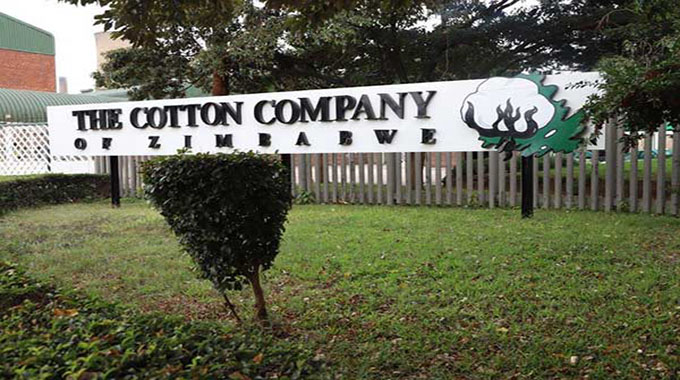
Cottco Holdings intends to delist from the Zimbabwe Stock Exchange and execute a rights issue to fund its restructuring and downstream value-addition projects, an official has said.
Delisting from the local bourse is expected to provide Cottco with operational flexibility to undertake balance sheet restructuring, streamline debt and raise long-term capital to stabilise operations following its placement under corporate rescue, corporate rescue practitioner Mr Ian Mtetwa said.
Cottco was placed under voluntary corporate rescue in April 2026 to restore operational viability, protect assets and restructure its balance sheet following severe working capital constraints and legacy debt pressures.
The company is majority-owned by the Mutapa Investment Fund, Zimbabwe’s sovereign wealth fund, which holds about a 38 percent stake on behalf of the Government.
Mr Mtetwa said removing the country’s largest cotton company from public exchange reporting rules — subject to shareholder approval at an Extraordinary General Meeting — would allow the business to aggressively pursue tailored equity injections and long-term working capital options.
“We should be publishing a circular to all our shareholders for an extraordinary general meeting.
“The agenda is to discuss Cottco funding requirements amongst other issues and, if successfully approved by the ZSE, the delisting of Cottco,” Mr Mtetwa said. Delisting of Cottco will allow us good flexibility in terms of restructuring options that we can put on the table.
“There is a lot of funding that is potentially available, so we need as much flexibility as possible. If we successfully delist, we intend to have a rights issue to raise further capital for future projects.”
Mr Mtetwa said they are targeting a preliminary US$12,5 million rights issue, with negotiations currently underway for an underwriter who could convert unexercised rights into equity.
Apart from balance sheet restructuring, the company is eyeing value addition through an oil expression plant to process cottonseed into crude oil and cake, with the long-term potential of producing refined cooking oil. Cottco has already paid an initial deposit for the primary plant, with more capital earmarked for civil works, auxiliary processing and packaging machines.
“We are still assessing our options; do we go for full oil manufacturing — pure oil — or just crude oil and sell to the players (cooking oil producers) who are already in the market,” said Mr Mtetwa.
Cottco is evaluating whether to set up the oil expression facility in Kadoma or Gokwe, with Kadoma emerging, logistically, as the superior option due to its central position along the national highway network, lower power disruption risks and reduced haulage costs.
Despite being appointed late in the buying season on May 7, 2026, Mr Mtetwa managed to secure funding and procure seed cotton during the last marketing season.
Cottco has fully paid the farmers to all 37 000 contracted farmers who delivered cotton this season, both the foreign and local currency components in compliance with regulatory mandates.
Driven by the 100 percent payout record, farmer interest for the upcoming 2026/27 agricultural season has surged to 72 400 farmers.
In response to forecasted El Niño weather patterns, Cottco plans to prioritise input distribution — which is already underway at common distribution points — to loyal farmers who consistently delivered the crop over past seasons.
Ginning operations are currently 80 percent complete, significantly reducing weather-related quality deterioration that historically affected lint stored at ginneries well into January and February.
Addressing the fundamental commercial viability of the company, Mr Mtetwa noted that international market demand for lint is expected to remain strong.
The primary challenge lies in internal operational cost structures, legacy debts and staff rationalisation — issues being addressed under the rescue proceedings ahead of a final creditors’ plan scheduled for presentation in March 2027.
“What we need to work on are our internal issues — rationalise our staff, optimise our operations, and optimise our cost structures because we are price takers on the global market.
“This year, as a trial run, has been a success story to the farmer, to our funders, to our bankers, to our shareholders and most importantly to our creditors. Every dollar was signed for — we opened new bank accounts, closed old accounts and monitored all transactions closely.
“By March 2027, we will present a comprehensive plan to creditors showing how we have streamlined business operations and reduced costs to allow Cottco to grow organically into the future.”